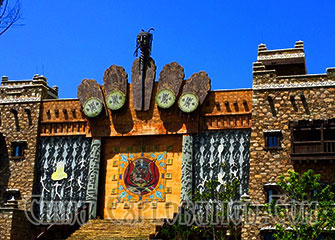
 Maoxian County in northern Sichuan is one of the main areas inhabited by the Qiang ethnic group. The Qiang people traditionally live in mountainous areas crossed by rivers and streams, where the mild climate and abundant rainfall provide favorable conditions for agriculture and settlement.
The Qiang people have a long history in western China and have developed a distinctive culture, language, architecture, clothing, food, and religious traditions.
History of the Qiang People
The name “Qiang” was historically used by the Han Chinese to refer to various peoples living in western China. Over centuries, the Qiang developed their own distinctive way of life in the mountainous areas of Sichuan.
Traditionally, the Qiang people relied heavily on agriculture and lived in relatively isolated mountain communities. Although the Qiang language belongs to the Tibeto-Burman branch of the Sino-Tibetan language family, the Qiang people have historically had close cultural and economic connections with surrounding Han communities.
The Qiang traditionally had no widely established written script of their own, and many Qiang people also speak Chinese.
Qiang Culture and Traditional Lifestyle
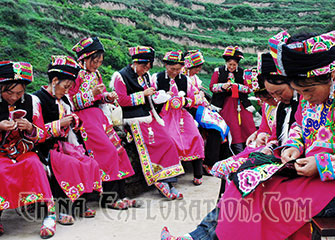 The Qiang and Han peoples have maintained close political, economic, and cultural connections for centuries. The Qiang traditionally exchanged local products such as horses, medicinal herbs, and other agricultural products for farming tools and daily necessities.
These long-term exchanges contributed to the economic and cultural development of Qiang communities while allowing their distinctive traditions to be preserved.
Traditional Qiang Clothing
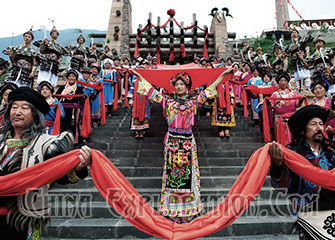
Traditional Qiang clothing is both practical and decorative. Men and women traditionally wear long garments made from materials such as hemp, cotton, and silk, often combined with sleeveless woolen jackets.
Women’s clothing is particularly distinctive, featuring:
* Embroidered decorations
* Silver ornaments
* Embroidered shoes
* Decorative belts
* Earrings
* Neck rings
 * Hairpins
* Silver ornaments
These colorful garments and elaborate accessories reflect the artistic traditions of Qiang communities.
Qiang Food and Daily Life
Traditional Qiang cuisine is closely connected with the agricultural environment of the mountainous region.
Important staple foods include:
* Millet
* Highland barley
* Potatoes
* Winter wheat
* Buckwheat
Traditional alcoholic drinks also have an important place in Qiang social and cultural life.
Traditional Qiang Stone Houses
One of the most recognizable features of Qiang culture is the traditional stone blockhouse.
Qiang houses are traditionally constructed by stacking stones of different sizes without relying heavily on modern construction materials. Many traditional buildings are two or three stories high.
A typical house may be organized as follows:
* Ground floor: livestock and poultry
* Second floor: living and sleeping quarters
* Upper floor: grain storage
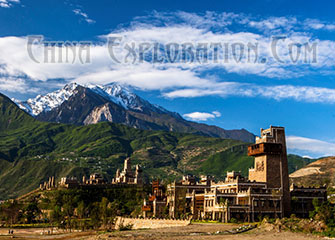 The strong stone construction is well adapted to the mountainous environment and has become an important symbol of Qiang architecture.
White-Stone Worship
White stones hold special significance in traditional Qiang religious beliefs.
White stones are often placed on the roofs of traditional Qiang houses and are associated with the Heavenly God. This ancient belief reflects the Qiang people’s close spiritual relationship with nature and the surrounding mountains.
Together with traditional stone houses, clothing, festivals, music, and customs, white-stone worship forms an important part of Qiang cultural heritage.
Experience Qiang Culture in Maoxian
For travelers visiting northern Sichuan, Maoxian offers an opportunity to learn about one of China’s distinctive ethnic cultures.
Exploring Qiang villages, traditional stone houses, local museums, handicrafts, clothing, and festivals provides a deeper understanding of the history and traditions of the Qiang people.