 Jinsha Site Museum, located in Jinsha Village, Qingyang District, western Chengdu, Sichuan Province, is one of the most important archaeological discoveries in China. Covering an area of approximately 5 square kilometers, the site was the capital and political, economic, and cultural center of the ancient Shu Kingdom from around the 12th century BC to the 7th century BC.
The discovery of Jinsha Site has revealed the remarkable achievements of the ancient Shu civilization and provided valuable evidence for understanding the origin, development, and evolution of Shu culture. It also confirmed that the Chengdu Plain was one of the major centers of early civilization in the upper reaches of the Yangtze River.
A Treasure House of Ancient Shu Civilization
Since its discovery, Jinsha Site Museum has uncovered more than 5,000 precious cultural relics, including:
* Gold artifacts
* Bronze objects
* Jade articles
* Stone tools
* Ivory products
* Lacquerware
* Pottery remains
Archaeologists have also discovered large quantities of ivory, animal remains, and thousands of wild boar tusks and antlers, providing important information about the religious beliefs, social structure, and daily life of the ancient Shu people.
These discoveries demonstrate the advanced craftsmanship, artistic achievements, and spiritual world of a civilization that flourished more than 3,000 years ago.
The Golden Sun Bird – Symbol of Chinese Cultural Heritage
Among all discoveries at Jinsha Site, the Golden Sun Bird is the most famous and iconic artifact. More than 30 gold objects were unearthed at the site, including gold masks, gold ornaments, and gold decorations, but the Golden Sun Bird remains the most representative masterpiece.
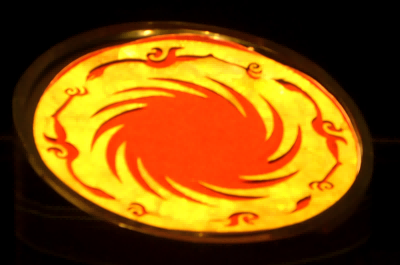
The circular gold ornament has a diameter of 12.5 centimeters, an inner diameter of 5.29 centimeters, a thickness of only 0.02 centimeters, and weighs about 20 grams. Made with delicate hollow-carving techniques, the design consists of two layers:
* The inner circle features 12 rotating rays symbolizing the sun.
* The outer circle depicts four birds flying in a clockwise direction.
The artwork reflects the ancient Shu people’s worship of the sun and birds, expressing their admiration for light, harmony, unity, and the relationship between humans and nature.
According to the National Cultural Heritage Administration of China, the Sun Bird Pattern represents the ancient Chinese philosophy of “harmony between humans and nature” and the pursuit of brightness, harmony, and inclusiveness.
In 2005, the Golden Sun Bird was officially selected as the symbol of Chinese cultural heritage. Later that year, it was also carried aboard the Shenzhou VI spacecraft, becoming a cultural symbol representing Chinese civilization.
Visit Jinsha Site Museum
Today, Jinsha Site Ruins Museum has become an important cultural attraction in Chengdu, where visitors can explore ancient Shu history through archaeological remains, exhibitions, and priceless artifacts.
For travelers interested in Chinese archaeology, ancient civilizations, and Chengdu history, Jinsha Site Ruins offers a unique opportunity to discover one of the most fascinating chapters of China’s early civilization.