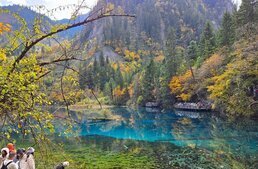
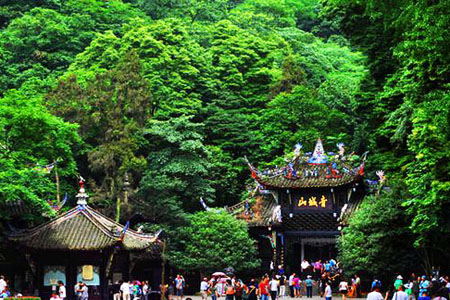
Located in the southwestern part of Guangxi Zhuang Autonomous Region, Chongzuo is an important regional transportation hub and one of the best destinations to experience Zhuang culture, stunning landscapes, and China’s border scenery. Covering an area of approximately 17,345 square kilometers, Chongzuo has a population of about 2.27 million, with the Zhuang ethnic group accounting for around 89.13% of the total population. It is the prefecture-level city with the highest proportion of Zhuang residents in China.
Chongzuo borders Nanning to the northeast, Baise to the north, and Fangchenggang to the southeast. To the west and south, it shares a border with the Democratic Republic of Vietnam, making it an important gateway for cultural and economic exchanges between China and Southeast Asia.
Chongzuo – A Land of Extraordinary Natural Beauty
Blessed with rich ecological resources, Chongzuo is home to more than 500 natural scenic attractions, including rare wildlife, ancient forests, and well-preserved primitive ecosystems. The Nanguo Pass Scenic Route is one of the five major tourist routes in Chongzuo, featuring numerous natural and cultural attractions along the way.
Among the highlights is the Guilong Leaning Tower, one of the world’s eight famous leaning towers, which attracts visitors with its unique architectural style and mysterious history.
 Rich Biodiversity and Cultural Heritage
Chongzuo is also an important destination for wildlife and ecological tourism. The Nongguan Ecological Park and Stone Forest is one of the world’s rare habitats for the endangered white-headed langur, a primate species found only in this region.
The Longrui-Nonggang National Nature Reserve, located across Longzhou and Ningming counties, is one of China’s 14 key biodiversity conservation areas and plays an important role in protecting international terrestrial biodiversity.
For history and culture lovers, the Huashan Rock Art Cultural Landscape is a must-visit attraction. Listed as a national 4A-level scenic area and a UNESCO World Heritage Site, the ancient cliff paintings provide valuable insights into the life and beliefs of the ancient Luoyue people, the ancestors of today’s Zhuang ethnic group.
Famous Attractions in Chongzuo
Chongzuo is home to some of Guangxi’s most spectacular landscapes and historical landmarks:
* Detian Transnational Waterfall – Located in Daxin County on the China-Vietnam border, it is the largest transnational waterfall in Asia and one of the most impressive waterfalls in the world.
* Mingshi Scenic Area – Known as the “Little Guilin of Guangxi,” this picturesque area features peaceful rivers, karst mountains, traditional villages, and beautiful rural scenery.
* Youyi Pass (Friendship Pass) – Located in Pingxiang, it is one of the nine most famous passes in ancient China and has played an important role in border history.
* Longzhou Ancient Sites – Including the Battlefields of the Sino-French War, the Southern China Great Wall, ancient forts, Qing Dynasty Mass Burial Grounds, the Former French Consulate, and  memorial sites honoring revolutionary figures.
History of Chongzuo
Chongzuo has a history of more than 2,000 years. The area was originally inhabited by the Luoyue people, the ancestors of the modern Zhuang ethnic group. During the Qin Dynasty (221 BC–206 BC), Chongzuo became part of Xiang Commandery.
Throughout history, the city developed rich mineral, agricultural, and tourism resources. In 1951, Chongshan County and Zuoxian County were merged to form Chongzuo County. In 2003, Chongzuo was officially established as a prefecture-level city.
Today, Chongzuo combines spectacular natural scenery, diverse ethnic traditions, and fascinating historical heritage, making it one of the most attractive destinations in Guangxi for travelers seeking authentic experiences in southern China.