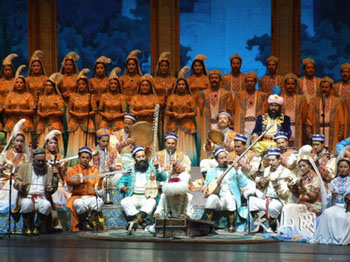
 The Art of Chinese Xinjiang Uyghur Muqam is one of the most remarkable traditional performing arts of Xinjiang Uyghur culture. Combining songs, instrumental music, poetry, and dance, Muqam represents a unique musical tradition developed by the Uyghur people over centuries.
Recognized as a masterpiece of human cultural heritage, Xinjiang Uyghur Muqam reflects the cultural exchanges that took place along the ancient Silk Road and preserves the history, emotions, and daily life of the Uyghur community.
In November 2005, UNESCO officially proclaimed the Art of Chinese Xinjiang Uyghur Muqam as a Masterpiece of the Oral and Intangible Heritage of Humanity, recognizing its outstanding cultural value and the importance of preserving this ancient tradition.
History and Origin of Uyghur Muqam
Known as the “mother of Uyghur music,” the Twelve Muqam is the most famous and complete form of Uyghur Muqam.
Some historians believe that its origins can be traced back to ancient musical traditions such as the “Great Western Region Melody” that flourished during the Han Dynasty (206 BC–220 AD) and Tang Dynasty (618–907 AD). These musical traditions traveled between China and Central Asia through the Silk Road, influencing the development of regional music.
During the Yarkent Khanate period in the 16th century, the poet and musician Amannisahan played an important role in collecting, organizing, and preserving scattered Muqam melodies. With the help of other musicians, she compiled twelve large musical suites, which became known as the Twelve Muqam.
Artistic Features of Xinjiang Uyghur Muqam
Uyghur Muqam is a comprehensive art form that combines:
* Vocal music
* Instrumental performance
* Traditional dance
* Poetry and storytelling
Unlike simple musical performances, Muqam expresses a wide range of human experiences, including:
* Love and friendship
* Reflections on life
* Historical memories
* Religious feelings
* Everyday experiences of Uyghur society
The lyrics include folk songs, traditional ballads, and poems created by classical Uyghur writers, making Muqam both an artistic expression and a record of cultural history.
Music and Instruments
A traditional Muqam performance is usually led by a main singer known as a Muqamchi, accompanied by traditional instruments.
Common instruments include:
* Satar – a long-necked bowed string instrument
* Rawap – a traditional plucked string instrument
* Dap – a large frame drum
* Gijak – a bowed instrument
* Wind instruments and percussion instruments
The melodies feature complex rhythms, changing patterns, and a combination of classical and folk musical elements.
Traditional Uyghur Dance
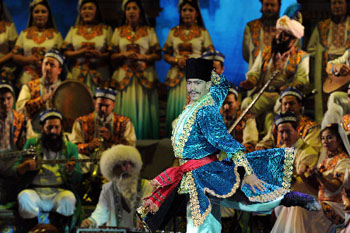
Dance is an essential part of Muqam performances. Uyghur dancers are known for their graceful movements, expressive gestures, and complex rhythms.
Traditional dance features include:
* Unique hand movements
* Flexible body techniques
* Creative formations
* Symbolic movements inspired by nature and daily life
Some famous dance techniques include:
* Picking flowers with the mouth
* Balancing bowls on the head
* Imitating animals through movement
These performances demonstrate the creativity and elegance of Uyghur folk culture.
Cultural Importance Along the Silk Road
Muqam is not only a musical tradition but also evidence of cultural exchange between civilizations.
Similar musical forms can be found across:
* Central Asia
* South Asia
* West Asia
* North Africa
Many of these traditions developed along the ancient Silk Road, where merchants, travelers, and artists exchanged ideas and artistic styles.
Xinjiang Uyghur Muqam preserves this history through its melodies, instruments, and performances.
 Challenges in Preservation
Although Muqam remains an important symbol of Uyghur culture, its transmission faces challenges.
Traditional community celebrations, such as meshrep, where people gathered to sing, dance, and perform Muqam, have become less frequent. Some older musical pieces are no longer widely performed, and fewer young people are learning the complete tradition.
The Twelve Muqam itself contains:
* More than 300 individual musical pieces
* A total performance time of over 20 hours
Preserving such a large and complex artistic system requires continuous cultural efforts.
Protection and Revival Efforts
Since the mid-20th century, efforts have been made to document and protect Uyghur Muqam.
Important preservation activities include:
* Recording traditional melodies and lyrics
* Publishing collections of Muqam music
* Establishing research programs
* Training new performers
* Creating archives and cultural centers
In 1956, Muqam masters including Turdi Ahun worked with musicians to record many Twelve Muqam performances, helping preserve this oral tradition for future generations.
Today, cultural institutions continue to promote Muqam through:
* Concert performances
* Academic research
* Educational programs
* Digital archives
* Museums and exhibitions
Experiencing Uyghur Muqam in Xinjiang
For travelers visiting Xinjiang, experiencing a Muqam performance is one of the best ways to understand local culture.
Visitors can enjoy:
* Traditional Uyghur music and dance
* Colorful costumes
* Historic instruments
* Poetry and storytelling
* The cultural atmosphere of Silk Road cities such as Kashgar and Turpan
Together with Xinjiang’s ancient cities, mosques, and bazaars, Uyghur Muqam provides a deeper understanding of the region’s rich multicultural heritage.