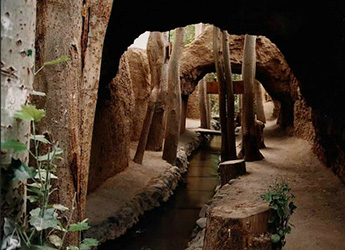
 Located in the Turpan Basin of Xinjiang, the Turpan Karez Paradise (Karez Water System) is one of the greatest ancient irrigation achievements in China. Developed by local Uyghur communities, this remarkable underground water network solved the challenge of providing water in one of the hottest and driest regions of China.
The word “Karez” means “well” in the Uyghur language. Together with the Dujiangyan Irrigation System and the Grand Canal, the Karez System is considered one of China’s three major ancient water projects.
How the Karez Water System Works
The Karez system was designed to make use of natural resources from the surrounding mountains. Meltwater from the Tianshan Mountains and nearby Flaming Mountains flows underground through a carefully designed network of channels.
Unlike modern pumping systems, Karez relies entirely on gravity. Water moves naturally from higher areas to lower areas through gently sloping underground tunnels before reaching farmland and settlements.
A typical Karez system consists of four main parts:
* Vertical wells for accessing underground water
* Underground channels for transporting water
* Surface canals for distribution
* Small reservoirs for storage
Most Karez channels are around 3 kilometers long, while some of the longest systems extend 20–30 kilometers and include dozens of vertical wells.
Engineering Wisdom in the Desert
The Turpan Basin has an extremely hot and dry climate, with intense sunlight, strong winds, and high evaporation rates. Traditional open canals often lost large amounts of water due to evaporation, and sandstorms could easily bury surface waterways.
The Karez system solved these problems through underground construction:
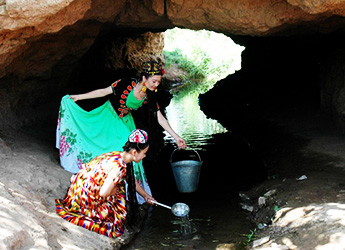 * Underground tunnels were built about 2 meters high and covered with earth to protect water from heat.
* Surface channels were kept narrow to reduce evaporation.
* Trees were planted along open waterways to provide shade and protect against wind and sand.
Because most of the water flows underground, Karez systems can provide a stable water supply regardless of seasonal changes, strong winds, or desert conditions.
History and Development of Karez Wells
The exact origin of the Karez system remains debated, but many Karez wells in Turpan were developed before or during the Qing Dynasty (1644–1911). Over centuries, these underground canals supported agriculture, settlements, and the famous grape-growing industry of Turpan.
At its peak, the Turpan Basin had more than 1,000 Karez wells, with underground channels stretching over 5,000 kilometers in total.
With the development of modern irrigation technologies, many traditional Karez systems have gradually declined. Today, around 300 Karez wells remain active, supplying an important portion of agricultural water in the Turpan area.
Visiting Turpan Karez Museum
For travelers interested in ancient technology and local culture, the Turpan Karez Museum is the best place to learn about this extraordinary water system.
The museum features:
* Historical photographs and models
* Exhibitions explaining Karez construction
* Underground tunnels where visitors can observe the water channels firsthand
A visit to the Karez Museum offers a fascinating insight into how ancient communities adapted to one of the harshest desert environments in China.
Cultural Significance
The Karez Water System is more than an irrigation project; it represents the intelligence, creativity, and perseverance of generations of people living in the Turpan Basin.
Together with the ancient Silk Road heritage of Turpan, including Jiaohe Ruins, Gaochang Ancient City, and Flaming Mountain, the Karez system demonstrates how human civilization flourished in the desert through innovation and adaptation.