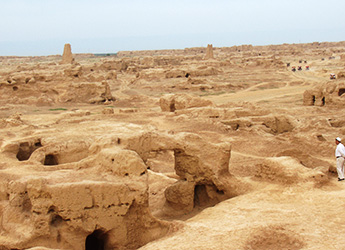
 Located about 47 kilometers southeast of Turpan City and near the northern foothills of the Flaming Mountains, the Gaochang Ancient City is one of the most important historical sites along the ancient Silk Road. Known as the “King City” by the Uyghur people, Gaochang was once the political, economic, and cultural center of the Turpan Basin and one of the largest ancient cities in western China.
Together with the Jiaohe Ruins, Gaochang represents one of the best-preserved ancient city sites in Xinjiang, offering visitors a glimpse into the civilizations that flourished along the Silk Road.
Layout of Gaochang Ancient City
The ancient city of Gaochang covers a vast area and was divided into three main sections:
* Outer City: A large square-shaped area surrounded by walls with a circumference of about 5 kilometers.
* Inner City: Located at the center of the city and used for residential and administrative purposes.
* Palace City: Situated in the northern part of Gaochang, serving as the political center for rulers.
The city was built with rammed earth and brick structures, many of which have survived despite centuries of desert winds and changing civilizations.
Walking through the ruins today, visitors can still see traces of ancient streets, temples, government buildings, residential areas, and defensive walls.
History of Gaochang Ancient City
The history of Gaochang dates back more than 2,000 years.
During the Han Dynasty (206 BC–220 AD), the area was known as Gaochangbi and became an important strategic location for controlling trade routes between China and Central Asia.
Later, Gaochang developed into the capital of several powerful kingdoms:
* During the Northern Wei Dynasty (386–534), it became the center of the Gaochang Kingdom.
* During the early Tang Dynasty (618–907), the Tang government established the Xizhou (West Prefecture) here, strengthening its control over the western regions.
As an important Silk Road hub, Gaochang connected China with Central Asia, Persia, and beyond. Merchants, monks, diplomats, and travelers passed through the city, bringing different cultures, religions, and artistic traditions.
However, centuries of warfare and political changes gradually weakened Gaochang. Around the 14th century, conflicts destroyed the city, and by approximately 1400, Gaochang was abandoned after being burned during regional conflicts.
Most of the surviving ruins today belong to the later Uyghur Gaochang period.
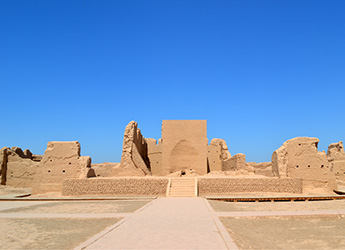 Gaochang and Silk Road Civilization
At its peak, Gaochang was a multicultural city where different religions and traditions existed side by side. Buddhism played a particularly important role, and many temples, monasteries, and religious artworks were created here.
The city served as an important center for:
* Silk Road trade
* Buddhist culture
* Agriculture in the Turpan Basin
* Political administration of the western regions
Its location between China and Central Asia made Gaochang a key bridge for cultural exchange.
Astana Ancient Tombs: Underground Museum of Gaochang
About 40 kilometers from Turpan City, in the northern part of the Gobi Desert, lie the Astana Tombs.
These tombs served as a public cemetery for the residents of Gaochang from around the Western Jin Dynasty (3rd century) to the Tang Dynasty (8th century).
Thousands of valuable historical artifacts have been discovered here, including:
* Ancient manuscripts
* Painted murals
* Wooden documents
* Earthen figurines
* Textiles and silk products
* Coins
* Pottery, bronze, iron, gold, and silver objects
* Well-preserved mummies
Because these discoveries provide detailed information about daily life, religion, economy, and social customs over more than 500 years, Astana Tombs are often called the “Living Historical Archives” and the “Underground Museum” of the Turpan region.
Visiting Gaochang Ancient City
Today, Gaochang Ancient City is one of Turpan’s most important archaeological attractions. Visitors can explore the vast desert ruins and imagine the former glory of a Silk Road kingdom.
Highlights include:
* Ancient city walls
* Palace ruins
* Buddhist temple remains
* Desert landscapes
* Historical connection with the Silk Road
For travelers interested in history, archaeology, and ancient civilizations, Gaochang offers an unforgettable journey into the heart of Silk Road history.