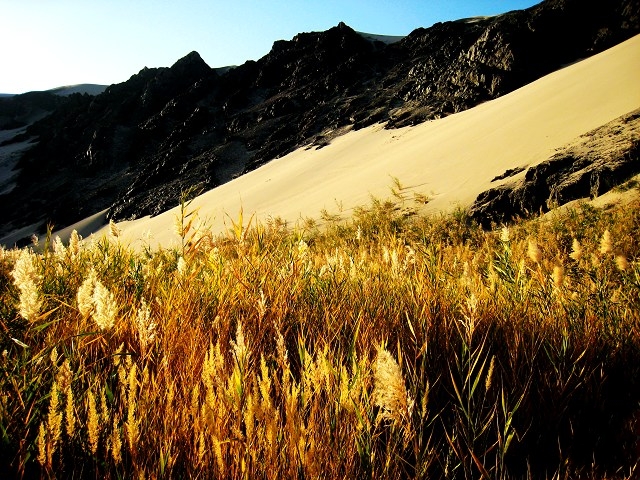
 The Taklamakan Desert is the largest desert in China and one of the most famous deserts in the world. Located in the center of the Tarim Basin in southern Xinjiang, it covers an area of more than 337,000 square kilometers and is considered the second-largest shifting-sand desert on Earth, after the Rub’ al Khali Desert.
With endless sand dunes, extreme weather conditions, and mysterious legends, Taklamakan has long been known as the “Sea of Death.” Despite its harsh environment, the desert is also a place of remarkable natural beauty, ancient Silk Road history, and valuable natural resources.
Meaning and Legend of Taklamakan
The name “Taklamakan” is traditionally believed to come from the Uyghur language and is often interpreted as meaning “once you enter, you may never come out.” This reflects the fear and respect that local people have held toward the vast and unpredictable desert.
According to a local legend, a supernatural being wanted to help the people living around the Tarim Basin. He possessed two magical treasures: a golden axe and a golden key.
He gave the golden axe to the Kazakh people, who used it to split the Altai Mountains and bring water to their farmland. He planned to give the golden key to the Uyghurs so they could open the treasure house of the Tarim Basin, but his daughter accidentally lost the key. In anger, he imprisoned her in the basin, and the enormous Taklamakan Desert was created.
Although this is only a legend, it reflects the deep connection between local cultures and the powerful natural environment.
A Sea of Moving Sand
Taklamakan is famous for its enormous sand dunes. Many dunes rise more than:
* 100 meters high
* Some exceeding 300 meters
Driven by strong desert winds, the dunes constantly shift. Historically, moving sands advanced by more than 100 meters each year in some areas, threatening nearby oasis settlements and agricultural land.
The desert’s extreme conditions include:
* Extremely low rainfall
* Strong winds
* Huge temperature differences between day and night
* Limited vegetation
For centuries, these conditions made crossing the desert one of the greatest challenges for travelers along the Silk Road.
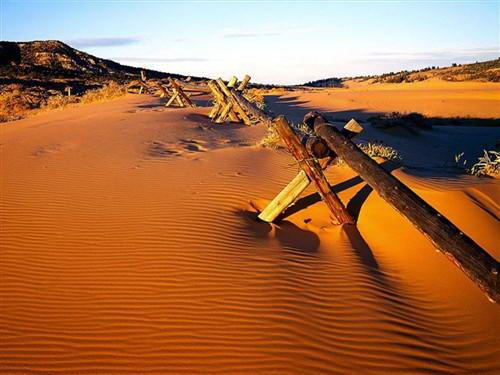 Desertification Control and Green Projects
Over the past decades, extensive efforts have been made to protect settlements and ecosystems around Taklamakan.
Local communities and scientists have planted drought-resistant vegetation, including:
* Diversiform-leaved poplar trees
* Rose willow
* Pomegranate trees
* Mulberry trees
Large-scale shelterbelt projects have helped reduce the impact of sandstorms and improve conditions around desert oases.
As vegetation has increased, wildlife has also gradually recovered. Today, many species of birds inhabit areas within and around the desert, demonstrating the ability of nature to adapt even in extreme environments.
Taklamakan Desert Highway
The discovery of natural resources, including groundwater, oil, and natural gas, led to the development of transportation routes across the desert.
One of the most impressive engineering achievements is the Tarim Desert Highway, which crosses the heart of Taklamakan.
Completed in 1995, the highway stretches approximately 522 kilometers and became the world’s longest desert highway at the time of its construction.
The road allows travelers and workers to cross the “Sea of Death” while connecting remote areas of the Tarim Basin.
Today, driving across the desert highway offers a rare opportunity to experience:
* Endless sand dunes
* Desert landscapes
* Remote oasis villages
* The dramatic contrast between barren desert and green settlements
Silk Road and Ancient Civilizations
Although Taklamakan is one of the harshest environments on Earth, it played a crucial role in the ancient Silk Road.
Ancient cities and kingdoms once flourished around its edges, supported by oasis agriculture and trade routes. Important historical sites near the desert include:
* Niya Ruins
* Dandan-Uiliq Ruins
* Khotan Kingdom Ruins
These archaeological discoveries reveal the rich civilizations that existed along the southern Silk Road.
Visiting Taklamakan Desert
Today, travelers can explore the Taklamakan Desert through organized desert tours and scenic routes.
Popular experiences include:
* Driving the Tarim Desert Highway
* Visiting desert-edge oasis towns
* Exploring Silk Road ruins
* Photographing sunrise and sunset over sand dunes
* Experiencing Uyghur desert culture
The Taklamakan Desert is not simply a barren wilderness. It is a place where ancient civilizations, natural forces, and human perseverance have interacted for thousands of years.