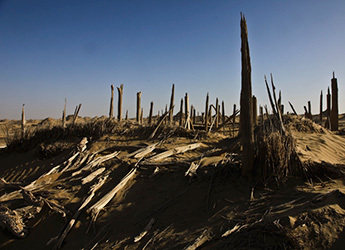
 Located approximately 150 kilometers north of Minfeng County in southern Xinjiang, the Niya Ruins are one of the most important archaeological sites along the ancient Silk Road. Hidden deep in the Taklamakan Desert, the ruins preserve the remains of an ancient oasis civilization that flourished more than 2,000 years ago.
Covering an area of about 220 square kilometers, the site contains traces of ancient settlements, irrigation canals, river channels, residential areas, and agricultural remains. Its remote desert location and remarkable preservation have made Niya one of the most significant discoveries for understanding ancient life in the Tarim Basin.
History of Niya and the Jingjue Kingdom
According to historical research, the Niya Ruins are generally believed to be the remains of the ancient Jingjue Kingdom (精绝国), which existed during the Han Dynasty period.
The kingdom was recorded in ancient Chinese historical documents as one of the small oasis states along the southern Silk Road. During the later Eastern Han Dynasty (25–220 AD), Jingjue became associated with the Shanshan Kingdom, and later came under the influence of the Wei and Jin dynasties.
Due to its location along an important Silk Road route, Niya served as a cultural and commercial exchange center connecting China with Central Asia.
Archaeological Discoveries at Niya Ruins
The dry desert environment helped preserve a large number of valuable artifacts, offering rare insights into the daily lives of ancient residents.
Archaeologists have discovered:
* Ancient manuscripts and wooden documents
* Silk and wool textiles
* Coins from different historical periods
* Wooden tools and household items
* Iron axes, sickles, and farming equipment
* Pottery jars and storage containers
* Remains of preserved crops and food
Among the discoveries were agricultural products such as wheat, barley, millet, vegetables, and melon seeds, showing that the ancient inhabitants developed farming systems despite living in a harsh desert environment.
The discovery of wooden slips with Chinese characters provided important evidence of administrative activities and cultural exchanges between the oasis kingdom and ancient Chinese dynasties.
Life in the Ancient Oasis Civilization
The ruins reveal that Niya was once a thriving settlement supported by sophisticated irrigation networks. Ancient canals and waterways allowed residents to cultivate crops and maintain a stable agricultural society in the desert.
Household remains, farming tools, animal bones, and storage facilities show that people here lived a relatively organized life, combining agriculture, handicrafts, and Silk Road trade.
The discovery of objects made from wood, copper, iron, pottery, stone, and textiles demonstrates the advanced craftsmanship and diverse cultural connections of the ancient Niya civilization.
Visiting Niya Ruins
Due to its remote location in the Taklamakan Desert, Niya Ruins are mainly visited by archaeology enthusiasts, history lovers, and adventurous travelers exploring southern Xinjiang.
A visit to Niya provides a unique opportunity to experience:
* Ancient Silk Road history
* Desert archaeological landscapes
* The remains of a forgotten oasis kingdom
* The relationship between human civilization and desert environments
As one of the most mysterious ancient sites in Xinjiang, Niya Ruins offer a fascinating window into the lost civilizations that once flourished along the Silk Road.