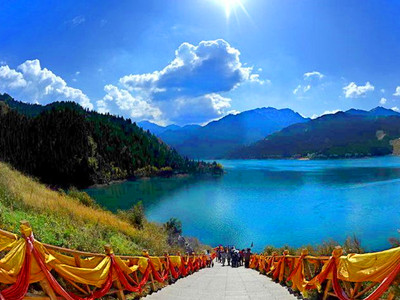
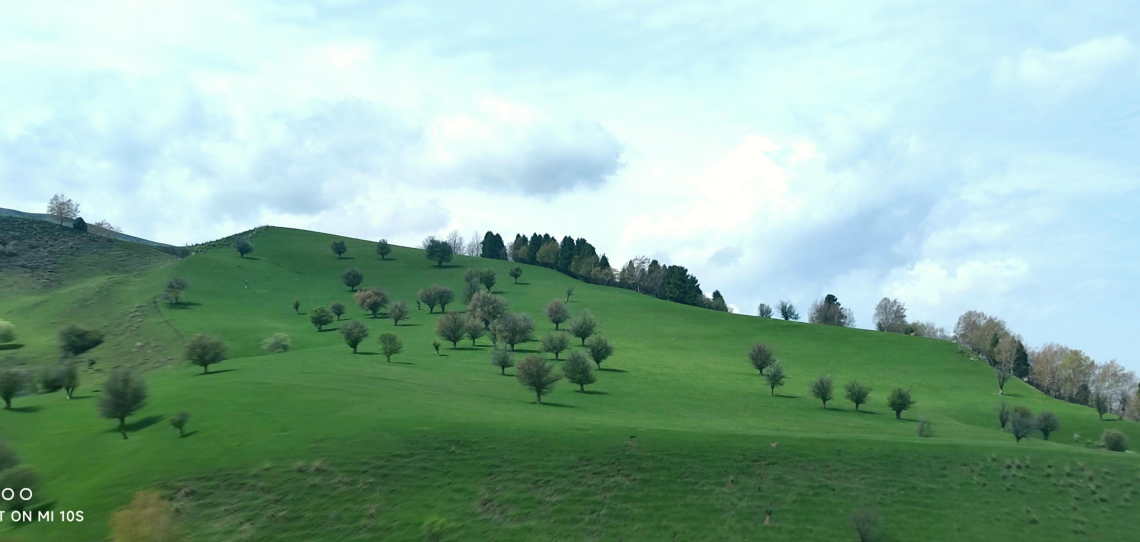
 Kanas Lake is located in Burqin County, Altay Prefecture, Xinjiang Uygur Autonomous Region, in the northernmost part of China near the borders of Kazakhstan, Russia, and Mongolia. Fed by glacial meltwater from the Friendship Peak (Youyi Peak) of the Altai Mountains and seasonal precipitation, Kanas Lake sits at an elevation of 1,374 meters above sea level. Covering an area of 45.73 square kilometers, with a maximum depth of 188.5 meters, it is recognized as China’s deepest alpine moraine lake, holding approximately 5.38 billion cubic meters of freshwater.
The name “Kanas” comes from the Mongolian language and is commonly interpreted as “beautiful, rich, and mysterious lake.” Surrounded by snow-capped mountains, pristine forests, rivers, grasslands, and colorful alpine meadows, Kanas is one of the most spectacular destinations in Xinjiang. The scenic area also preserves ancient rock paintings, historical relics, and the unique traditions of the local Tuva (Tuvan) people, giving it exceptional ecological, cultural, and scientific value.
The Mysteries of Kanas Lake
Kanas Lake is famous for several legendary natural wonders that have fascinated visitors for decades.
One of its most distinctive features is the Dead Tree Dike, a natural barrier formed by thousands of ancient tree trunks carried downstream and accumulated at the upper reaches of the lake.
Another enduring mystery is the legendary “Kanas Lake Monster.” Local folklore tells of a giant creature that occasionally appears in the lake and was once believed to drag horses into the water. While no scientific evidence supports the legend, many researchers believe the sightings may have been exceptionally large Hucho taimen (Siberian taimen) or other large freshwater fish, adding an air of mystery to this remarkable destination.
After summer rainstorms, visitors may also witness the spectacular “Buddha’s Light”—an atmospheric optical phenomenon similar to a Brocken Spectre, where sunlight projects a colorful halo through drifting clouds and mist.
 Top Attractions at Kanas Lake
Camel Neck Bay
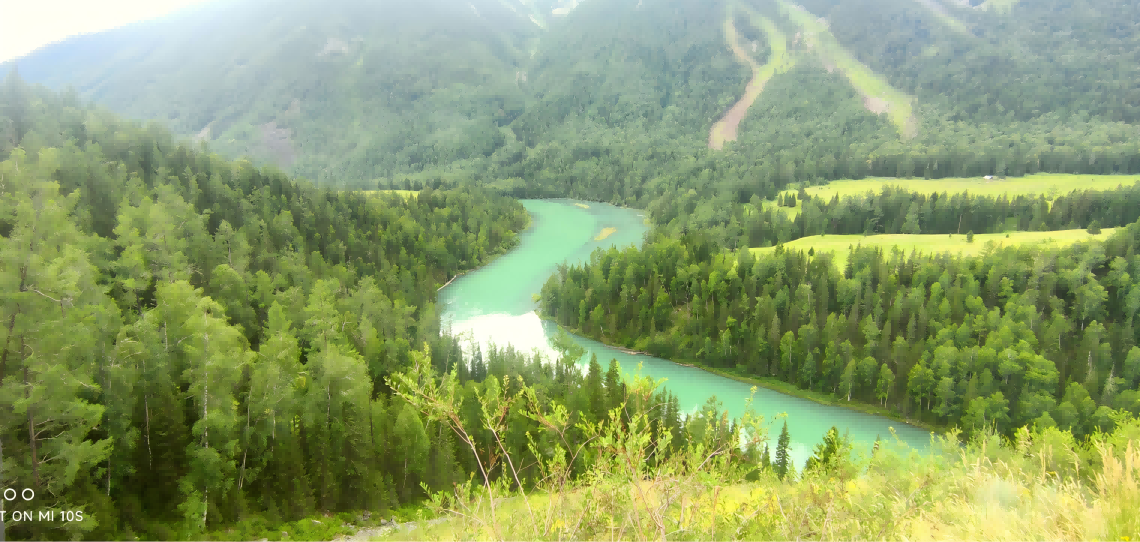
Located about 1 kilometer south of Kanas Lake, Camel Neck Bay marks both the entrance to the lake and the source of the Kanas River. The river bends gracefully like the neck of a camel, giving the site its name. Rolling meadows stretch along the eastern bank, while ancient virgin forests cover the western side, creating one of the most picturesque landscapes in the region.
Moon Bay (Blue Lake)
Often referred to as Moon Bay, this section of Kanas Lake is famous for its constantly changing colors. Depending on the season, weather, sunlight, and glacial sediment, the water transforms from deep gray in spring to emerald green, turquoise, sapphire blue, and dark jade throughout the year.
The colorful forests surrounding the lake during autumn create one of China’s most breathtaking natural landscapes, making Moon Bay a paradise for photographers.
Wolong Bay
Located approximately 10 kilometers from Kanas Lake, Wolong Bay (Sleeping Dragon Bay) is one of the park’s signature viewpoints. A lush sandbar in the center of the river resembles a dragon resting peacefully on the water, giving the bay its poetic name.
Dense forests, crystal-clear water, and a wooden bridge spanning the river create a perfect vantage point for viewing both the tranquil bay and the rushing Kanas River.
 Fish Watching Pavilion
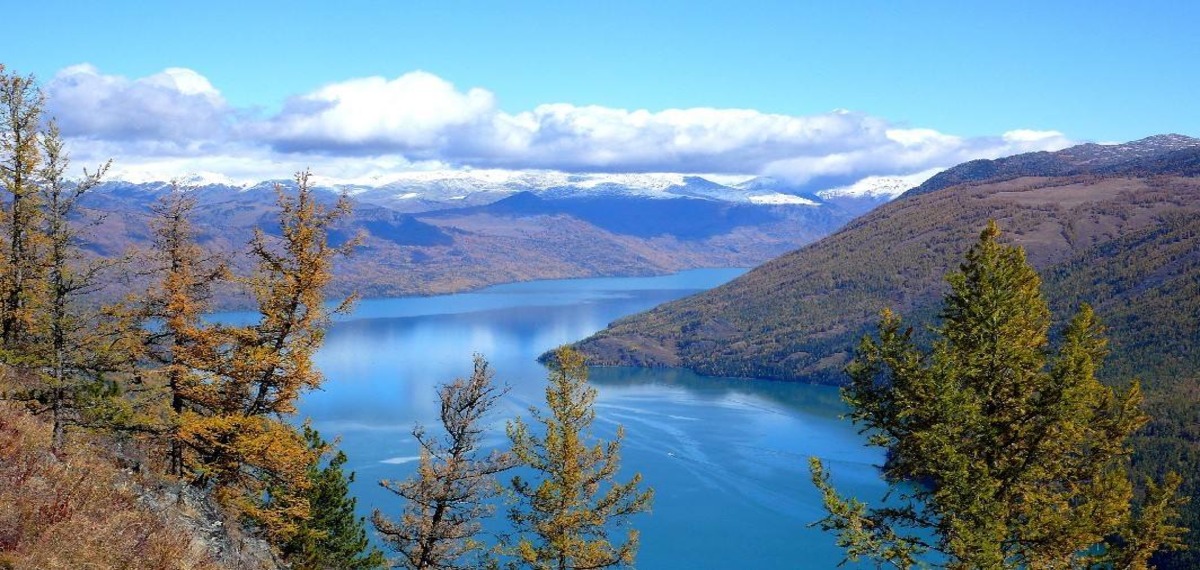
The Fish Watching Pavilion is the highest and most famous observation point in the Kanas Scenic Area. Originally constructed in 1987, it offers panoramic views of the entire lake, surrounding forests, and distant snow-covered Altai Mountains.
On misty mornings or during sunset, clouds drift across the lake while golden light illuminates the landscape, creating one of the most iconic views in Xinjiang. It is also the best location to search for the legendary “Kanas Lake Monster” and observe large fish swimming in the crystal-clear water below.
Best Time to Visit Kanas Lake
Kanas Lake offers spectacular scenery throughout the year, with each season presenting a unique experience:
* Spring (May–June): Fresh greenery, melting snow, and vibrant alpine flowers.
* Summer (July–August): Pleasant temperatures, emerald forests, and ideal hiking conditions.
* Autumn (September–October): Brilliant golden birch forests and colorful mountain landscapes—widely regarded as the best time to visit.
* Winter (November–March): Snow-covered forests and frozen lakes create a magical winter wonderland.
Why Visit Kanas Lake?
Kanas Lake is one of China’s most beautiful natural destinations, combining pristine alpine scenery, colorful forests, glacial lakes, rich biodiversity, and fascinating local legends. Whether you are interested in photography, hiking, wildlife, cultural experiences, or simply enjoying breathtaking landscapes, Kanas offers an unforgettable journey into the heart of the Altai Mountains.