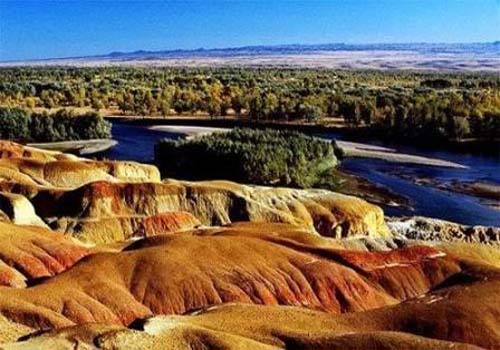
 Located on the southern edge of the Taklamakan Desert in Xinjiang, Hotan (also spelled Hetian) has been an important oasis city along the southern route of the ancient Silk Road for more than 2,000 years.
Known historically as Yutian, Hotan flourished during the Sui (581–618) and Tang (618–907) dynasties when the Silk Road reached its golden age. As one of the major commercial centers of ancient Xinjiang, Hotan became famous for silk production, trade, Buddhism, and its precious Hetian jade.
Today, this “Silk Capital of Xinjiang” still preserves numerous historical sites, desert landscapes, traditional crafts, and ethnic cultural traditions, making it one of the most fascinating destinations in southern Xinjiang.
Ancient Cities and Silk Road Heritage
For centuries, Hotan served as a meeting point between Chinese civilization and Central Asian cultures. Several ancient cities buried in the desert provide evidence of its former prosperity.
Niya Ancient City
The Niya Ruins is one of the most important archaeological sites in Hotan and is often called the “Pompeii of the East.”
Located in the desert about 150 kilometers north of Minfeng County, the ruins cover a vast area containing remains of ancient streets, houses, irrigation channels, and agricultural fields.
The site is believed to have been the former capital of the ancient Jingjue Kingdom, which existed during the Han Dynasty period. Since its discovery by British explorer Aurel Stein in the early 20th century, Niya has attracted archaeologists from around the world.
Thousands of valuable artifacts have been unearthed, including:
* Wooden documents
* Silk fabrics
* Coins
* Tools
* Pottery
* Household items
* Agricultural remains
These discoveries provide important information about life along the ancient Silk Road.
 Other Ancient Cities
Besides Niya, Hotan also preserves other historical sites, including:
* Mallikurwatur Ancient City
* Yotkan (Yoktan) Ancient City
Artifacts from these ancient settlements are displayed at the Hotan Museum, which introduces visitors to thousands of years of regional history.
Taklamakan Desert Adventure
Hotan is located near the southern edge of the Taklamakan Desert, the second-largest shifting-sand desert in the world.
The famous Taklamakan Desert, known historically as the “Sea of Death,” offers dramatic desert scenery and adventure experiences.
The Tarim Desert Highway, crossing the desert from north to south, provides travelers with a unique opportunity to experience:
* Endless sand dunes
* Desert landscapes
* Remote oasis settlements
* The mysterious atmosphere of the desert interior
For adventure travelers, drifting on the Hotan River during the summer flood season (usually from June to August) is an exciting outdoor activity.
Kunlun Mountains and Muztag Landscape
To the south of Hotan lies the magnificent Kunlun Mountains, one of the world’s great mountain ranges.
The Muz Mountain area in Qira (Cele) County is part of the middle ranges of the Kunlun Mountains. With peaks exceeding 6,000 meters above sea level, snow-covered summits, and dramatic mountain roads, the region attracts climbers and nature lovers seeking remote landscapes.
The journey through this area offers spectacular views of:
* High mountain valleys
* Snow-covered peaks
* Desert-mountain transitions
* Traditional rural landscapes
Hotan Oasis: A Green Miracle in the Desert
Surrounded by desert, the Hotan Oasis has long been an important agricultural center.
Local farmers have developed unique farming techniques to protect crops from harsh desert conditions. In Bageqi Town of Hotan County, grapevines are planted along roads and fields, creating impressive grape corridors.
These vineyards transform the desert oasis into a green landscape and reflect the agricultural wisdom of local communities.
Hotan Jade: The Treasure of the Kunlun Mountains
Hotan is world-famous for Hetian jade, one of the most valued traditional Chinese jades.
The Kunlun Mountains have been regarded as an important source of jade since ancient times. The main jade-producing areas include:
* Yulong Kashgar River (White Jade River)
* Karakash River (Black Jade River)
* Alemasi Jade Mine in Yutian County
For thousands of years, mountain floods carried jade stones from the Kunlun Mountains into river valleys. Continuous washing and polishing by water transformed these stones into valuable jade.
Local people traditionally searched the riverbeds for jade after floods, and today many visitors travel to Hotan hoping to experience jade culture and perhaps discover their own precious stone.
Visiting Hotan
Hotan offers travelers a rare combination of:
* Ancient Silk Road history
* Desert exploration
* Kunlun Mountain scenery
* Uyghur culture
* Traditional handicrafts
* Famous jade markets
From ancient ruins hidden in the desert to green oasis villages and snow-covered mountains, Hotan reveals the extraordinary relationship between people, nature, and the Silk Road over thousands of years.