Located on Wangbori Mountain in Lhasa, about 57 kilometers east of the city center, Ganden Monastery is one of the most important Tibetan Buddhist monasteries and the spiritual birthplace of the Gelug School of Tibetan Buddhism. Founded in the 15th century by Tsongkhapa, the founder of the Gelug School, it is the oldest and most significant of the six major Gelug monasteries in Tibet.
Together with Drepung Monastery and Sera Monastery, Ganden Monastery is recognized as one of the “Three Great Monasteries of Lhasa.” At its height, the monastery was home to more than 4,000 monks and served as an important center for Buddhist study, religious practice, and cultural exchange.
History of Ganden Monastery
Ganden Monastery was established in 1417 during the Ming Dynasty by Tsongkhapa, who carried out a major religious reform in Tibet and founded the Gelug School. The monastery became the first monastery of this tradition and later gave its name to the original title of the Gelug School, “Gandenpa.”
The full Tibetan name of Ganden Monastery reflects its meaning as a place of ultimate joy and spiritual perfection. In 1733, Emperor Yongzheng of the Qing Dynasty granted the monastery the title “Yongtai,” further recognizing its historical importance.
For centuries, Ganden Monastery played a central role in Tibetan Buddhism. It was not only a place for religious ceremonies but also an important institution for Buddhist philosophy, scripture studies, and the training of senior monks.
Architecture and Scenic Features
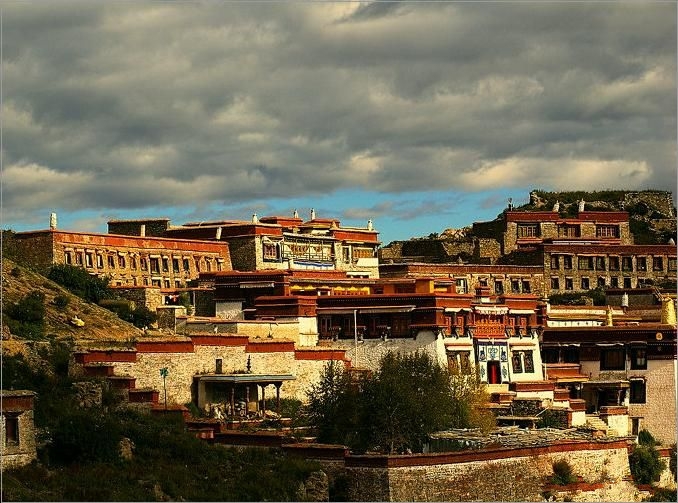
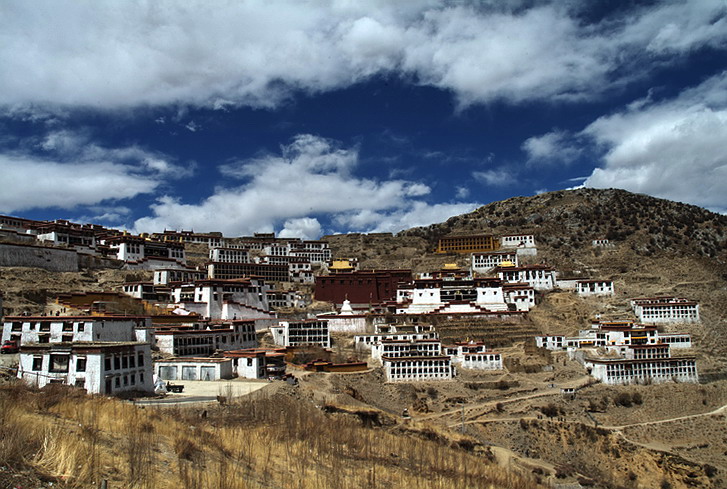
Situated at an altitude of around 3,800 meters on Wangbori Mountain, Ganden Monastery blends harmoniously with the surrounding highland landscape. The monastery complex follows the natural shape of the mountain, with magnificent halls, prayer halls, residences, and meditation areas built along the slopes.
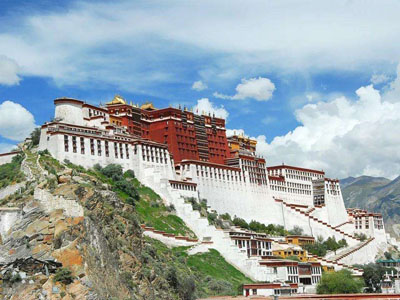
Compared with many Tibetan religious sites, Ganden Monastery has an especially grand scale, with a complex said to be several times larger than the Potala Palace. Its traditional Tibetan architecture, golden roofs, white walls, and spectacular mountain views create a remarkable atmosphere for visitors.
The monastery is also famous for its panoramic views of the Lhasa River Valley. Standing on the mountain overlooking the surrounding landscape provides travelers with an unforgettable experience of Tibet’s natural beauty and spiritual heritage.
Religious Significance and Legend
According to Tibetan Buddhist tradition, Ganden Monastery holds a special connection with Tsongkhapa. A famous legend says that when Tsongkhapa was born, a sacred tree grew from the place where his umbilical cord blood touched the ground. It was believed that the tree had 100,000 leaves, and each leaf carried an image of a lion roaring toward the Buddha, symbolizing the power and wisdom of Buddhist teachings.
The monastery also houses important religious treasures, including statues, scriptures, murals, and relics related to Tsongkhapa and the development of the Gelug School.
Visiting Ganden Monastery
Ganden Monastery is one of the most rewarding cultural attractions near Lhasa for travelers interested in Tibetan Buddhism, history, and architecture. Visitors can explore ancient prayer halls, observe monks conducting religious practices, walk around the sacred pilgrimage route, and enjoy breathtaking views of the Tibetan plateau.
The monastery can usually be reached by bus from the Jokhang Temple area in Lhasa. The journey takes about two hours, making it a popular day trip destination from Lhasa.
With its deep historical roots, impressive architecture, and spiritual importance, Ganden Monastery is a must-visit destination for anyone exploring Tibetan culture and the religious heritage of Tibet.