Located at the foot of Gambo Utse Mountain on the western outskirts of Lhasa, Drepung Monastery is one of the most important Tibetan Buddhist monasteries and one of the “Three Great Monasteries of Lhasa,” together with Ganden Monastery and Sera Monastery. Founded in 1416 by Jamyang Choje, a disciple of Tsongkhapa, the founder of the Gelug School, Drepung played a central role in Tibet’s religious, cultural, and political history.
At its peak, Drepung Monastery was considered the largest monastery in the world, housing more than 10,000 monks. Today, it remains one of Tibet’s most significant cultural heritage sites, preserving magnificent Tibetan architecture, ancient scriptures, religious artwork, and centuries-old Buddhist traditions.
History of Drepung Monastery
Jamyang Choje established Drepung Monastery in 1416 as part of the expansion of the Gelug School of Tibetan Buddhism. According to historical accounts, he received financial support from wealthy friends and supporters, allowing the monastery to develop rapidly. Within only two years of its foundation, Drepung had already attracted around 2,000 monks.
The monastery’s name, “Drepung,” means “Rice Heap,” symbolizing abundance and prosperity. Over the following centuries, it became a major center for Buddhist learning and one of the most influential religious institutions in Tibet.
In 1530, when the Second Dalai Lama established his residence at Ganden Palace within Drepung Monastery, the monastery became the main residence of successive Dalai Lamas and the political center of the Gelug tradition. The tombs of the Second, Third, and Fourth Dalai Lamas are located inside Drepung Monastery.
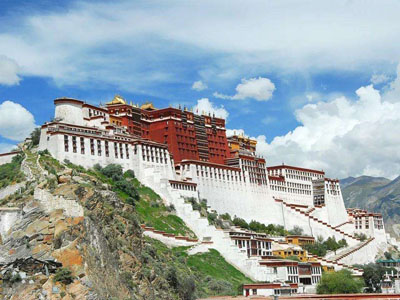
After the Fifth Dalai Lama built the Potala Palace in 1645, the Potala Palace became Tibet’s main political and spiritual center, while Drepung continued to maintain its important religious influence.
Monastic Colleges and Buddhist Studies
When Drepung Monastery was first established, it consisted of seven tratsangs (Buddhist colleges), each led by one of Jamyang Choje’s disciples. As the number of monks increased, the monastery was reorganized in the 18th century into four major colleges:
* Loseling College – The largest and most influential college, once containing numerous study residences known as khangtsens.
* Gomang College – Focused on Buddhist philosophy and academic studies.
* Deyang College – Dedicated to Buddhist teachings and monastic education.
* Ngagpa College – Specialized in esoteric Buddhist practices and tantric teachings.
Each college functioned almost like an independent institution, with its own abbot, curriculum, dormitories, kitchens, and administrative system. This organization helped Drepung become one of the most advanced centers of Tibetan Buddhist education.
Political and Cultural Importance
Drepung Monastery was not only a religious institution but also a powerful political center in Tibet. For centuries, it played an important role in regional governance and the administration of Lhasa.
The abbot of the Tshomchen assembly hall held considerable influence in Tibetan affairs, reflecting the monastery’s close connection with the political system of the time. Many highly respected Buddhist scholars and spiritual leaders were trained at Drepung, making it a symbol of Tibetan intellectual and religious traditions.
Architecture and Attractions
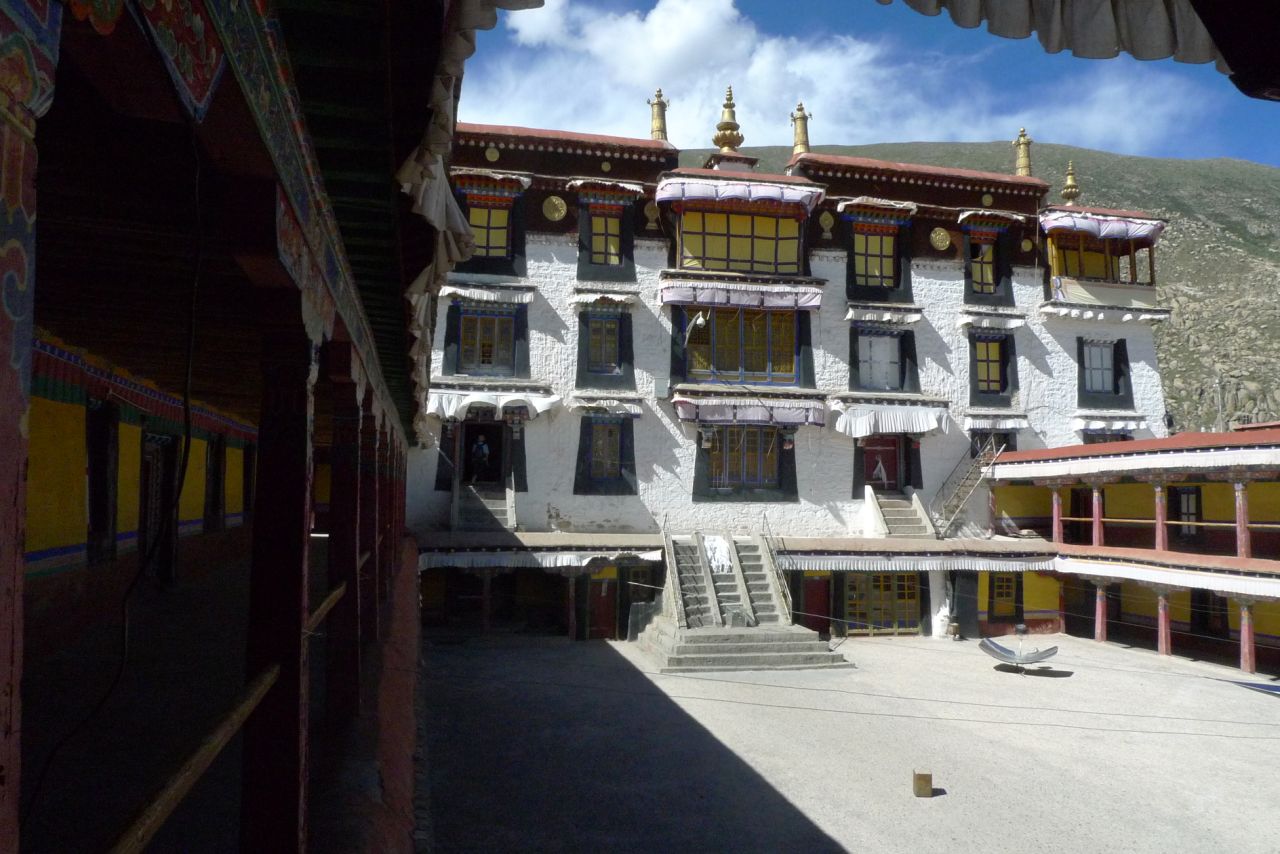
Built along the mountain slopes, Drepung Monastery covers a vast area of whitewashed buildings, prayer halls, courtyards, and monk residences. Its traditional Tibetan architectural style blends harmoniously with the surrounding mountains.
Important sites inside the monastery include:
* Ganden Palace – The former residence of the Dalai Lamas before the construction of the Potala Palace.
* Tsochen Hall – The main assembly hall where monks gather for important religious ceremonies.
* Dalai Lama Tombs – The sacred burial sites of the Second, Third, and Fourth Dalai Lamas.
* Buddhist Scripture Collections – The monastery preserves valuable Buddhist texts, murals, and religious artifacts.
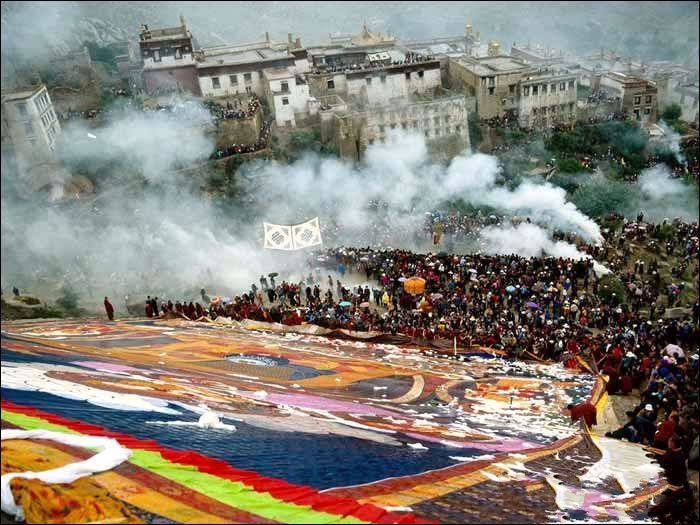
The annual Shoton Festival is another highlight associated with Drepung Monastery. During the festival, the famous giant Buddha thangka is displayed on the hillside, attracting thousands of pilgrims and visitors.
Visiting Drepung Monastery
Although the number of resident monks is much smaller today than during its golden age, Drepung Monastery remains one of the most important symbols of Tibetan Buddhism. Its impressive scale, historic significance, and preserved architecture make it an essential stop for travelers exploring Lhasa.
A visit to Drepung offers travelers the opportunity to discover the history of the Gelug School, experience traditional Tibetan Buddhist practices, and appreciate one of Tibet’s greatest cultural treasures.