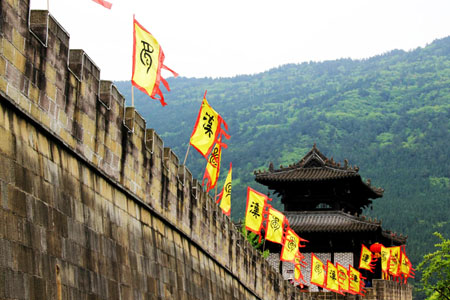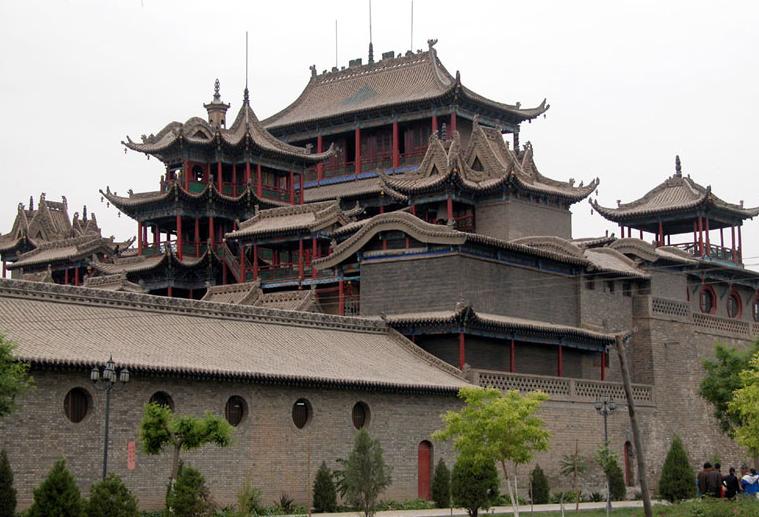
Located in Zhongwei City, Ningxia Hui Autonomous Region, about 170 kilometers southwest of Yinchuan, Gao Temple (Gao Miao Temple) is one of the most remarkable historical and cultural attractions in western Ningxia.
Originally built during the early Ming Dynasty (1368–1644), the temple has experienced several periods of destruction and reconstruction throughout history. It was damaged by a major earthquake in 1739, rebuilt and expanded afterward, and later destroyed again by fire in 1942. The present complex was rebuilt based on its historical design and remains an important example of ancient Chinese religious architecture.
Covering an area of approximately 4,000 square meters, Gao Temple is famous for its unique architectural style and its integration of multiple religious traditions.
A Unique Blend of Three Chinese Religions
Similar to the famous Hanging Monastery near Datong, Gao Temple is a rare religious complex that combines:
* Buddhism
* Taoism
* Confucianism
The temple also reflects the historical openness of Chinese religious culture, incorporating elements connected with other belief systems that influenced China throughout history.
Within the complex, visitors can see statues and religious images of important figures such as:
* Gautama Buddha
* The Jade Emperor
* The Holy Mother
These artworks demonstrate the coexistence of different philosophical and religious traditions in Chinese history.
 Magnificent Wooden Architecture
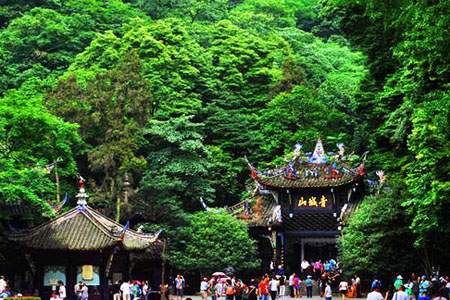
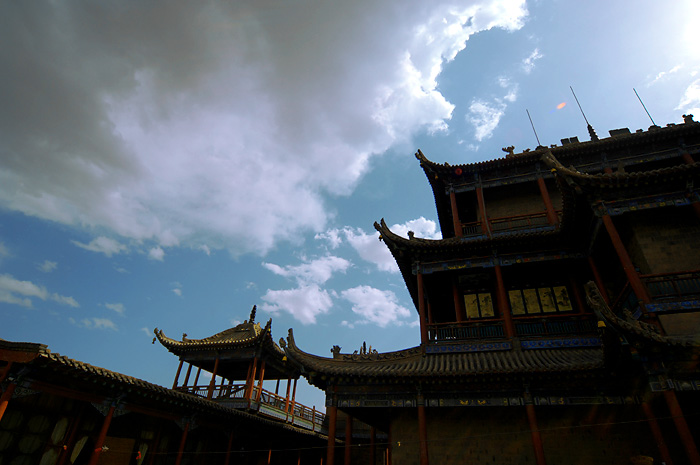
The current Gao Temple is mainly constructed with wood and is renowned for its impressive architectural layout.
The complex features:
* Multi-level wooden structures
* Layered pavilions
* Elegant balconies
* Overhanging roofs
* Intricate connections between buildings
With approximately 250 rooms, the temple presents a spectacular combination of traditional Chinese architectural techniques and religious symbolism.
Its unique arrangement of buildings creates a breathtaking view, with structures rising layer by layer above one another.
The Mysterious Underground “Hell” Exhibition
One of the most unusual features of Gao Temple is the underground area beneath the complex.
Originally used as an air-raid shelter during the uncertain years of the Cultural Revolution (1966–1976), the underground chambers were later transformed into a traditional Chinese religious-themed exhibition depicting the underworld.
The displays show scenes of mythical punishments in which evil spirits punish souls who failed to follow moral principles. Although dramatic in style, the exhibition reflects traditional Chinese beliefs about morality, justice, and the afterlife.
Visit Gao Temple in Zhongwei
With its extraordinary architecture, religious diversity, and fascinating underground exhibition, Gao Temple offers a unique cultural experience in Ningxia.
For travelers exploring Zhongwei and Ningxia, a visit to Gao Temple provides a deeper understanding of Chinese religious traditions, ancient architecture, and local history.