Located in Liaoning Province, Shenyang is the provincial capital and one of the most important cities in northeastern China. With a history spanning more than 2,000 years, Shenyang has played a significant role in Chinese history, especially as the birthplace and early capital of the Qing Dynasty before the imperial court moved to Beijing.
Today, Shenyang is not only a major transportation hub and commercial center of Northeast China but also a fascinating destination where visitors can explore royal palaces, imperial tombs, historical residences, and vibrant shopping streets.
1. Shenyang Imperial Palace — A Mini Forbidden City in Northeast China
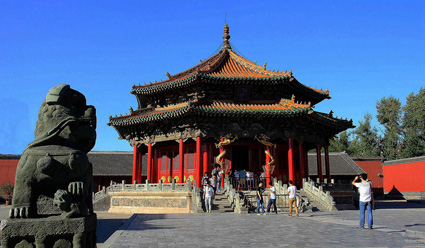
The Shenyang Imperial Palace (Mukden Palace) is one of the city’s most famous historical landmarks and a UNESCO World Heritage Site as part of the Imperial Palaces of the Ming and Qing Dynasties.
Built during the early Qing Dynasty, the palace represents the highest achievements of early Manchu palace architecture and reflects the unique history, traditions, and cultural identity of the Manchu people.
With its magnificent halls, elegant courtyards, and distinctive architectural style, Shenyang Imperial Palace is often described as a smaller version of Beijing’s Forbidden City. It provides visitors with a valuable glimpse into the early history of the Qing imperial family.
2. North Tomb (Zhaoling Tomb) — The Imperial Mausoleum of Huang Taiji
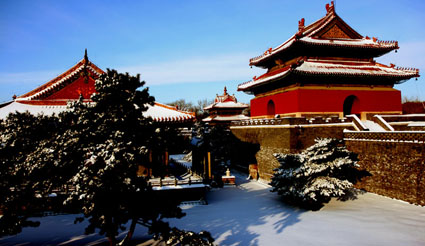
The North Tomb (Zhaoling / Zhao Mausoleum) is the burial place of Huang Taiji (1592–1643), the second emperor of the Qing Dynasty and the ruler who officially established the Qing imperial state.
Located in a peaceful area surrounded by gardens and ancient trees, the tomb complex features traditional Qing-style architecture, stone statues, grand gates, and beautifully designed landscapes.
The pathway leading to the tomb is lined with impressive stone animal sculptures, creating a solemn and majestic atmosphere. The combination of imperial architecture and natural scenery makes Zhaoling Tomb one of the most important historical attractions in Shenyang.
3. Former Residence of Zhang Zuolin and Zhang Xueliang — A Window into Modern Chinese History
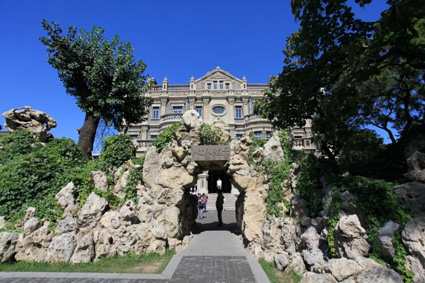
The Former Residence of Zhang Zuolin and Zhang Xueliang preserves the history of two influential figures in modern Chinese history.
Zhang Zuolin (1875–1928) was a powerful warlord who controlled Manchuria from 1916 to 1928. He was assassinated on June 4, 1928, when a bomb was planted by an officer of the Japanese Kwantung Army.
His son, Zhang Xueliang (1901–2001), later became the actual political leader of Manchuria and much of northern China after his father’s death.
The former residence combines traditional Chinese and Western architectural styles and displays historical documents, personal belongings, and exhibits related to the Zhang family, offering visitors insight into the political changes of early 20th-century China.
4. Zhongjie Pedestrian Street — The Heart of Shenyang Shopping and Culture
Zhongjie Pedestrian Street is one of Shenyang’s most famous commercial areas and a historic shopping destination in China.
Stretching approximately 1,500 meters, it is a vehicle-free street and is regarded as one of the earliest commercial pedestrian streets in China. Today, Zhongjie is filled with modern shopping malls, department stores, restaurants, and entertainment venues.
Beyond the main street, visitors can explore the surrounding alleys where numerous local markets offer a wide range of goods, souvenirs, snacks, and traditional products.
With its royal heritage, historic landmarks, and lively urban culture, Shenyang is an essential destination for travelers exploring Liaoning Province and the history of Northeast China.