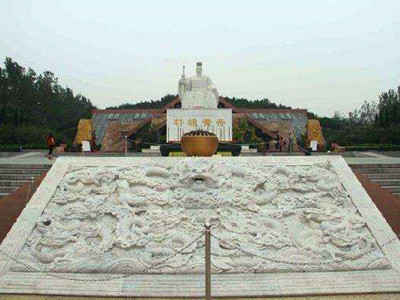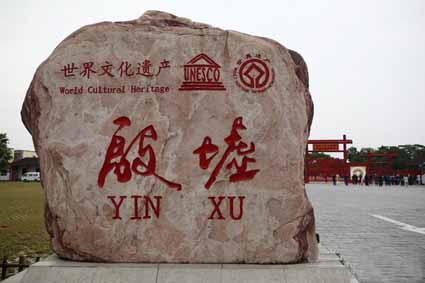
Located around Xiaotun Village in Yindu District, Anyang City, Henan Province, the Yin Dynasty Ruins (Yinxu) are the remains of the last capital of the Shang Dynasty (approximately 1600–1046 BC).
Stretching along both banks of the Huan River, Yin Dynasty Ruins represent one of the most important archaeological discoveries in China. It is recognized as the first ancient capital in China whose historical existence has been confirmed through written records, archaeological evidence, and oracle bone inscriptions.
The site provides valuable insights into the political system, religious practices, writing, architecture, and daily life of the late Shang Dynasty more than 3,000 years ago.
The Historical Importance of Yin Dynasty Ruins
During the Shang Dynasty, rulers from King Pan Geng to King Di Xin (also known as King Zhou of Shang) established their capital at this location for approximately 273 years.
The ruins include several important archaeological areas:
* Palace and Temple Area – The center of royal administration and religious activities
* Royal Cemetery Area – The burial place of Shang kings and nobles
* Huanbei Shang City Site – The remains of an earlier Shang capital area
Together, these sites form the magnificent archaeological complex known today as Yin Dynasty Ruins, revealing the extraordinary achievements of ancient Chinese civilization.
Discovery of Oracle Bones and Archaeological Excavation
The discovery of Yin Dynasty Ruins is closely connected with oracle bone inscriptions, the earliest known form of systematic Chinese writing.
At the beginning of the 20th century, the site attracted attention after oracle bones were discovered and collected. These inscriptions recorded important information about Shang Dynasty politics, religion, warfare, agriculture, and social life.
Formal archaeological excavations began in 1928, marking the beginning of modern archaeological research in China. Since then, thousands of valuable relics have been unearthed, including:
* Oracle bones with ancient Chinese characters
* Bronze ritual vessels
* Jade artifacts
* Weapons and tools
* Architectural remains
* Royal tombs
The discovery and excavation of Yin Dynasty Ruins was ranked No. 1 among China’s “Top 100 Significant Archaeological Discoveries” of the 20th century, highlighting its exceptional historical value.
UNESCO World Heritage Site
In 1961, Yin Dynasty Ruins was listed as a National Key Cultural Relics Protection Unit of China.
On July 13, 2006, the site was officially added to the UNESCO World Heritage List during the 30th World Heritage Convention.
UNESCO recognized Yin Dynasty Ruins for its outstanding contribution to understanding the development of ancient Chinese civilization, particularly in relation to:
* The early Chinese writing system
* Bronze culture
* Ancient urban planning
* Royal political systems
* Religious traditions and ancestor worship
Visiting Yin Dynasty Ruins in Anyang
Today, visitors can explore Yin Dynasty Ruins Museum and archaeological areas to experience the history of the Shang Dynasty and discover the origins of Chinese civilization.
For travelers interested in ancient history, archaeology, Chinese characters, and UNESCO World Heritage Sites, Yin Dynasty Ruins is one of the most important cultural attractions in Henan Province.
Together with other historical destinations such as Luoyang’s ancient capitals and Kaifeng’s Song Dynasty heritage, Anyang offers a deeper understanding of China’s long and fascinating history.