 As one of China’s most important cultural centers, Luoyang City has served as the capital of more than a dozen ancient dynasties, including the Xia Dynasty (approximately 2100–1600 BC) and the Eastern Zhou Dynasty (770–256 BC). With a history spanning thousands of years, Luoyang experienced remarkable prosperity, especially during the Tang Dynasty (618–907), when it became one of the wealthiest and most influential cities in China.
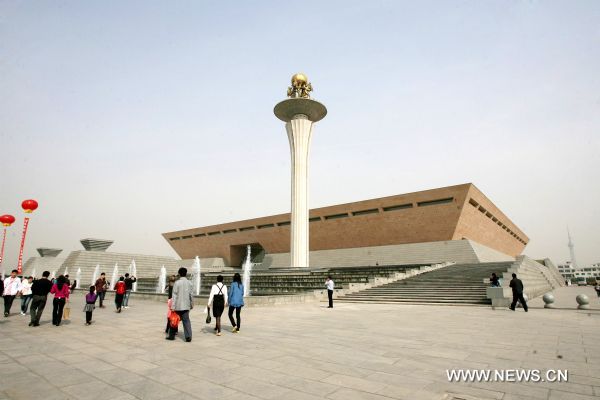
The city’s glorious past is beautifully preserved at the Luoyang Museum, which showcases the rich history, archaeology, and artistic achievements of ancient China.
A Modern Museum with a Rich Historical Collection
Originally located in downtown Luoyang, the museum was expanded to better display its extensive collection of cultural relics. The new Luoyang Museum was completed and opened to the public in 2009. It is located south of Niewan Village, Anle Town, next to the Sui and Tang Dynasty Ruins Botanical Garden.
The museum houses thousands of precious artifacts from different historical periods, offering visitors a fascinating journey through Chinese civilization. Among its many outstanding exhibits, several treasures are particularly noteworthy.
Highlights of Luoyang Museum’s Collection
Gold Seal from the Western Jin Dynasty
One of the museum’s remarkable artifacts is a gold seal from the Western Jin Dynasty (265–316 AD). The seal features a square base engraved with five Chinese characters in traditional seal-cutting style.
Although simple in design, the arrangement and craftsmanship demonstrate the elegance and precision of ancient Chinese seal art.
Glazed Ceramic Teapot
Another impressive exhibit is a glazed ceramic teapot featuring a flat base, a dragon-shaped handle, and a body decorated with brown glaze combined with grey-white spots.
The unique design and delicate colors create an elegant appearance, reflecting the advanced ceramic techniques of ancient Chinese craftsmen.
Tang Tri-Colored Glazed Pottery
The Tang Dynasty (618–907) is famous worldwide for its Tang tri-colored glazed pottery (Tang Sancai), a distinctive type of ceramic decorated with colorful glazes, traditionally including yellow, green, and blue.
Luoyang Museum displays many excellent examples of Tang Sancai, including a lifelike figure of a graceful woman that reflects the beauty standards and fashion of the Tang Dynasty. The figure wears a long brown gown, has her hair arranged in an elegant bun, and displays delicate facial makeup.
A closer look reveals the sophisticated craftsmanship behind Tang tri-colored pottery, making these pieces valuable examples of Tang Dynasty art.
Jade Figurine from the Warring States Period
The museum also displays a small jade figurine from the Warring States Period (475–221 BC). The figure is shown crouching with both hands crossed in front of the abdomen.
With high cheekbones, thick eyebrows, and a wide mouth, the mysterious figure wears a mask and a heart-shaped, short-sleeved garment. This precious jade carving provides important information for researching clothing styles and cultural practices during the Warring States period.
Replica of the Golden Throne from the Forbidden City
Another highlight is a replica of the famous Golden Throne from Beijing’s Forbidden City.
In ancient China, the original throne was exclusively used by emperors in the Hall of Supreme Harmony (Taihedian) within the Forbidden City. The Luoyang Museum replica was created at a 1:7 scale and features intricate dragon carvings decorated with jade and ruby embellishments, representing imperial power and craftsmanship.
Visiting Luoyang Museum
The exhibits mentioned above represent only a small part of the museum’s extensive collection. With artifacts covering many different dynasties, the Luoyang Museum provides an excellent opportunity to explore the origins and development of Chinese civilization.
For travelers interested in Chinese archaeology, ancient history, art, and culture, Luoyang Museum is an essential stop during a Luoyang tour.