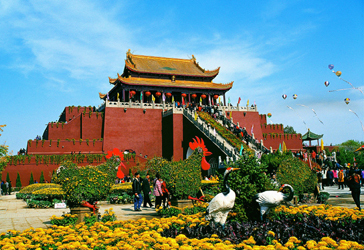
 As one of the seven great ancient capitals of China, Kaifeng City is famous for its rich history, ancient architecture, and cultural heritage. Among the many historical attractions in Kaifeng, Dragon Pavilion Park (Longting Park) is one of the most popular destinations for travelers exploring Henan Province.
Located in the northern part of Kaifeng’s historic city area, Dragon Pavilion Park combines royal history, traditional Chinese architecture, beautiful lakes, and seasonal flower displays, making it a must-visit attraction during a Henan tour.
Dragon Pavilion – The Symbol of Kaifeng’s Royal Heritage
Covering an area of approximately 83.13 acres, Dragon Pavilion Park is centered around the famous Dragon Pavilion, with nearly half of the park occupied by two scenic lakes: East Lake (Pan Family Lake) and West Lake (Yang Family Lake).
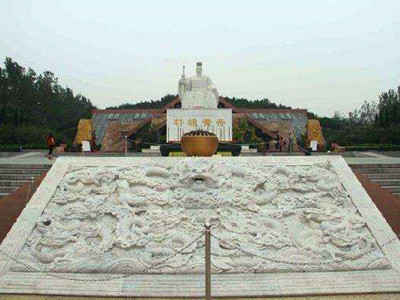
Despite its name, Dragon Pavilion is not actually a traditional pavilion. It is a magnificent palace-style wooden hall built on a 13-meter-high blue brick terrace. Visitors can reach the top platform by climbing a staircase of 72 steps, with stone balustrades on both sides. The middle section of the stairs is decorated with carved cloud dragons, adding to the grandeur of the imperial design.
At the top of the terrace stands the main palace hall, featuring traditional wooden architecture with double-gable roofs. From the terrace, visitors can enjoy panoramic views of Kaifeng’s downtown area, the nearby Qingming Riverside Landscape Garden, and the peaceful lakes surrounding the pavilion.
The terrace is also an excellent place to watch the sunset, when the golden light creates a beautiful view across the historic city.
History of Dragon Pavilion
The current Dragon Pavilion dates back to 1692, the 31st year of the reign of Emperor Kangxi during the Qing Dynasty (1644–1911). It was originally called Wanshou Pavilion and was built on the former palace site of King Zhou of the Ming Dynasty.
The pavilion was once used to store imperial tablets, where local officials came to hold ceremonies and offer prayers. Later, the hill on which it stood became known as Dragon Pavilion Hill, giving the structure its current name.
A Royal Site at the Heart of Ancient Kaifeng
Kaifeng served as the capital of eight dynasties, and many royal palaces were historically located around the present Dragon Pavilion area and the surrounding lakes.
The development of Kaifeng’s ancient city layout began during the Tang Dynasty. In 781 AD, Li Mian, a local governor, moved his administrative office from Shangqiu to present-day Kaifeng, establishing the foundation of the city’s central axis that continued for more than 1,200 years.
Today, Dragon Pavilion stands at the northern end of this historic axis, representing Kaifeng’s long imperial history and cultural importance.
Visiting Dragon Pavilion Park
Dragon Pavilion Park is conveniently accessible by public transportation and taxi.
How to Get There:
* Take Bus No. 1 or Bus No. 20 to Dragon Pavilion Park.
* Taxis are also available from anywhere in Kaifeng city center.
To the south of Dragon Pavilion Park is Ming and Qing Street, a 400-meter-long pedestrian street designed to recreate the style of streets from the Ming and Qing dynasties. Visitors can enjoy traditional architecture, local snacks, and cultural performances.
Best Time to Visit Dragon Pavilion Park
The best time to visit Dragon Pavilion Park is during the Kaifeng Chrysanthemum Festival, usually held from mid-October to mid-November every year.
During the festival, the park is decorated with thousands of chrysanthemums in different colors, shapes, and artistic arrangements. The spectacular flower displays make it one of the most impressive chrysanthemum exhibitions in China and a highlight of autumn travel in Henan.
As one of the seven great ancient capital cities in China, the city of Kaifeng has much to offer in terms of ancient buildings and historical relics. Dragon Pavilion Park ( Long Ting Park ) is a big draw when visiting Kaifeng on your Henan tour.