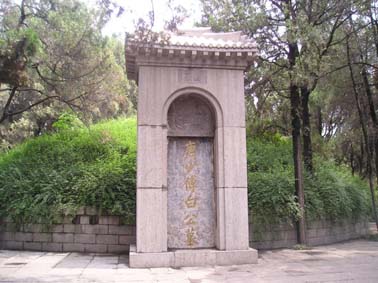
 Located on Pipa Peak, about 12 kilometers (7 miles) south of Luoyang City, Henan Province, Bai Garden (Bai Juyi’s Garden) is a beautiful cultural attraction built around the tomb of the famous Tang Dynasty poet Bai Juyi (772–846).
Known for its peaceful landscape, traditional Tang-style architecture, and rich literary atmosphere, Bai Garden commemorates one of the greatest poets in Chinese history. It offers visitors a unique opportunity to appreciate ancient Chinese poetry, garden design, and cultural heritage.
The Legacy of Bai Juyi – A Great Tang Dynasty Poet
Born in Henan Province, Bai Juyi was a renowned poet and government official during the Tang Dynasty (618–907). Throughout his life, he held important official positions and created a large collection of poems admired for their clear language, emotional depth, and social significance.
Many of his works remain highly influential in Chinese literature today. Bai Garden was constructed in 1985 to honor his remarkable achievements and preserve his cultural legacy.
Covering an area of approximately 44 mu (about 7 acres), the garden occupies almost the entire Pipa Peak. Centered around Bai Juyi’s tomb, the garden is divided into three main scenic areas:
* Green Valley Area
* Tomb Area
* Poem Corridor Area
Green Valley Area – A Peaceful Tang Dynasty Garden
Upon entering Bai Garden, visitors first arrive at the Green Valley Area, a tranquil landscape filled with lush bamboo forests, traditional pavilions, and beautiful lotus ponds.
The green bamboo along the pathways creates a peaceful atmosphere while also representing vitality and strength. Scattered throughout the garden are pavilions designed in the architectural style of the Tang Dynasty, adding to the historic charm of the scenery.
In the elegant Letian Hall — named after Bai Juyi’s courtesy name “Letian” — visitors can see a white marble statue of Bai Juyi, portraying the poet’s refined character and artistic spirit.
Tomb Area – The Final Resting Place of Bai Juyi
Located at the top of Pipa Peak, the Tomb Area is the central section of Bai Garden. Surrounded by green pine and cypress trees, Bai Juyi’s tomb creates a solemn and peaceful atmosphere.
Viewed from a higher position, the layout of the tomb area resembles the shape of a lute (pipa), reflecting the name of the mountain peak. Beautiful flowers and trees are carefully arranged around the tomb, creating a harmonious combination of nature and history.
Poem Corridor Area – A Gallery of Chinese Calligraphy
Descending to the northern side of the garden, visitors will find the Poem Corridor Area, where nearly 100 stone steles display Bai Juyi’s famous poems.
These inscriptions feature various styles of Chinese calligraphy, many created by renowned modern calligraphers and artists. The corridor also presents important stories and events from Bai Juyi’s life, allowing visitors to better understand the poet’s achievements and influence.
Visiting Bai Garden in Luoyang
With its poetic landscapes, traditional architecture, and connection to one of China’s greatest literary figures, Bai Garden Luoyang is more than a scenic garden — it is a place where visitors can experience the spirit of Tang Dynasty culture and the timeless beauty of Chinese poetry.
For travelers interested in Chinese history, literature, and traditional gardens, Bai Garden is an essential cultural attraction to visit during a Luoyang tour.