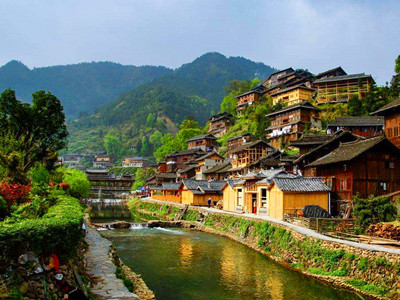
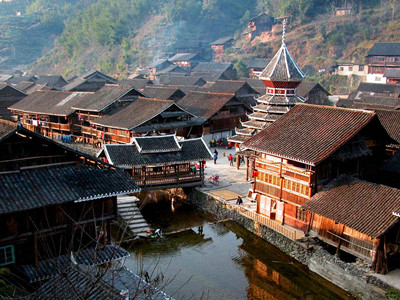
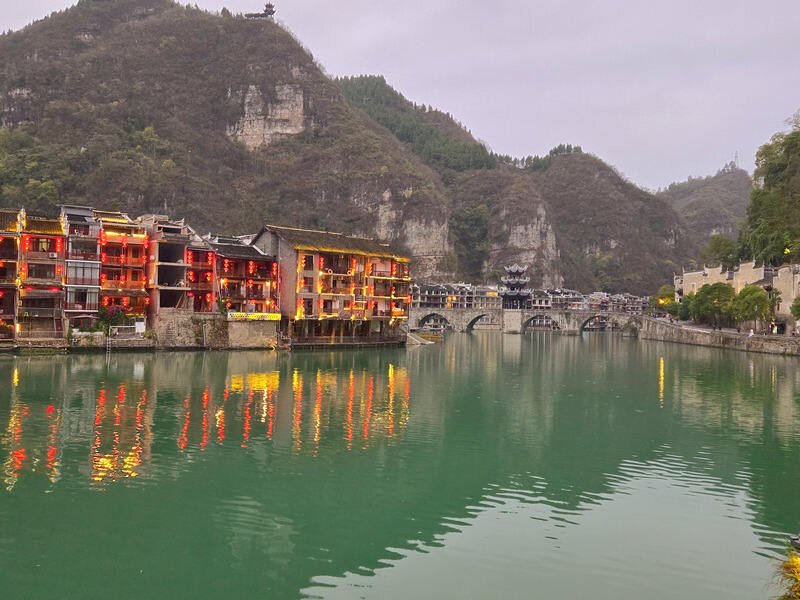
 Zhenyuan Ancient Town is located in Zhenyuan County, Qiandongnan Miao and Dong Autonomous Prefecture, Guizhou Province, China. Covering approximately 3.1 square kilometers, this well-preserved ancient town is divided by the picturesque Wuyang River, which winds through the town in an S-shaped curve, creating the unique landscape known as “Nine Mountains Embrace One River, One River Divides Two Towns.”
The northern bank of the river is known as Weicheng (Military Town), while the southern bank is Fucheng (Administrative Town). Viewed from above, the river and surrounding mountains resemble the traditional Chinese Taiji (Yin-Yang) symbol, making Zhenyuan one of China’s most distinctive ancient towns.
With a history spanning more than 2,000 years, Zhenyuan preserves nearly 200 historical and cultural sites, including ancient city walls, temples, guild halls, bridges, docks, ancestral halls, academies, opera stages, ancient wells, and traditional residences. The town is often described as “a living museum of traditional Chinese culture”, where the cultures of the Miao, Dong, and Han ethnic groups have blended harmoniously for centuries.
Top Attractions in Zhenyuan Ancient Town
Zhusheng Bridge
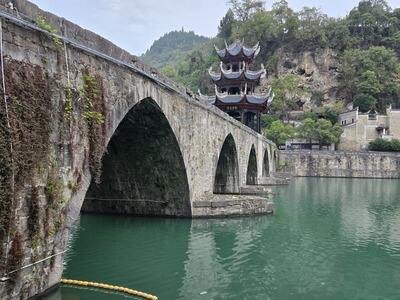
Zhusheng Bridge is the most iconic landmark of Zhenyuan Ancient Town. Originally named Wuxi Bridge, it was later renamed Zhusheng Bridge in celebration of the birthday of the Kangxi Emperor during the Qing Dynasty.
First constructed in 1388 during the Ming Dynasty, the bridge stretches 135 meters long, 8.5 meters wide, and 14 meters high, spanning the Wuyang River. It once served as an important crossing on the ancient postal route connecting Yunnan, Guizhou, and Hunan.
At the center of the bridge stands the elegant Kuixing Pavilion, a three-story pavilion dedicated to Kuixing, the deity believed to bless scholars with success in the imperial civil service examinations. For this reason, the pavilion is also popularly known as “Zhuangyuan Pavilion,” symbolizing academic achievement and prosperity.
 Qinglong Cave Ancient Architectural Complex
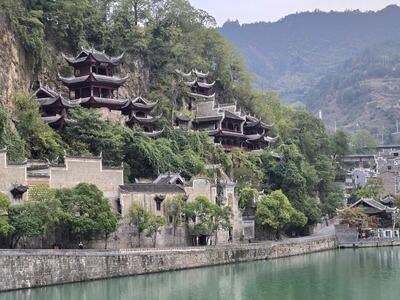
Qinglong Cave (Green Dragon Cave) is one of the most remarkable cultural landmarks in Guizhou Province. Built in 1388 during the Ming Dynasty, the complex sits dramatically against a 300-meter-long cliff overlooking the Wuyang River.
The architectural ensemble combines Buddhism, Taoism, and Confucianism, creating a unique religious and cultural landscape rarely seen elsewhere in China.
The complex consists of 36 historic buildings, including:
* Qinglong Cave
* Zhusheng Bridge
* Zhongyuan Temple
* Wanshou Palace
* Ziyang Academy
* Xianglu Rock
* Lingguan Temple
* Dongshan Temple
In 1988, Qinglong Cave was designated a National Key Cultural Relic Protection Unit, and in 2004, UNESCO recognized it as the “World Cliffside Ancient Architecture Museum” for its outstanding architectural and cultural value.
 Tianhou Palace
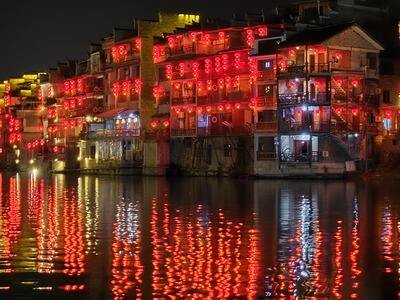
Tianhou Palace, also known as the Fujian Guild Hall, was built during the Qing Dynasty by merchants from Fujian Province.
The palace is dedicated to Mazu, the Chinese Goddess of the Sea, who has long been worshipped by sailors and merchants for protection and safe voyages. It also served as a gathering place for the Fujian merchant community engaged in trade along the Wuyang River.
Zou Sizhong Memorial Hall
Originally built in 1891 during the reign of the Guangxu Emperor of the Qing Dynasty, the Zou Sizhong Memorial Hall honors the respected local official Zou Sizhong.
The complex covers approximately 800 square meters, featuring traditional Qing Dynasty architecture. Today, it serves as the Zhenyuan Historical and Cultural Exhibition Museum, introducing visitors to the rich history, folk customs, and cultural heritage of Zhenyuan Ancient Town.
Ancient Streets and Alleys
The ancient streets and narrow stone-paved alleys are among the most charming parts of Zhenyuan.
Often referred to as the “Six Archways and Ten Alleys,” these winding lanes were carefully built along the mountainside and preserve the original layout of the ancient town. Seven major historic alleys remain today:
* Shizifang Lane
* Sifangjing Lane
* Fuxing Lane
* Renshou Lane
* Chongzikou Lane
* Migou Lane
* Chenjiajing Lane
Walking through these quiet alleys allows visitors to experience centuries-old architecture, traditional residences, local shops, and the authentic atmosphere of old Guizhou.
Fucheng Ancient City Wall
The Fucheng Ancient City Wall was first constructed during the Zhengde reign (1506–1521) of the Ming Dynasty.
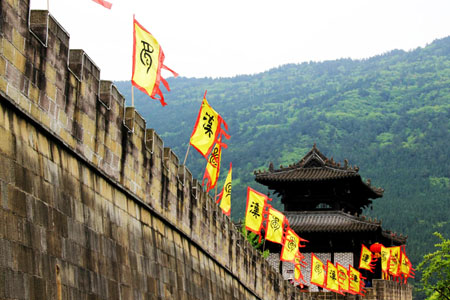
Built entirely from large blocks of blue stone, the wall stretches approximately 2 kilometers along Shiping Mountain, overlooking the ancient town and the Wuyang River.
Because of its strategic military importance, the wall was once a vital defensive fortress protecting southwestern China’s frontier. It has earned the nickname “The Great Wall South of the Yangtze River” and is also known locally as the “Great Wall of the Miao Region.”
Today, visitors can walk along sections of the ancient wall while enjoying panoramic views of the river, traditional houses, and surrounding mountains.
Why Visit Zhenyuan Ancient Town?
Zhenyuan Ancient Town is one of China’s best-preserved historic river towns, offering a fascinating blend of Ming and Qing Dynasty architecture, ethnic minority culture, Buddhist and Taoist heritage, and spectacular natural scenery. Whether strolling through ancient alleys, admiring centuries-old temples, or enjoying a boat ride along the Wuyang River, visitors can experience the timeless charm of one of Guizhou’s most beautiful cultural destinations.
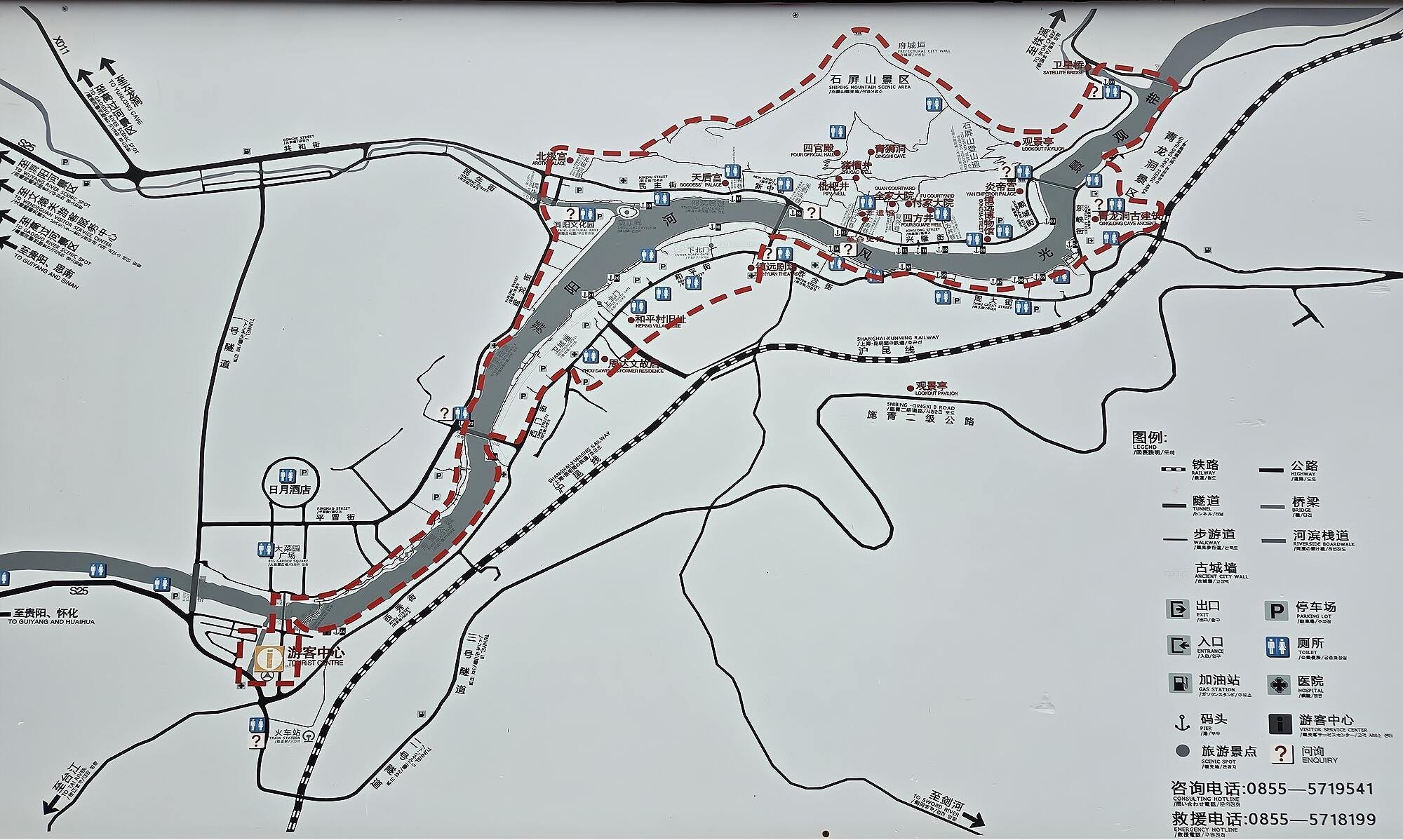
Tour Map of Zhenyuan Ancient City:
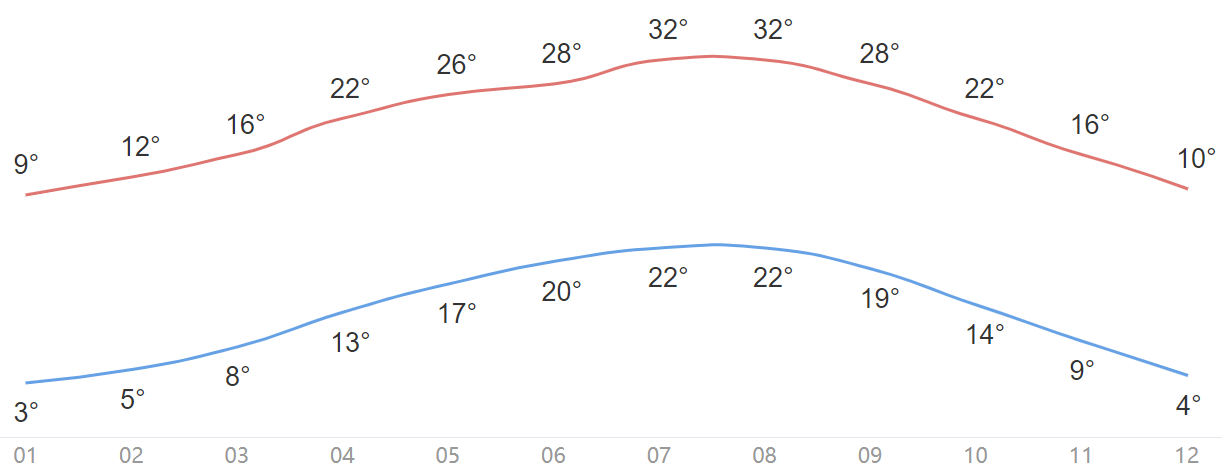
Climate of Zhenyuan City: