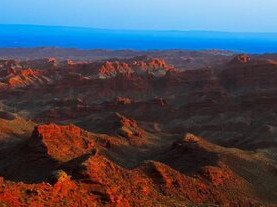
 Located in Pingshanhu Mongolian Township, Ganzhou District, Zhangye City, Gansu Province, Pingshanhu Grand Canyon is one of the most spectacular natural attractions in northwestern China. Situated about 56 kilometers from downtown Zhangye, this magnificent canyon is famous for its unique red rock formations, dramatic landscapes, and extraordinary geological features.
Covering an area of approximately 100 square kilometers with elevations ranging from 1,500 to 2,550 meters, Pingshanhu Grand Canyon is a national 4A-level scenic area combining geological exploration, canyon hiking, ethnic culture, and outdoor adventure.
Often described as a “living textbook of geological history,” Pingshanhu Grand Canyon is one of the three major Danxia landform scenic areas in Zhangye and offers visitors a rare opportunity to experience the incredible geological evolution of the Earth.
The Unique Geological Landscape of Pingshanhu Grand Canyon
The landscape of Pingshanhu Grand Canyon Zhangye belongs to the red bed landform, formed by layers of red sandstone and conglomerate deposited from the Mesozoic Jurassic to the Cenozoic Tertiary periods, dating back approximately 180–240 million years.
Millions of years of geological movement, weathering, and erosion have created a landscape featuring:
* Towering sandstone cliffs
* Deep canyons
* Narrow valleys
* Strange rock formations
* Danxia and Yardang landforms
The canyon displays rich colors, including:
* Red
* White
* Ochre
The mountains appear in various shapes, including:
* Columns
* Peaks
* Towers
* Natural sculptures
The exposed rock layers clearly reveal different geological periods, and fossils from various eras can be found in the area, making Pingshanhu an important destination for geological research and nature exploration.
Best Time to Visit Pingshanhu Grand Canyon
Zhangye has a typical continental climate characterized by:
* Dry weather
* Abundant sunshine
* Large temperature differences between day and night
* Short hot summers
* Long cold winters
* Limited rainfall
The average annual temperature is around 6°C.
The best time to visit Pingshanhu Grand Canyon is from June to September, when the weather is comfortable and the scenery is at its most attractive.
During summer and early autumn, visitors can enjoy:
* Clear skies
* Comfortable hiking conditions
* Beautiful lighting for photography
* Vibrant mountain colors
Scenic Areas of Pingshanhu Grand Canyon
The scenic area is mainly divided into two parts:
1. Viewing Platform Area
2. Canyon Exploration Area
The viewing platforms provide panoramic views of the entire canyon, while the canyon route allows visitors to experience the unique rock formations up close.
Main Viewing Platforms and Attractions
Nine Dragons Converging at the Sea
From Viewing Platform No. 1, visitors can overlook the entire Pingshanhu Grand Canyon.
The winding valleys and mountains resemble a group of dragons gathering toward the horizon, with some peaks appearing to rise, descend, hide, or soar. This spectacular formation inspired the name:
“Nine Dragons Converging at the Sea.”
It is one of the most impressive viewpoints in the scenic area and a favorite location for photography.
General Stone
Located on the western side of the canyon, General Stone is a naturally formed rock pillar resembling a powerful general wearing armor and standing guard over the canyon.
The human-like shape of the stone, combined with the surrounding Danxia landscape, creates one of the most fascinating natural sculptures in Zhangye.
Divine Turtle Asking for Longevity
The Divine Turtle Asking for Longevity is one of the most famous strange peaks in Pingshanhu Grand Canyon.
Due to its unique shape, the rock formation appears different from various angles. From a distance, it resembles a giant turtle looking upward toward the sky.
At sunrise and sunset, changing light and shadows make the formation appear even more lifelike, creating a magical natural scene.
Lovers’ Peaks
The Lovers’ Peaks resemble two figures embracing each other.
One peak stands slightly higher than the other, and their shapes appear like two lovers gazing at each other, symbolizing eternal companionship and affection.
Canyon Hiking Experience
A Narrow Sky (Yixiantian)
One of the most spectacular features inside Pingshanhu Grand Canyon is the “A Narrow Sky” landscape.
This narrow canyon section is formed by steep cliffs rising on both sides. When visitors look upward, only a thin line of sky can be seen between the towering rock walls.
Some sections are so narrow that sunlight only reaches the canyon floor around midday. Hanging rocks and dramatic cliffs create an unforgettable adventure experience.
According to local legends, this area was once associated with Taoist traditions and was known as “Crossing the Immortal Gorge.”
Auspicious Sacred Tree
Deep inside the canyon stands an ancient poplar tree known as the “Auspicious Sacred Tree.”
Local Mongolian herders traditionally visit the tree to pray for blessings, health, and peace. Visitors from surrounding regions also come here to offer ceremonial scarves called hada and express their wishes.
The tree represents the connection between local traditions, nature, and spiritual beliefs.
Unique Natural Rock Formations
Guanyin Peak
Guanyin Peak is a naturally sculpted rock formation resembling Guanyin Bodhisattva, the Buddhist figure of compassion.
The formation features:
* A clearly shaped head
* Natural facial features
* A graceful body outline
It combines the power of Danxia geology with an elegant human-like appearance.
Arhat Peak
Created through millions of years of wind and rain erosion, Arhat Peak resembles a seated Buddhist Arhat.
It is another remarkable example of how natural forces can create artistic-looking landscapes.
Golden Toad Asks the Heavens
The Golden Toad Asks the Heavens is a rock formation shaped like a golden toad emerging from the hillside.
Its realistic appearance, including the head, eyes, mouth, and body, was created through natural differential weathering. Hard sandstone resisted erosion while surrounding rocks gradually disappeared.
According to local folklore, the formation represents a golden toad associated with wealth and prosperity.
Dongda Mountain Natural Landscape Belt
Located in the southeastern part of the scenic area, the Dongda Mountain Natural Landscape Belt reaches an elevation of 3,633 meters.
Covering approximately:
* 7 kilometers from north to south
* 9 kilometers from east to west
* 32,000 mu of forest area
The region contains rich ecological resources.
Main plant species include:
* Qinghai spruce
* Qilian juniper
* Poplar trees
The area is also home to wildlife such as:
* Gansu red deer
* Blue sheep
* Goitered gazelle
* Argali sheep
* Dark-bellied snowcock
Many protected animals and bird species can be found in this natural environment.
Visiting Pingshanhu Grand Canyon
With its breathtaking canyon scenery, ancient geological history, and unique cultural legends, Pingshanhu Grand Canyon Zhangye is one of the most fascinating natural destinations in Gansu Province.
Unlike the colorful Zhangye Danxia landforms, Pingshanhu offers a deeper and more dramatic landscape featuring narrow canyons, towering cliffs, and mysterious rock formations.
For travelers interested in:
* Geological wonders
* Photography
* Hiking
* Desert landscapes
* Natural history
* Off-road adventures
Pingshanhu Grand Canyon provides an unforgettable experience and is one of the hidden gems of northwestern China.