Mt. Maijishan Grottoes Tour Attractions
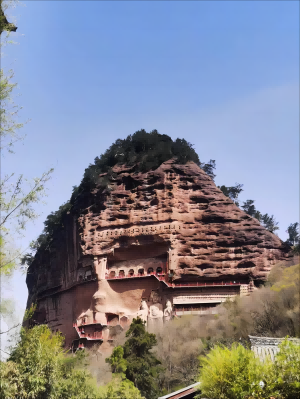 Mount Maijishan Scenic Area (Maijishan Mountain) is located in Maiji District, Tianshui City, Gansu Province, in the eastern section of the western Qinling Mountains. The scenic area lies along the watershed between the Yangtze River and Yellow River systems, creating a unique combination of magnificent mountains, forests, rivers, and cultural heritage.
With a planned area of approximately 215 square kilometers, Mount Maijishan Scenic Area consists of more than 180 attractions, including the world-famous Maijishan Grottoes, Xianren Cliff, Shimen Scenic Area, Qushui Scenic Area, and Jieting Hot Spring.
The area is famous for its rich biodiversity, distinctive geological landscapes, pleasant climate, and well-preserved Buddhist grotto culture. Combining natural scenery with thousands of years of history, Mount Maijishan is one of the most important cultural and tourism destinations in Gansu Province, China.
Main Attractions of Mount Maijishan Scenic Area
Maijishan Grottoes: The Oriental Sculpture Exhibition Hall
The Maijishan Grottoes are located in the Xiaolongshan forest area of the eastern western Qinling Mountains. The mountain rises sharply from the ground, and its shape resembles a traditional wheat stack, which gave it the name “Maiji Mountain” (Wheat Stack Mountain).
The mountain reaches approximately 142 meters high, with a Sui Dynasty brick pagoda relic standing at the summit surrounded by ancient white-bark pine trees.
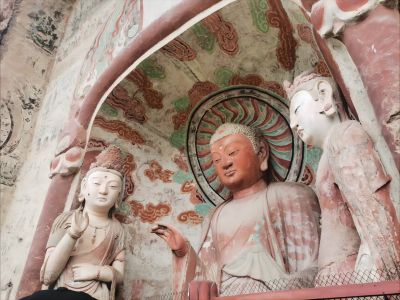
Carved into the steep cliffs are more than 200 grotto caves dating back over 1,600 years. The site contains:
* Approximately 7,866 clay and stone sculptures
* More than 1,300 square meters of murals
* Precious Buddhist artworks from multiple dynasties
As one of the four major grotto complexes in China, Maijishan Grottoes is known as the “Oriental Sculpture Exhibition Hall” due to its extraordinary collection of Buddhist statues and artistic achievements.
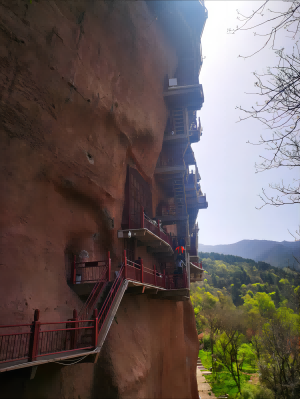
The combination of cliff sculptures, ancient plank roads, green forests, and red sandstone cliffs creates a spectacular landscape. The famous scenery of “Maiji Misty Rain” is regarded as one of the most beautiful views in the region.
 Maijishan Botanical Garden: A Natural Paradise
The Mount Maijishan Botanical Garden is home to more than 1,800 species of seed plants from 146 families, representing plant diversity from both northern and southern China.
The botanical garden features flowing streams, waterfalls, springs, rare birds, wildlife, and beautiful flowers. Traditional pavilions, viewing platforms, and leisure facilities are integrated into the natural environment, creating a peaceful atmosphere often described as a paradise.
It is an ideal destination for visitors who enjoy nature, hiking, photography, and ecological tourism.
Xiangji Mountain: A Scenic Mountain Between Two River Systems
Xiangji Mountain is located south of Mount Maijishan. Its shape resembles a green pyramid rising above the landscape.
The mountain forms the watershed between the Jialing River, a tributary of the Yangtze River, and the Wei River, a tributary of the Yellow River.
A deep mountain crack extends more than 100 meters, revealing colorful rock layers and unique geological formations. Water continuously drips from the cave roof, forming spectacular winter ice landscapes including:
* Ice pillars
* Frozen waterfalls
* Crystal-like ice formations
The snow-covered summit has earned the mountain the poetic name “Fragrant Snow Mountain.”
Arhat Cliff: Ancient Buddhist Sculptures Hidden in the Red Cliffs
Arhat Cliff gets its name from its shape, which resembles an ancient oil lamp.
The cliff face stretches over 100 meters in length and rises more than 150 meters high. Inside the cliff caves are precious Song Dynasty hanging sculptures, including:
* Three Buddha statues
* Eighteen Arhat figures
The sculptures are highly realistic, with delicate clothing details and expressive features. Hidden among the red cliffs and green forests, Arhat Cliff forms an important Buddhist cultural landscape together with Maijishan Grottoes.
 Jiaolong Temple: A Mountain Temple with Ancient Origins
Jiaolong Temple is located at the junction between the Mount Maijishan Scenic Area and Xianren Cliff Scenic Area.
Historical records indicate that the temple was established no later than the construction period of Maijishan Grottoes, making it closely connected with the region’s Buddhist traditions.
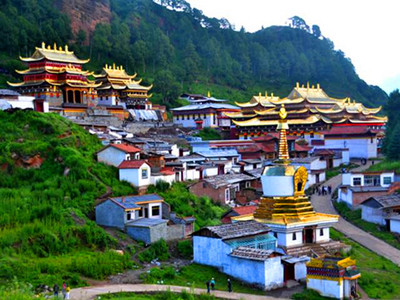
Built along the mountain slopes, the temple features magnificent architecture surrounded by natural scenery. In recent years, additional buildings such as the First Mother Palace have been constructed through private donations, attracting many visitors seeking cultural experiences and spiritual inspiration.
Xianren Cliff: A Combination of Buddhism, Taoism, and Natural Beauty
Located about 15 kilometers from Maijishan Grottoes, Xianren Cliff Scenic Area consists of:
* Three cliffs
* Five peaks
* Six temples
During the Northern Wei Dynasty, Buddhist and Taoist temples were built here, creating a unique religious landscape.
Today, the area preserves:
* 27 temples from the Ming and Qing dynasties
* 197 statues from the Northern Wei, Song, Ming, and Qing periods
* 83 square meters of murals
* Five precious bronze Buddha statues from the Yongle period of the Ming Dynasty
The exquisite Ming and Qing Dynasty clay sculptures preserved at Xianren Cliff complement the earlier artworks of Maijishan Grottoes, forming a complete historical timeline of Chinese Buddhist sculpture development.
Pure Land Temple: A Peaceful Mountain Retreat
Located behind Xianren Cliff, Pure Land Temple (Jingtu Temple) is surrounded by mountains and dense pine forests.
When mountain winds pass through the trees, the sound of waving pine branches creates a peaceful atmosphere, which is why the area is known as the “Pure Land.”
In recent years, the scenic area has become famous for reports of natural “Buddha light” phenomena. A naturally shaped Buddha-like head discovered on the rear mountain cliff has further increased the temple’s reputation among visitors.
Jieting Ancient Town: A Historic Town of Ming and Qing Architecture
Jieting Ancient Town, also known as Jiezi Town, is located at the eastern end of Dongge River Valley, where Huangjiaxia and Wenjiaxia valleys meet.
The town has a traditional cross-shaped layout:
* North-south street: approximately 300 meters long
* East-west street: approximately 400 meters long
* Street width: about 9 meters
Many buildings along the streets retain their original Ming and Qing Dynasty architectural styles, including traditional wooden structures and ancient shopfronts.
The entrances of the east and west streets still preserve old city gate structures. Important historic buildings include:
* Poetry Saint Pavilion in the west
* Wenchang Pavilion and an ancient opera stage in the east
Jieting Ancient Town offers visitors a glimpse into traditional Chinese town planning and local culture.
Why Visit Mount Maijishan Scenic Area?
With its breathtaking mountain scenery, ancient Buddhist grottoes, historic temples, forests, and traditional villages, Mount Maijishan Scenic Area is one of the most remarkable destinations in Gansu Province.
For travelers exploring China’s cultural heritage and the ancient Silk Road, Mount Maijishan provides a perfect combination of:
* Buddhist art
* Ancient architecture
* Natural landscapes
* Religious culture
* Historical exploration
It is an unforgettable destination for anyone interested in Chinese history, archaeology, photography, and nature.
Maijishan Mountain Tour Routes and Packages:
1. Two-day Lanzhou & Tianshui Tour