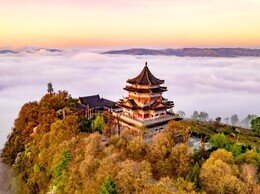
 Kongtong Mountain is one of China’s most famous sacred mountains and an important cultural landmark along the ancient Silk Road. Located in Pingliang City, Gansu Province, the scenic area covers 84 square kilometers, with its highest peak rising to 2,123 meters (6,965 feet) above sea level. Boasting more than 95% forest coverage, Kongtong Mountain combines dramatic northern landscapes with the graceful beauty often associated with southern China, making it one of the country’s most scenic mountain destinations.
Recognized as a National AAAAA Tourist Attraction, National Geological Park, National Nature Reserve, and National Key Cultural Relics Protection Unit, Kongtong Mountain is widely honored as “The First Mountain of Chinese Taoism.”
A Sacred Mountain of Taoism
Kongtong Mountain is regarded as one of the birthplaces of Taoism (Daoism) in China. According to Chinese tradition, the legendary Yellow Emperor (Huangdi) traveled here to seek guidance on governance, philosophy, and longevity from the immortal sage Guangchengzi, making the mountain one of the earliest sacred sites associated with Chinese civilization.
Throughout history, many famous rulers and scholars visited Kongtong Mountain, including Emperor Qin Shi Huang, Emperor Wu of Han, Sima Qian, Du Fu, Bai Juyi, Lin Zexu, and Tan Sitong. Their visits and literary works further enhanced the mountain’s cultural significance.
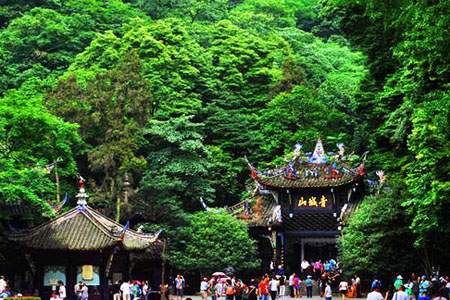
For more than 2,000 years, Taoist temples, Buddhist monasteries, pavilions, and ancient stone structures have been built across its peaks, creating a unique landscape where religion, history, and nature coexist.
Magnificent Ancient Architecture
Kongtong Mountain is renowned for its impressive collection of historic religious architecture, traditionally described as:
* Eight Terraces
* Nine Palaces
* Twelve Courtyards
* Forty-Two Historic Buildings
* Seventy-Two Stone Caves
Among the mountain’s best-known Taoist sites are:
* Asking the Dao Palace
* Queen Mother Palace
* Taiqing Palace
* Yuqing Palace
* Purple Palace
* South Cliff Palace
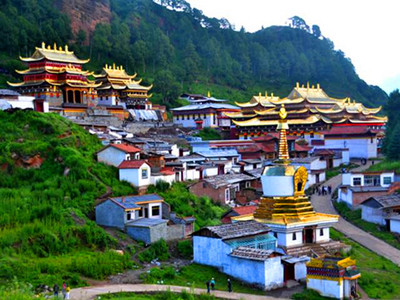
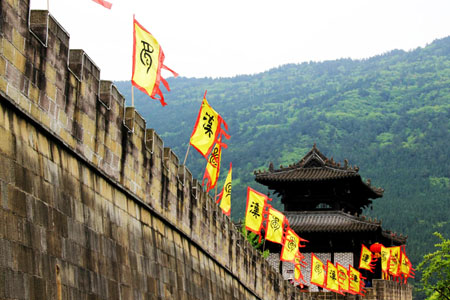
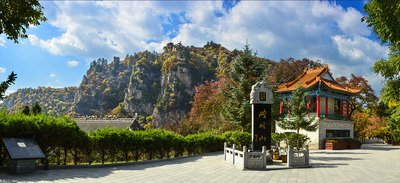
Ancient temples, pagodas, stone stairways, and cliffside pavilions are scattered throughout the mountains, offering visitors spectacular scenery while reflecting centuries of Taoist and Buddhist culture.
 Kongtong Martial Arts
Kongtong Mountain is also celebrated as the birthplace of Kongtong Kung Fu, one of China’s most influential traditional martial arts schools.
Together with Shaolin, Wudang, Emei, and Kunlun, Kongtong represents one of the Five Great Schools of Chinese Martial Arts. Kongtong Kung Fu is known for its graceful movements, flexible techniques, swordsmanship, and emphasis on internal cultivation inspired by Taoist philosophy.
Today, martial arts demonstrations and cultural performances continue to preserve this important part of China’s intangible cultural heritage.
Spectacular Natural Scenery
Beyond its historical significance, Kongtong Mountain offers breathtaking natural landscapes throughout the year.
Visitors can explore:
* Towering granite peaks
* Dense forests and ancient pine trees
* Deep valleys and dramatic cliffs
* Crystal-clear streams and waterfalls
* Scenic hiking trails
* Panoramic viewpoints overlooking the surrounding mountains
The mountain’s unique combination of rugged northern terrain and lush southern vegetation has earned it a reputation as one of China’s most beautiful religious mountains.
Things to Do at Kongtong Mountain
Visitors can enjoy a wide range of cultural and outdoor experiences, including:
* Visit ancient Taoist temples and palaces
* Discover historic Buddhist monasteries
* Learn about Taoist philosophy and Chinese spiritual culture
* Watch Kongtong Kung Fu demonstrations
* Hike through forested mountain trails
* Explore ancient caves and cliffside architecture
* Enjoy panoramic views from the mountain summits
* Experience one of the most important sacred mountains along the ancient Silk Road
Why Visit Kongtong Mountain?
Kongtong Mountain offers a remarkable combination of Taoist heritage, ancient architecture, martial arts culture, and spectacular mountain scenery. As one of China’s earliest centers of Taoism and the legendary meeting place of the Yellow Emperor and Guangchengzi, it occupies a unique place in Chinese history and philosophy.
Whether you are interested in Chinese religion, traditional martial arts, history, or outdoor adventure, Kongtong Mountain provides an unforgettable journey into one of the most culturally significant and naturally beautiful destinations in northwest China.