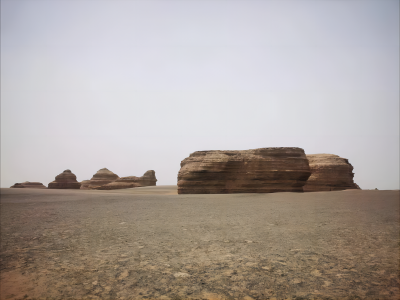
 Dunhuang Yadan National Geopark, also known as Dunhuang Yadan Devil City, is one of the most spectacular natural wonders in northwest China. Located in Dunhuang City, Gansu Province, it is an important part of the Dunhuang World Geopark and is recognized as one of the three most beautiful Yadan landscapes in China.
The park features the world’s largest and most mature examples of Yadan landforms, offering exceptional geological, scientific, and tourism value. Created by millions of years of wind and water erosion, the strange landscapes resemble castles, animals, and mysterious sculptures, earning the area the nickname “Devil City.”
The scenic area stretches approximately 25 kilometers from east to west and 18 kilometers from north to south, with an elevation ranging from 810 to 970 meters above sea level. Covering an area of about 398 square kilometers, the geopark is divided into two major sections: the northern and southern Yadan landscape zones.
Location of Dunhuang Yadan National Geopark
Dunhuang Yadan National Geopark is located in the western part of Gansu Province, within Dunhuang City. It lies in a remote desert region along the ancient Silk Road, surrounded by spectacular natural landscapes.
The geopark is located approximately:
* 100 kilometers southeast of Yumen Pass
* 20 kilometers south of the ancient Shule River and Halaqi Wetland
* Near the Kumtag Desert in the southwest
* About 7 kilometers west of Sanlong Sand in Ruoqiang County, Xinjiang
* Around 120 kilometers from Lop Nur Lake
Its unique location makes Dunhuang Yadan an essential stop for travelers exploring the natural and historical wonders of the Silk Road.
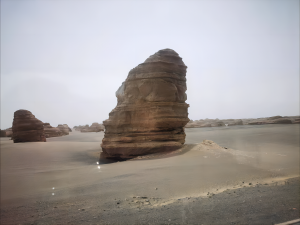 Unique Yadan Landform Landscape
The main landscapes of Dunhuang Yadan National Geopark include desert, Gobi, Yadan formations, and alkaline plains.
The terrain gradually slopes from east to west. The northern section contains the largest concentration of Yadan formations, mainly arranged in a north-south direction. The southern section features scattered wind-eroded valleys, wind-eroded hills, columns, mushrooms, depressions, and unusual rock formations.
The Yadan formations generally range from 20 to 100 meters high, while wind-eroded valleys are usually 100 to 200 meters wide. Their hard textures, reddish colors, and unusual shapes create a mysterious atmosphere, making the landscape look like a huge natural city carved by the desert.
Plants and Wildlife of Dunhuang Yadan
Although Dunhuang Yadan is located in an extremely dry desert environment, the geopark still supports unique desert ecosystems.
The area belongs to a warm temperate semi-shrub desert zone and contains approximately 168 species of seed plants, including:
* 2 species of gymnosperms
* 166 species of angiosperms
* More than 100 plant genera across about 30 families
Vegetation is limited due to the harsh climate, mainly growing in the southern and western lowland areas of the Yadan region.
The Dunhuang area is also home to diverse wildlife. There are approximately 196 species of wild animals, including:
* 141 bird species
* 32 mammal species
* 8 fish species
* 2 amphibian species
* 13 reptile species
Among them are 8 national first-class protected animals and 33 second-class protected animals.
Geological Heritage of Dunhuang Yadan National Geopark
Dunhuang Yadan National Geopark contains abundant geological relics, with 77 officially recognized geological heritage sites covering four major categories:
* Landform landscapes
* Geological structures
* Water-related landscapes
* Environmental geological relics
The park includes various geological features such as desert landscapes, wind-eroded formations, flowing-water erosion landscapes, lake-related geological remains, and geological disaster relics.
More than 5,000 Yadan formations of different sizes can be found throughout the park. Their shapes, heights, directions, and structures vary greatly, creating one of the most spectacular geological landscapes on Earth.
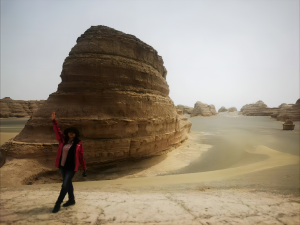 Formation of the Dunhuang Yadan Landscape
The creation of the Yadan landform is the result of a long geological process involving both geological foundations and natural erosion.
The formation requires two important conditions:
1. Ancient lake sedimentary layers
Millions of years ago, this region contained ancient lakes where layers of sediment accumulated and formed the foundation of today’s Yadan landscape.
2. Long-term wind and water erosion
Over countless years, strong desert winds and occasional water erosion gradually carved the sedimentary hills. Softer materials were removed faster, while harder layers remained, creating cliffs, towers, pillars, and strange shapes.
Through continuous erosion and collapse, the desert transformed ordinary sedimentary formations into the incredible Yadan landscapes seen today.
Famous Scenic Spots in Dunhuang Yadan National Geopark
The geopark contains countless fascinating wind-eroded formations. Some of the most famous landscapes include:
Golden Lion Welcoming Guests
This Yadan formation resembles a giant lion lying in the desert. After thousands of years of wind and rain erosion, the original large formation gradually became smaller and took the shape of a lion.
Standing proudly in the wilderness, it appears as if the golden lion is welcoming visitors from afar.
Sphinx
The Sphinx is a wall-shaped Yadan formation formed from sandy and muddy sediment. Continuous weathering and differential erosion created its uneven surface.
Viewed from a distance, the formation resembles the famous Sphinx of Egypt, demonstrating the incredible creativity of nature.
Peacock
The Peacock is a column-shaped Yadan formation created through the gradual erosion of softer materials while stronger layers remained.
Its elegant shape resembles a proud peacock displaying its beautiful feathers, making it one of the most attractive landscapes in the park.
West Sea Fleet
The West Sea Fleet is a large-scale ridge-shaped Yadan group located in the northwest section of the scenic area.
Stretching thousands of meters with formations 5–30 meters wide, it resembles a magnificent fleet sailing through a vast desert ocean. This spectacular concentrated ridge landscape is rare both in China and worldwide.
Turtle Entering the Sea
This unique deformed Yadan landscape was created by geological movements that tilted originally horizontal rock layers.
From a distance, the formation looks like a giant turtle stretching its head toward the sea, proudly overlooking the surrounding desert.
Princess Yadan
Princess Yadan is a typical column-shaped formation. Due to different erosion rates between hard and soft layers, a slender column was created, resembling an elegant ancient princess standing gracefully in the desert.
Yadan Castle
Yadan Castle is one of the largest and most impressive landscapes in the park.
Through the combined effects of gravity, wind, rain, and geological changes, the upper parts of the wall-shaped formations gradually developed into towers and columns, while the lower sections remained connected.
The result resembles a mysterious ancient castle standing silently in the wilderness.
Alien Yadan
Alien Yadan is one of the most unusual column-shaped formations in Dunhuang Yadan.
Because the upper clay layer is more resistant to erosion while the lower sandy layer is softer, a unique shape formed with a large rock block balanced above a smaller pillar.
Its strange appearance resembles a visitor from outer space observing the desert, attracting travelers to explore its mystery.
Visit Dunhuang Yadan: A Natural Wonder Along the Silk Road
With its incredible geological formations, mysterious desert atmosphere, and unique natural beauty, Dunhuang Yadan National Geopark is one of the most unforgettable destinations in Gansu Province.
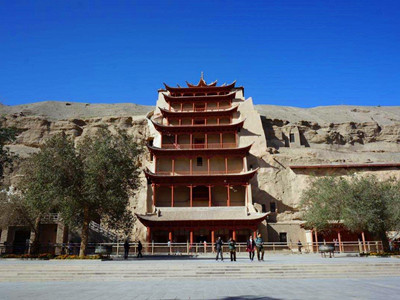
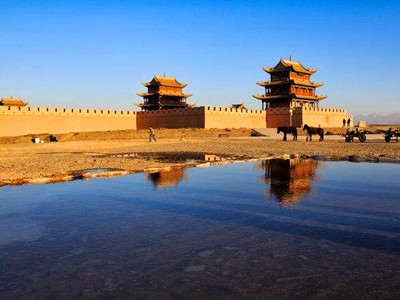
Combined with nearby historical attractions such as Mogao Caves, Yumen Pass, and Yangguan Pass, Dunhuang Yadan offers travelers a perfect opportunity to experience the natural wonders and ancient civilization of the Silk Road.
Dunhuang Tour Routes and Packages:
1. Three-day Dunhuang Tour
2. Four-day Dunhuang & Yangguan Tour
3. Four-day Dunhuang Tour
4. Six-day Great Wall & Dunhuang Tour