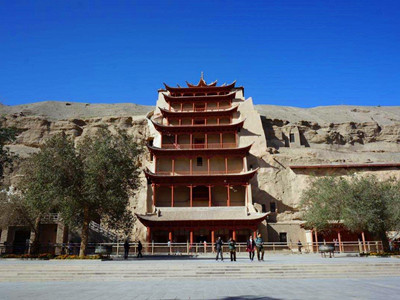
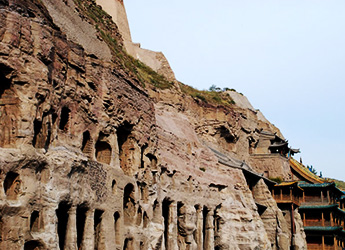
 The Mogao Caves, also known as the Caves of the Thousand Buddhas (Qianfodong), are one of the world’s greatest collections of Buddhist art and an outstanding cultural heritage site along the ancient Silk Road. Located about 25 kilometers southeast of Dunhuang City in Gansu Province, western China, the caves were carved into a cliff face in the Gobi Desert and preserve more than 1,000 years of religious, artistic, and cultural history.
As a major stop on the ancient Silk Road, Dunhuang once served as a vital meeting point between China, Central Asia, India, and the Western world. Today, the Mogao Caves are recognized as a masterpiece of Buddhist cave art and one of China’s most important historical attractions.
History of the Mogao Caves
The history of the Mogao Caves dates back to the 4th century AD during the Eastern Jin Dynasty period. According to historical records, the first caves were created by Buddhist monks who carved meditation chambers and worship spaces into the cliffs along the Daquan River.
Over the following centuries, as Dunhuang flourished as a Silk Road trading hub, more caves were built by monks, merchants, officials, and wealthy families seeking blessings and protection for their journeys.
During its peak development, more than 1,000 caves were created along the nearly 2-kilometer-long cliff. Around 500 caves were decorated as Buddhist temples, containing magnificent murals, painted sculptures, inscriptions, and religious artworks.
The caves reflect the cultural exchanges that took place along the Silk Road, combining artistic influences from China, India, Central Asia, and other regions.
A Treasure House of Buddhist Art
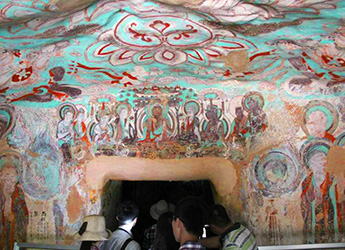
The Mogao Caves are famous for their extraordinary murals and sculptures. The walls of the caves are covered with colorful paintings depicting:
* Stories of Buddha’s life
* Buddhist scriptures and legends
* Flying apsaras (heavenly musicians)
* Ancient architecture and landscapes
* Scenes of daily life in ancient China
The artworks provide valuable information about religion, politics, architecture, music, costumes, and social life throughout different historical periods.
The artistic styles changed over time, reflecting the development of Chinese Buddhist art from the Northern Wei Dynasty to the Tang, Song, and later dynasties.
 The Discovery of the Hidden Library Cave
One of the most remarkable discoveries at the Mogao Caves was the Library Cave (Cave 17).
When the Silk Road gradually declined during the Ming Dynasty (1368–1644), many desert oasis towns lost their importance. Although some monks continued to protect the Mogao Caves, the site was largely forgotten for centuries.
Inside Cave 17, an incredible collection of ancient treasures was hidden behind a sealed wall. Discovered in 1900 by Daoist monk Wang Yuanlu, who served as a guardian of the caves, the hidden chamber contained tens of thousands of manuscripts, paintings, textiles, and cultural relics dating back more than 900 years.
The discovery revealed valuable records of Silk Road history, including Buddhist texts, official documents, literature, and evidence of cultural exchanges between China and the outside world.
Mogao Caves and the Silk Road
The Mogao Caves represent more than just Buddhist religious art; they are also a historical record of the ancient Silk Road.
For centuries, merchants, pilgrims, diplomats, and travelers passed through Dunhuang before entering the vast deserts of Central Asia. Many stopped at the caves to pray for safe journeys, express gratitude, or seek spiritual guidance.
The artworks inside the caves preserve memories of this international exchange and demonstrate how different civilizations influenced one another through trade and religion.
Why Visit the Mogao Caves?
Today, the Mogao Caves are one of the most important cultural attractions in China and a UNESCO World Heritage Site. Visitors can admire ancient Buddhist sculptures, explore beautifully preserved murals, and learn about the history of the Silk Road.
A visit to the Mogao Caves offers a unique opportunity to experience:
* Over 1,000 years of Buddhist artistic development
* The history of ancient Silk Road civilizations
* Remarkable examples of Chinese cave architecture
* Rare cultural relics from different historical periods
For travelers exploring Dunhuang, the Mogao Caves provide an unforgettable journey into China’s ancient history, art, and cultural heritage.