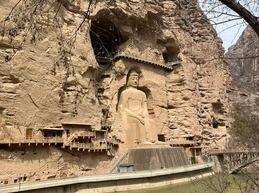
 Bingling Temple Grottoes is one of China’s most remarkable Buddhist cave temple complexes, located in the dramatic red sandstone cliffs of the Jishi Mountains in Yongjing County, Gansu Province. Situated about 75 kilometers southwest of Lanzhou, the grottoes are uniquely accessible by boat across the scenic Liujiaxia Reservoir, making the journey itself part of the experience.
Surrounded by towering cliffs and tranquil waters, Bingling Temple combines spectacular natural scenery with more than 1,600 years of Buddhist art, earning its place among the most important grotto sites in northwestern China.
A Buddhist Sanctuary with 1,600 Years of History
The history of Bingling Temple dates back to the Western Qin Dynasty in the early 5th century. Over the following centuries, the grottoes were continuously expanded during the Northern Wei, Sui, Tang, Song, Yuan, Ming, and Qing dynasties.
Throughout its long history, artists created magnificent sculptures, murals, and cave shrines that reflect the evolution of Chinese Buddhist art. Influences from the Central Plains, the Silk Road, and later Tibetan Buddhism blended together to create a unique artistic style found nowhere else.
Today, Bingling Temple Grottoes are recognized as one of the most significant Buddhist heritage sites along the ancient Silk Road.
One of Gansu’s Great Buddhist Grottoes
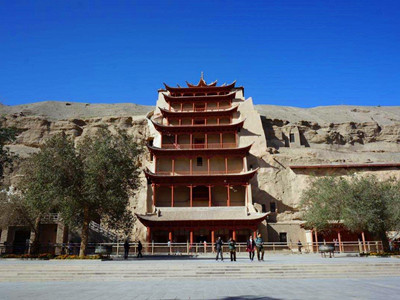
Together with the Mogao Grottoes in Dunhuang and the Maijishan Grottoes in Tianshui, Bingling Temple is regarded as one of Gansu Province’s three most important grotto complexes.
Unlike many famous cave temples located beside highways or cities, Bingling Temple remains hidden among remote cliffs overlooking the Yellow River, giving visitors a peaceful and less crowded cultural experience.
Explore Hundreds of Ancient Caves
The grottoes are carved into sandstone cliffs stretching approximately 200 meters in length and rising up to 60 meters above the river.
Today, the site preserves:
* 196 caves and niches
* 694 stone sculptures
* 82 clay statues
* More than 900 square meters of ancient murals
The caves are connected by cliffside walkways, allowing visitors to admire Buddhist sculptures while enjoying panoramic views of the surrounding canyon and reservoir.
Highlights of Bingling Temple
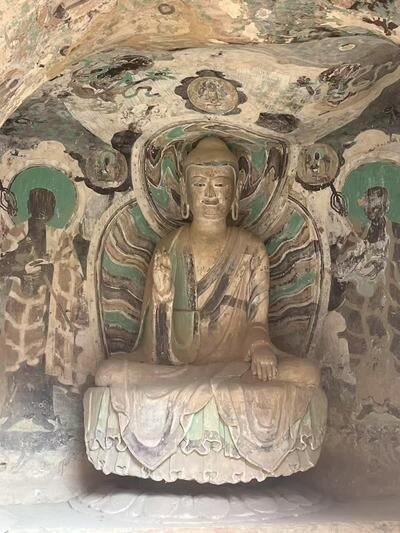 Giant Maitreya Buddha
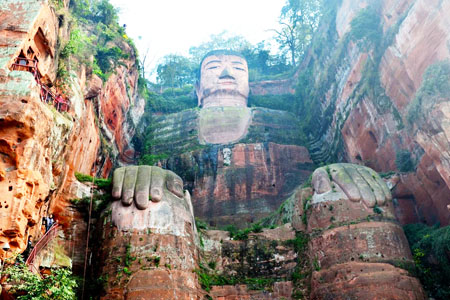
The site’s most famous masterpiece is the 27-meter-tall seated Maitreya Buddha carved during the Tang Dynasty. Towering above the surrounding caves, it is one of the largest ancient stone Buddha statues in Gansu Province and demonstrates the extraordinary craftsmanship of Tang Dynasty sculptors.
Ancient Murals and Sculptures
The grottoes contain an impressive collection of Buddhist murals, relief carvings, and statues ranging from monumental figures to delicate sculptures measuring only a few centimeters in height. These artworks vividly illustrate the development of Buddhist iconography and artistic styles over more than a millennium.
Cliffside Cave Complex
Visitors can explore multiple groups of grottoes distributed across the Upper Temple, Lower Temple, and Donggou Valley sections of the site. Each area preserves caves from different historical periods, offering insight into the changing artistic traditions of ancient China.
A Scenic Journey Across Liujiaxia Reservoir
One of Bingling Temple’s most distinctive features is its access route. Visitors typically travel by boat from Liujiaxia Reservoir, cruising through spectacular canyon scenery before arriving at the grottoes nestled beneath towering sandstone cliffs.
The combination of dramatic landscapes and ancient cultural heritage makes Bingling Temple one of the most memorable day trips from Lanzhou.
Best Time to Visit
The best time to visit Bingling Temple is from May to October, when boat services operate regularly and the weather is ideal for sightseeing.
Spring and autumn offer particularly pleasant temperatures, clear skies, and excellent conditions for photography.
Why Visit Bingling Temple?
Bingling Temple Grottoes provide a unique combination of Buddhist history, Silk Road culture, spectacular cliffside scenery, and ancient artistic masterpieces. Compared with China’s more famous grotto sites, Bingling Temple offers a quieter and more immersive experience while preserving some of the country’s finest Buddhist sculptures and murals.
Conveniently reached from Lanzhou via Liujiaxia Reservoir, Bingling Temple is an ideal destination for travelers interested in Chinese history, Buddhism, archaeology, and the cultural heritage of the Silk Road.
Whether you’re exploring Gansu’s ancient civilizations or seeking one of China’s hidden cultural treasures, Bingling Temple Grottoes offer an unforgettable journey through history, art, and nature.