Located in the western mountains of Beijing, Tanzhe Temple (Tanzhe Si) is one of the oldest Buddhist temples in China and one of the most famous cultural attractions in the capital.
The temple’s Chinese name, “Tanzhe Si” (Temple of the Pool and Zhe Trees), comes from the natural surroundings of the site. In ancient times, there was a deep pool behind the temple and many Zhe trees (wild mulberry trees) grew on the nearby mountains, giving the temple its unique name.
A popular saying describes the temple’s long history:
“First came Tanzhe Temple, then Beijing.”
This reflects the temple’s ancient origins, as it was built long before Beijing became the great capital city it is today.
A Buddhist Temple with More Than 1,700 Years of History
Tanzhe Temple was originally built in 307 AD during the Western Jin Dynasty (265–316 AD), making it one of the oldest Buddhist temples in the Beijing area.
Throughout Chinese history, the temple experienced several name changes during the:
* Jin Dynasty
* Yuan Dynasty
* Ming Dynasty
* Qing Dynasty
After major renovation and expansion in 1692 during the Qing Dynasty, the temple was officially renamed Xiuyun Temple. However, the traditional name Tanzhe Temple remained widely used because of its famous pool and Zhe trees.
Over centuries, the temple became an important center of Buddhist practice and attracted monks, pilgrims, emperors, and visitors from across China.
Ancient Architecture Inspired by the Forbidden City
Besides its religious importance, Tanzhe Temple is also famous for its magnificent traditional Chinese architecture and beautiful natural surroundings.
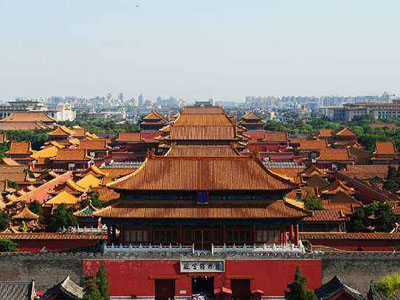
The temple complex follows a carefully planned central axis layout. According to historical tradition, this design influenced later imperial architectural planning and is said to have provided inspiration for the layout of the Forbidden City.
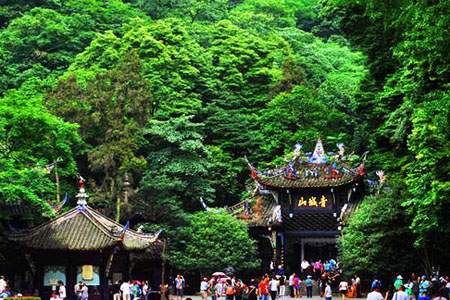
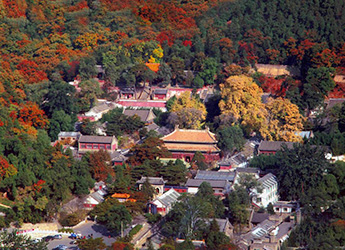
The temple is built along the hillside and surrounded by nine mountain peaks, creating a peaceful and impressive landscape.
The complex includes:
* Buddhist halls
* Courtyards
* Pavilions
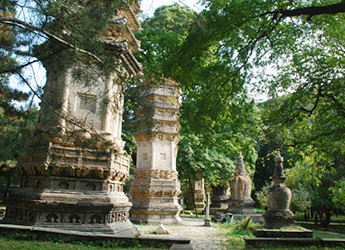
* Ancient pagodas
* Religious buildings from the Yuan, Ming, and Qing dynasties
Because of its scale and artistic value, Tanzhe Temple was once considered an important imperial temple with a high social status.
 Imperial Connections and Buddhist Traditions
During the Ming Dynasty, Tanzhe Temple received imperial attention and became a favorite destination of members of the royal family, including Empress Dowager Li, mother of the Wanli Emperor.
The main temple complex rises gradually along the mountain slope, with different halls dedicated to various Buddhist deities. Like many traditional Chinese temples, visitors can see incense burners and large incense coils used for prayers and blessings.
Today, Tanzhe Temple continues to attract:
* Buddhist believers
* Cultural travelers
* Photographers
* Visitors interested in Chinese history and architecture
The peaceful environment, ancient trees, and traditional rituals make it a unique cultural experience in Beijing.
Visiting Tanzhe Temple – Travel Information
Entrance Fee: Approximately RMB 55 per person
Opening Hours:
Usually around 8:30 AM–4:30 PM (hours may vary by season)
How to Get to Tanzhe Temple
By Public Transportation:
1. Take Beijing Subway Line 1 to Pingguoyuan Station (the western terminal).
2. Transfer to Bus 931 to Tanzhe Temple.
3. The bus operates daily, usually from around 7:00 AM to 5:30 PM.
4. The journey takes approximately 1 hour.
Why Visit Tanzhe Temple?
Tanzhe Temple is an ideal destination for travelers who want to experience a different side of Beijing beyond the Forbidden City and modern city center.
With its:
* More than 1,700 years of history
* Ancient Buddhist traditions
* Imperial connections
* Traditional Chinese architecture
* Peaceful mountain environment
Tanzhe Temple offers visitors a chance to explore the spiritual and cultural heritage of old Beijing.
For travelers interested in Chinese Buddhism, ancient temples, and historical architecture, Tanzhe Temple is one of the most rewarding cultural attractions around Beijing.