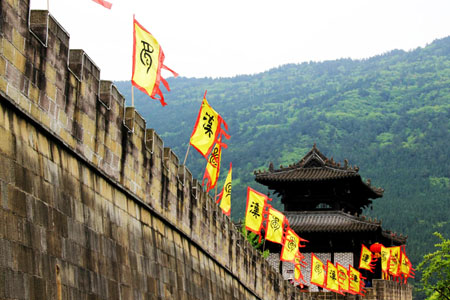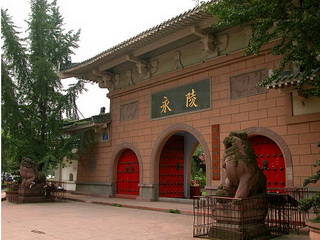
Located in the western suburbs of Chengdu City, Sichuan Province, Yongling Mausoleum is the tomb of Wang Jian, the founder and first emperor of the Former Shu Kingdom during the Five Dynasties and Ten Kingdoms period. As one of Chengdu’s most important historical sites, the mausoleum provides valuable insights into ancient Chinese imperial culture, architecture, music, and art.
Wang Jian was born in Wuyang County, Henan Province. In his early years, he served as a general of the Faithful Army during the late Tang Dynasty. In 903, Emperor Zhaozong of the Tang Dynasty granted him the title of King of Shu. After the Tang Dynasty fell in 907, Wang Jian established an independent regime known as Former Shu, making him one of the influential figures in Chinese history during the transitional period between dynasties.
Discovery and Structure of Yongling Mausoleum
For centuries, the location of Wang Jian’s tomb was mistakenly believed to be the musical platform associated with the famous Western Han Dynasty poet and musician Sima Xiangru. In 1942, while excavating air-raid shelters at the site, archaeologists discovered the true Yongling Mausoleum. However, the tomb had already been looted before its discovery.
The construction of Yongling Mausoleum began in 918 AD, during the first year of the Guangtian reign. Covering an area of about 7 mu, the tomb features a large earthen mound approximately 45 meters high. The underground structure is divided into three sections: the front chamber, middle chamber, and rear chamber, with a total length of about 23.6 meters.
The entire tomb complex is grand and elegant. Wang Jian’s coffin was placed in the middle chamber, while the rear chamber contains a stone bed featuring a carved statue of Wang Jian. Archaeological discoveries from the tomb include valuable cultural relics such as mourning documents, jade belts, jade rings, silver bowls, silver pigs, silver plates, bronze and iron objects, and 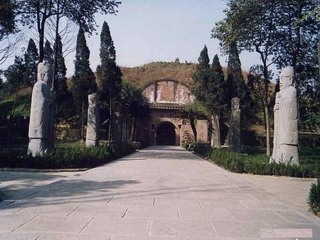 pottery.
Precious Stone Carvings and Cultural Value
Among the most significant discoveries at Yongling Mausoleum are three groups of exquisite stone carvings, which provide important evidence for studying ancient Chinese art and culture.
* The first group, located in the middle chamber, depicts 12 Hercules figures supporting the coffin, showing the artistic style of ancient Chinese tomb sculpture.
* The second group presents 24 scenes of musical performances, offering valuable information about music and dance during the Former Shu period.
* The third group includes relief carvings on the front of the imperial stone bed and a seated statue of Wang Jian.
These remarkable carvings are considered important historical materials for researching ancient Chinese music, dance, sculpture, and imperial burial traditions.
Visit Yongling Mausoleum
A visit to Yongling Mausoleum allows travelers to explore Chengdu’s lesser-known historical treasures beyond its famous cuisine and modern attractions. Through its royal tomb structure, precious relics, and artistic carvings, Yongling reveals the cultural achievements of the Former Shu Kingdom and the rich history of ancient Sichuan.