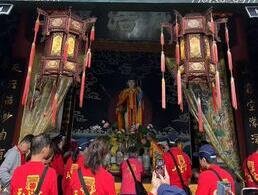
 Nezha Palace, also known as Nezha Temple, is located on Cuiping Mountain in Yibin, Sichuan Province, southwestern China. Dedicated to Nezha, one of the most beloved heroes in Chinese mythology, the temple is regarded by many devotees on both sides of the Taiwan Strait as the ancestral temple of Nezha worship.
Following the global popularity of the Ne Zha animated film series, especially during the 2025 Spring Festival, Nezha Palace became one of Yibin’s most visited cultural attractions, drawing thousands of visitors each day to experience the legendary birthplace of one of China’s most iconic mythological figures.
Who Is Ne Zha?
Ne Zha is one of the most famous figures in Chinese mythology, folklore, and religious tradition. Revered in both Taoism and Chinese folk religion, he is celebrated as a youthful protector deity, a fearless warrior, and a guardian who defeats demons and evil spirits.
According to Chinese legends, Nezha was the third son of the military commander Li Jing and Lady Yin. Under the guidance of the immortal master Taiyi Zhenren, Nezha mastered extraordinary magical abilities and became renowned for his courage and sense of justice.
His legendary battle with the Dragon King of the East Sea remains one of the best-known stories in Chinese mythology and has been retold in classical literature, traditional opera, television dramas, animation, and modern films.
In Buddhist scriptures translated during the Tang Dynasty, Nezha also appears as a divine guardian with multiple heads and arms, illustrating the blending of Buddhist and Taoist traditions in Chinese religious culture.
A Temple Dedicated to China’s Legendary Hero
Ne zha Palace occupies approximately 2,200 square meters, with over 1,100 square meters of traditional architecture dating primarily to the late Qing Dynasty.
Built in classic Chinese temple style, the complex consists of three main sections:
* Temple Gate
* Prince Hall
* Nezha Cave
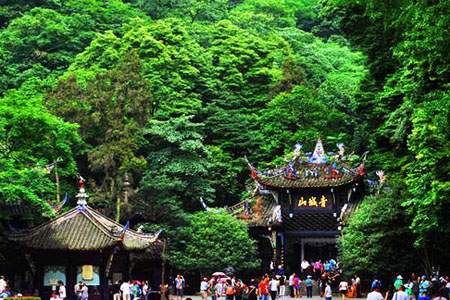
Nestled among the forests of Cuiping Mountain, the temple combines religious architecture with beautiful natural scenery, creating a peaceful destination for both pilgrims and tourists.
 Prince Hall
The Prince Hall serves as the main worship hall of Nezha Palace.
At its center stands a vivid statue of Nezha wearing his iconic Wind Fire Wheels, holding the Fire-Tipped Spear and the Universe Ring (Qiankun Ring). His flowing silk ribbons and lotus-leaf garments reflect the classic artistic image familiar throughout Chinese culture.
The walls surrounding the hall feature colorful murals depicting scenes from Nezha’s legendary life, including his birth, apprenticeship, heroic battles, and famous confrontation with the Dragon King.
Ne zha Cave
Behind the Prince Hall lies Ne zha Cave, one of the temple’s most sacred sites.
The cave measures approximately 5 meters deep and contains a seated statue of Nezha on a lotus throne. Above the entrance is an intricately carved pavilion-style relief, while the cave itself provides a quiet place for worship and reflection.
For many devotees, Nezha Cave represents the spiritual heart of the temple.
Why Is Yibin Considered the Ancestral Home of Ne zha Worship?
Ne zha Palace gained national recognition during the 1990s through cultural exchanges between mainland China and Taiwan.
According to a widely shared account, in 1990, a Taoist temple keeper from Chiayi, Taiwan, dreamed that Nezha guided him to a mountain beside the confluence of three rivers, where an ancient cave and neglected temple awaited restoration. After an extensive search, he arrived at Cuiping Mountain in Yibin and believed it matched the location seen in his dream.
The following year, a delegation of Taoist priests and Nezha devotees from Taiwan visited Yibin to study the site’s history, local traditions, and religious heritage. Their research concluded that Cuiping Mountain represented an important historical center of Nezha worship. With donations from believers and support from local authorities, Nezha Palace was restored and expanded.
Today, the temple continues to welcome pilgrims and visitors from mainland China, Taiwan, Hong Kong, Macau, Southeast Asia, and other regions where Nezha is widely revered.
A Popular Destination After the Ne Zha Films
The worldwide success of the animated Ne Zha films introduced the legendary hero to a new international audience and sparked renewed interest in Nezha’s cultural origins.
During the 2025 Spring Festival, visitor numbers to Cuiping Mountain increased dramatically, with peak daily attendance reaching approximately 8,000 visitors. Many travelers now visit Nezha Palace to explore the mythology behind the beloved character and learn more about traditional Chinese culture.
Things to Do at Nezha Palace
Visitors can enjoy a variety of cultural experiences, including:
* Visit the historic Prince Hall
* Explore the sacred Nezha Cave
* Learn about the legends of Nezha through murals and sculptures
* Experience Taoist religious traditions
* Enjoy panoramic views from Cuiping Mountain
* Discover the cultural origins behind the popular Ne Zha films
* Participate in traditional festivals and temple celebrations
Why Visit Ne zha Palace?
Nezha Palace is more than a religious site—it is an important cultural landmark that connects mythology, Taoist tradition, and contemporary popular culture.
Whether you are fascinated by Chinese mythology, inspired by the Ne Zha films, or interested in Taoist heritage, a visit to Nezha Palace offers a unique opportunity to experience one of China’s most enduring legendary heroes in the place many devotees regard as the spiritual home of Nezha worship.