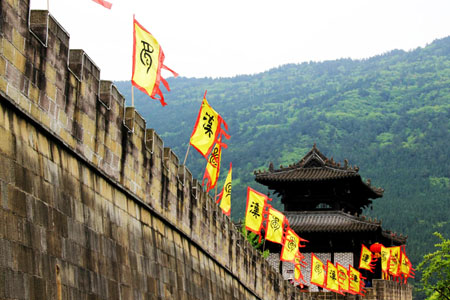
Located about 19 kilometers downstream along the Yangtze River from Yibin City, Sichuan Province, Lizhuang Ancient Town is one of the most historic and culturally significant ancient towns in southern Sichuan. With a history of more than 1,000 years, Lizhuang preserves traditional architecture, ancient streets, temples, and cultural relics from the Ming and Qing dynasties.
The town was officially established in 540 BC, and its name is believed to have originated from a large stone that once stood in the area. Known as the “First Ancient Town along the Yangtze River”, Lizhuang has maintained its original layout and traditional atmosphere despite centuries of change.
More than half of the town’s houses, temples, and streets were built during the Ming and Qing dynasties (1368–1911). Today, visitors can still explore 18 well-preserved ancient lanes featuring traditional wooden houses, stone-paved roads, and historical courtyards.
Lizhuang: A Cultural Refuge During Wartime
Lizhuang holds a special place in modern Chinese history. During the War of Resistance Against Japan (1937–1945), many important Chinese universities, research institutions, and cultural organizations moved inland to escape Japanese bombing.
Among them were:
* Central Research Institute
* Central Museum
* Tongji University
* Cultural and academic institutions associated with Beijing’s Palace Museum collections
During this period, Lizhuang became an important center for Chinese academic research and cultural preservation. The town welcomed many famous scholars, making it known as a “Cultural Town During Wartime.”
Among the scholars who lived here were renowned architects Liang Sicheng and Lin Huiyin. During their six-year stay in Lizhuang, they conducted extensive research on ancient Chinese architecture throughout Sichuan. With Lin Huiyin’s assistance, Liang Sicheng completed important research that contributed to the publication of “A History of Chinese Architecture,” the first comprehensive work of its kind in China.
Visitors can still find their former residence in Lizhuang today.
Ancient Streets and Traditional Architecture
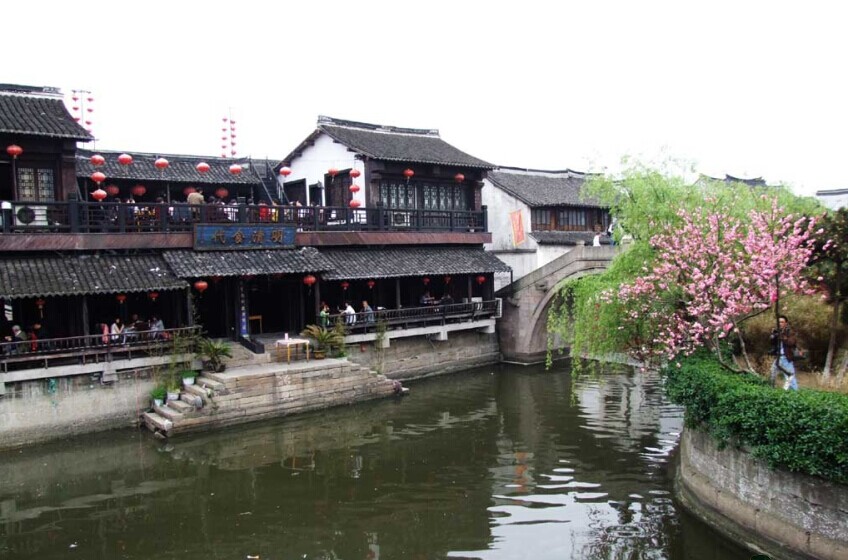
Lizhuang Ancient Town retains the original street layout and architectural style of the Ming and Qing dynasties.
The ancient streets have preserved their traditional names, including:
* Scholar Street
* Well Street
* Sheep and Mat Street
The lanes are usually 2–6 meters wide and mainly paved with traditional green stone slabs. Along both sides of the streets are wooden houses arranged in an orderly style, creating an authentic historical atmosphere.
In Well Street, local residents still use two ancient wells that were dug around 100 years ago, showing how traditional lifestyles continue in the old town.
The best time to visit Lizhuang is generally from June to October, when the weather is comfortable for walking and sightseeing.
Main Attractions of Lizhuang Ancient Town
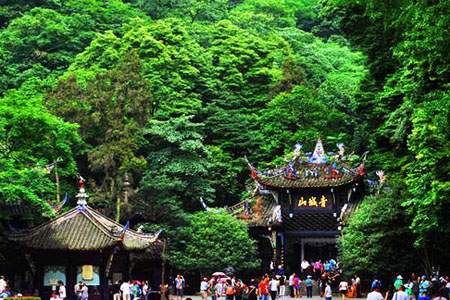
Yuwang Temple
Yuwang Temple is one of the most important historic temples in Lizhuang.
The temple houses a remarkable stone carving of nine dragons playing with a pearl. The relief measures about 2 meters long, 1.5 meters high, and 1 meter wide, weighing more than one ton.
Nearly 200 years old, this triangular stone carving is considered extremely rare and bears similarities to artistic works preserved in the Palace Museum in Beijing.
Ancestral Hall of the Zhang Family
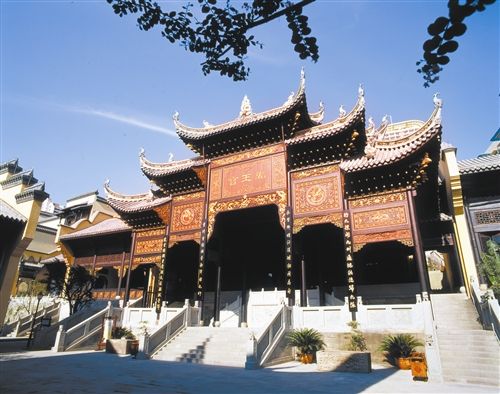
The Zhang Family Ancestral Hall is a masterpiece of traditional Sichuan architecture.
The main hall features 50 window panels decorated with 100 carved red-crowned cranes. Each window contains two cranes surrounded by hollow-carved cloud patterns.
The 100 cranes are all different, showing various poses such as:
* Flying with open wings
* Searching for food near streams
* Standing gracefully
* Resting together
The detailed craftsmanship reflects the outstanding skills of traditional Chinese wood carving.
Historic Mansions and Cultural Relics
Lizhuang Ancient Town contains numerous historical buildings and cultural sites, including:
* Zhang Family Ancestral Hall
* Dongyue Palace
* Zushi Courtyard
* Huiguang Courtyard
* Nanhua Pavilion
* Tianshang Guild Hall
* Xuanluo Pavilion
* Kuixing Building
* Former Site of China Construction Group
* Lifeng Residence
Together, these sites showcase the architectural styles, religious traditions, and social history of southern Sichuan.
Why Visit Lizhuang Ancient Town?
Lizhuang offers a rare combination of:
* Ming and Qing dynasty architecture
* Ancient streets and traditional houses
* Yangtze River scenery
* Wartime cultural history
* Famous scholars’ former residences
* Sichuan folk traditions
Unlike many commercialized ancient towns, Lizhuang maintains a quiet and authentic atmosphere, allowing visitors to experience the historical lifestyle of old Sichuan.
For travelers interested in Chinese architecture, history, and culture, Lizhuang is one of the best cultural destinations near Yibin.








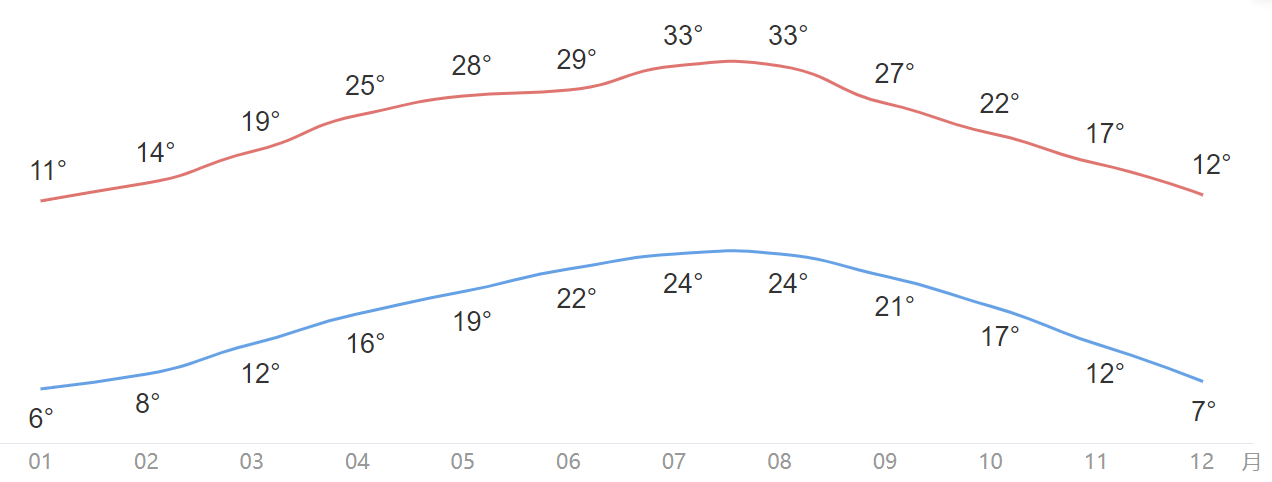 Note: From January to December, red line is the highest Centigrade in average, blue line is the lowest climate in average.