 Located in Songpan County, northern Sichuan Province, Huanglong Scenic National Park (Huanglong Scenic and Historic Interest Area 黄龙风景区) is one of China’s most spectacular natural landscapes. Famous for its colorful travertine pools, snow-capped mountains, ancient forests, waterfalls, and rich Tibetan culture, Huanglong is often described as a “fairyland on earth.”
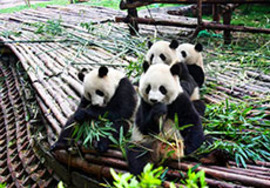
Covering an area of approximately 700 square kilometers, Huanglong lies at the eastern edge of the Tibetan Plateau and is known for its unique limestone formations. The area is also home to diverse ecosystems and rare wildlife, including the giant panda and Sichuan golden snub-nosed monkey.
A Natural Wonder of Colorful Limestone Pools
The most famous landscape of Huanglong is the Huanglong Valley, a 7.5-kilometer-long valley located at the foot of snow-covered mountains near the source of the Fujiang River.
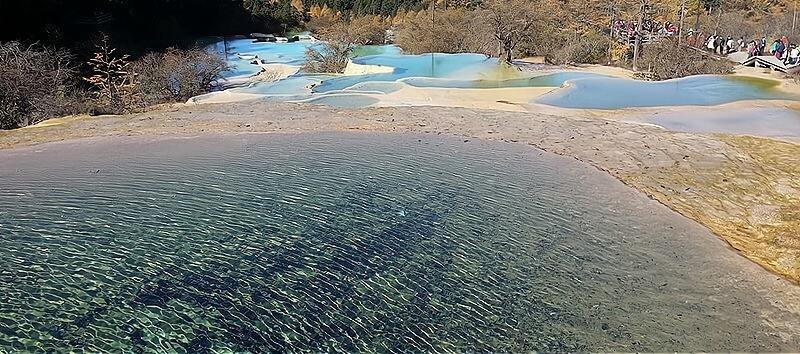
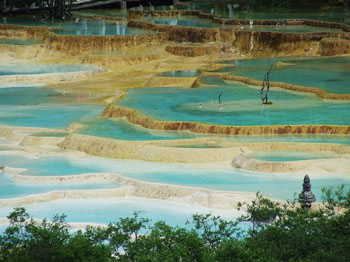
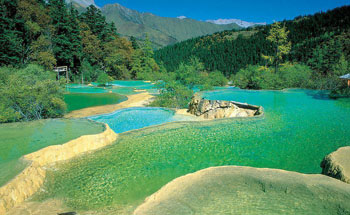
Over thousands of years, water from melting snow has flowed through underground limestone formations, carrying calcium carbonate. As the water travels down the mountain terraces, the minerals are deposited on rocks, stones, and fallen trees, gradually creating thousands of colorful travertine pools.
The golden-yellow terraces resemble a giant dragon descending from the snowy mountains, which is why the area was named Huanglong, meaning “Yellow Dragon.”
When sunlight reflects on the clear water, the pools display brilliant colors ranging from turquoise and emerald green to golden yellow and deep blue, creating one of the most unique landscapes in China.
Famous Pools and Waterfalls in Huanglong
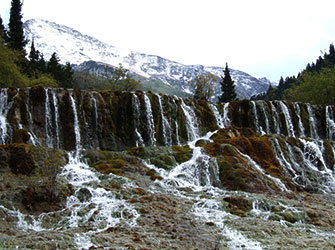 The flowing water in Huanglong creates numerous pools, waterfalls, and terraces. Among them, several scenic areas are especially famous:
Five-Color Pool
The highest and most spectacular section of Huanglong Valley, featuring hundreds of colorful limestone pools surrounded by mountain scenery.
Flower-Washing Pool
A beautiful group of small pools decorated with colorful mineral formations.
Bonsai Pool
Known for its unique miniature landscapes created by trees growing among limestone deposits.
Mirror Pool
Famous for its calm water surface reflecting the surrounding mountains and forests.
Rhododendron Pool
Surrounded by blooming rhododendrons, especially beautiful in spring and early summer.
 Jade Plants Pool
Featuring delicate limestone formations and crystal-clear water.
Brilliant Flying Waterfall
A spectacular waterfall about 10 meters high and 60 meters wide, where water flows over unique jagged cliffs.
Bathing Cave Waterfall
A seven-meter waterfall forming a beautiful curtain of water.
Rich Forest Ecosystems and Wildlife
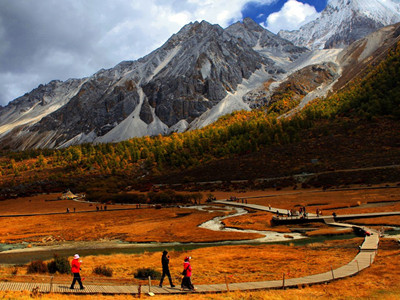
Huanglong is located in a unique ecological transition zone between eastern humid forests and the alpine ecosystems of the Qinghai-Tibet Plateau.
Its location at the intersection of several major plant regions, combined with a wide range of elevations, creates exceptional biodiversity.
The vegetation changes dramatically with altitude:
* 1,700–2,300 meters: Mixed forests dominated by Chinese hemlock, spruce, and maple trees
* 2,300–3,600 meters: Alpine coniferous forests
* 3,600–4,200 meters: Alpine meadows with shrubs and grasses
The area contains many rare and endangered plant species, including numerous rhododendron varieties.
Huanglong is also an important habitat for wildlife, including:
* Giant panda
* Sichuan golden snub-nosed monkey
* Brown bear
* Asiatic black bear
* Sichuan takin
* Chinese monal
* Various rare bird species
 Cultural and Religious Heritage
Beyond its natural beauty, Huanglong also has deep cultural and religious significance.
According to local traditions, the area was once associated with the Taoist immortal Huanglong Zhenren, who was believed to have practiced meditation here.
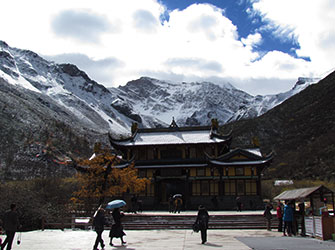
Several historic temples were built in Huanglong during the Ming Dynasty (1368–1644). Although some structures have been damaged over time, the rear temple at the end of Huanglong Valley remains well preserved and continues to attract visitors.
Every year during the sixth month of the lunar calendar, the Huanglong Temple Fair brings together Tibetan, Qiang, Hui, and Han communities. Visitors can experience:
* Religious ceremonies
* Traditional singing and dancing
* Local customs
* Tibetan cultural celebrations
Legends of Huanglong Valley
Many natural features in Huanglong are connected with Tibetan legends and local folklore.
One famous story tells that the Xishen Waterfall (“Body Washing Waterfall”) was once a place where a heavenly goddess bathed. Local people believe the water has special healing powers and brings blessings to those who visit.
These legends add a spiritual atmosphere to the already magical landscape of Huanglong.
Why Visit Huanglong Scenic Area?
Huanglong is one of the most unforgettable destinations in Sichuan, combining natural beauty, biodiversity, and cultural heritage.
Visitors can enjoy:
* Colorful travertine pools
* Snow mountain views
* Alpine forests and meadows
* Tibetan cultural experiences
* Rare wildlife habitats
* Ancient temples and legends
Together with nearby Jiuzhaigou Valley, Huanglong is one of the highlights of any Sichuan and Tibetan Plateau journey.
Travel Tips for Huanglong
* Best time to visit: May to October; autumn offers especially beautiful forest colors.
* Recommended duration: Half a day to one full day.
* Altitude: The scenic area reaches over 3,500 meters, so visitors should allow time to adapt.
* What to bring: Warm clothing, sunscreen, sunglasses, and comfortable walking shoes.
* Nearby attraction: Jiuzhaigou Valley, another world-famous natural scenic area in northern Sichuan.
Tour Map of Huanglong National Park:

Weather Information of Huanglong National Park:
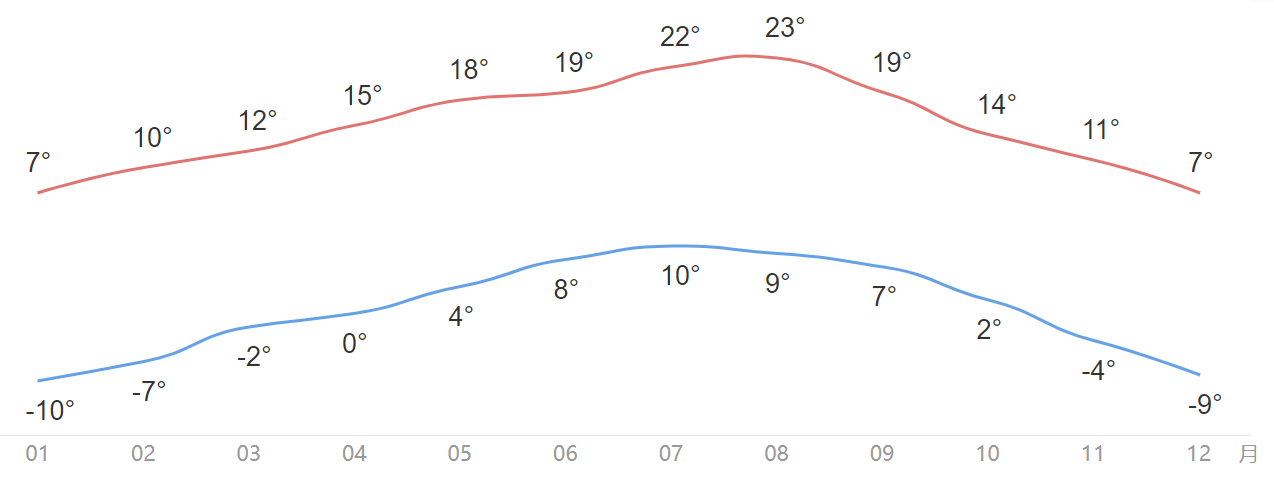
Note: From January to December, red line is the highest Centigrade in average, blue line is the lowest climate in average.
Huanglong Tours and Packages:
1. Jiuzhaigou Private Tours departure from Chengdu
2. 3 Days Jiuzhaigou and Huanglong Package Tour
3. 4 Days Jiuzhaigou and Ruoergai Grassland Tours
4. 7 Days Chengdu & Jiuzhaigou Tours
3. 8 Days Classic Tour of Jiuzhaigou,Leshan and Chengdu
4. 10 Days Jiuzhaigou, Danba, Yading Tours in East Tibetan Plateau
5. Oriental Eden Exploration