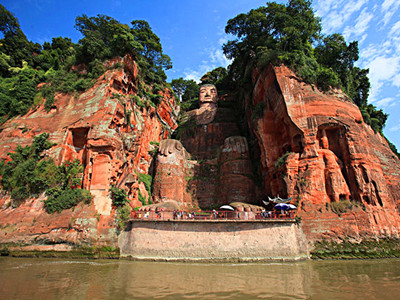
Located on the eastern bank of the Jialing River, about 4 kilometers north of Guangyuan City, Sichuan Province, the Guangyuan Thousand Buddha Cliff is one of the most important Buddhist grotto sites in Southwest China. Known for its magnificent cliff carvings and rich historical value, it is regarded as a treasure house of ancient Chinese grotto art.
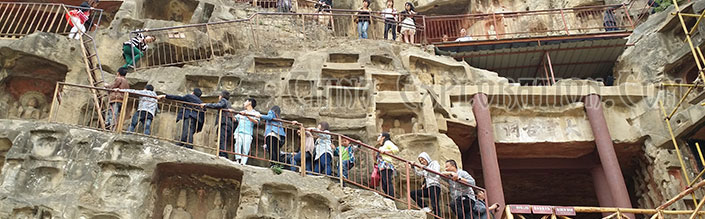
The Thousand Buddha Cliff stretches approximately 420 meters long and 40 meters high, making it the largest grotto complex in Sichuan Province. The caves and Buddhist shrines are arranged across the cliff in layers, with the highest sections reaching 13 levels.
During the Qing Dynasty, the cliff once contained more than 17,000 Buddhist statues. Today, more than 400 grottoes and shrines with over 7,000 statues remain, representing artistic works from different historical periods, including the:
* Tang Dynasty (618–907)
* Five Dynasties Period (907–960)
* Song Dynasty (960–1279)
* Yuan Dynasty (1271–1368)
* Ming Dynasty (1368–1644)
* Qing Dynasty (1644–1911)
The site also preserves more than 100 inscriptions and cliff carvings from various dynasties, providing valuable information about Chinese Buddhism, sculpture, and history.
Layout of Thousand Buddha Cliff
Centered around the famous Dayun Cave, the Thousand Buddha Cliff can be divided into two sections: the southern area and the northern area.
Southern Section
The southern section contains some of the most famous caves, including:
* Big Buddha Cave
* Lotus Cave
* Sakyamuni Cave
* Thousand Buddha Cave
* Sleeping Buddha Cave
* Multi Treasures Buddha Cave
These grottoes display exquisite Buddhist sculptures and reflect the artistic styles of different historical periods.
Northern Section
The northern section features important Buddhist shrines such as:
* Three World Buddhas Grotto
* Maitreya Buddha Grotto
* Three Buddha Bodies Shrine
* Vairocana Buddha Shrine
* Qing Dynasty Hiding Buddha Cave
The collection represents the development of Chinese Buddhist sculpture from the Northern and Southern Dynasties through the Tang, Song, Yuan, Ming, and Qing dynasties.
Dayun Cave
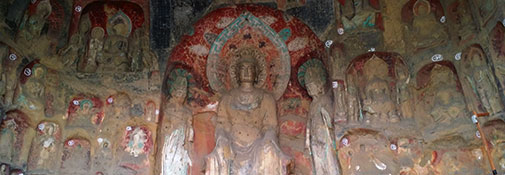
Located at the center of the Thousand Buddha Cliff, Dayun Cave is one of the most remarkable attractions. The cave measures approximately 3.8 meters high, 3.6 meters wide, and 10.6 meters long.
Inside the cave stands a magnificent statue of Maitreya Buddha, also known as the Laughing Buddha. The statue features broad shoulders, a rounded face, a large body, and a peaceful expression with a gentle smile.
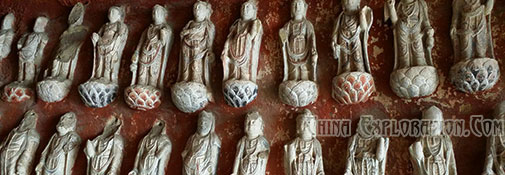
Behind the Buddha statue is a cone-shaped stone wall decorated with numerous small Buddhist shrines and Bodhisattva carvings. On both sides of the cave are two deep shrines containing seven statues, including:
* One Buddha
* Two disciples
* Two Bodhisattvas
* Two guardian warriors
The cave walls are also carved with 148 Bodhisattva figures, each displaying elegant clothing and distinctive artistic styles.
Artistic Value of the Grottoes
The sculptures in the Big Buddha Cave and Three-Sage Shrine are especially valuable examples of early Buddhist art. The statues feature delicate facial expressions, refined clothing details, and elegant craftsmanship.
The Three-Sage Shrine contains inscriptions dating back to 555 AD during the Liang Kingdom of the Southern Dynasty, making these sculptures among the earliest works preserved at Thousand Buddha Cliff.
The Lotus Cave is another important site. It is named after the large lotus carving on the central ceiling panel. Later artists from the Song Dynasty added peony decorations and incorporated Taoist symbols such as the Bagua Taiji diagram, showing the cultural interaction between Buddhism and traditional Chinese philosophy.
Sleeping Buddha Cave
The Sleeping Buddha Cave is considered one of the masterpieces of Tang Dynasty Buddhist sculpture.
The reclining statue of Sakyamuni Buddha has a calm and peaceful expression. Behind him, disciples are carved with different emotional expressions, including grief and sorrow. Some appear to cry or beat their chests, vividly portraying the scene of Buddha’s passing.
The cave also contains relief carvings depicting the story of Buddha’s cremation, making it an outstanding example of Tang Dynasty stone carving art.
A Treasure House of Ancient Chinese Art
Beyond its major caves, Thousand Buddha Cliff contains countless smaller shrines featuring vivid sculptures of:
* Foreign-style artists
* Dancing celestial figures
* Musicians
* Winged flying figures
* Armored warriors
* Animals and mythical creatures
With its enormous collection, diverse artistic styles, and historical significance, Guangyuan Thousand Buddha Cliff is considered one of the great treasures of ancient Chinese grotto art.
Visit Guangyuan Thousand Buddha Cliff
A visit to Guangyuan Thousand Buddha Cliff offers travelers a unique opportunity to explore more than a thousand years of Buddhist history and Chinese artistic achievement. Together with other famous grotto sites in China, it represents the extraordinary creativity and craftsmanship of ancient Chinese sculptors.