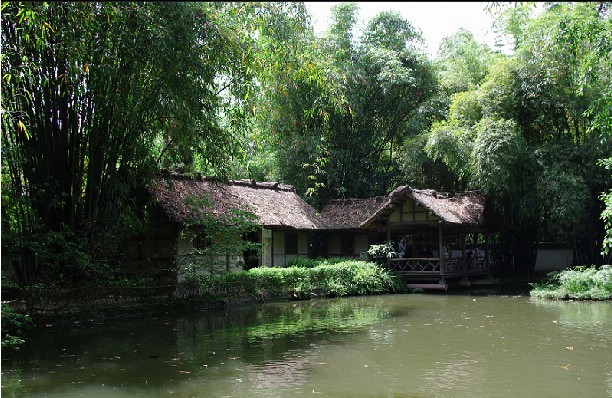
 Located in western Chengdu, Sichuan Province, Du Fu Thatched Cottage is the former residence of Du Fu, one of the greatest poets in Chinese history.
Built beside the Flower Bathing Brook more than 1,200 years ago, the cottage has become a symbol of Chinese poetry and literature. Today, it serves as both a historical memorial site and a traditional Chinese garden, attracting visitors who want to experience the cultural spirit of ancient Chengdu.
The Story of Du Fu and His Chengdu Years
Du Fu was born in 712 AD in Gongyi, Henan Province, during the prosperous Tang Dynasty (618–907).
After failing the official examination in Chang’an (modern Xi’an), he continued living there for more than ten years. In 758, during the turbulent period of the An Lushan Rebellion, Du Fu left the capital and eventually traveled to Chengdu in 759.
With the help of his friends, he built a simple thatched house beside Flower Bathing Brook on the western outskirts of Chengdu in 760.
During his approximately four years living here, Du Fu created more than 240 poems, many of which are now considered masterpieces of Chinese literature and valuable cultural treasures.
His poems reflected:
* The lives of ordinary people
* Social changes during wartime
* His concern for the country and society
* The beauty of nature
Because of his profound influence, Du Fu is often honored as the “Poet Sage” of China.
From Abandoned Cottage to Literary Memorial
After Du Fu left Chengdu, the original cottage gradually fell into decline.
Hundreds of years later, during the Northern Song Dynasty (960–1127), a temple was built on the original site to commemorate the great poet.
Over the following centuries, the site was repeatedly restored and expanded. Two major renovations in:
* 1500 during the Ming Dynasty
* 1811 during the Qing Dynasty
established the basic layout and architectural style seen today.
Today, Du Fu Thatched Cottage has become an important cultural landmark and a shrine dedicated to Chinese poetry.
A Traditional Chinese Garden in Chengdu
Covering approximately 24 hectares, Du Fu Thatched Cottage combines:
* The eastern Fan’an Temple area
* The western Plum Garden
* Memorial halls
* Traditional gardens
* Historic buildings
The architecture follows the style of the Qing Dynasty, featuring classic Chinese garden design with a harmonious combination of buildings, water, plants, and landscapes.
Visitors can enjoy:
* Quiet streams
* Elegant bridges and pavilions
* Bamboo forests
* Plum trees
* Traditional courtyards
The changing seasons bring different scenery:
* Plum blossoms in spring
* Lotus flowers in summer
* Chrysanthemums in autumn
* Orchids in winter
creating a poetic atmosphere throughout the year.
Historic Buildings Inside Du Fu Thatched Cottage
The main architectural axis of the site includes several important structures:
Screen Wall and Main Gate
The entrance introduces visitors to the peaceful and elegant atmosphere of the traditional garden.
Lobby
A historical reception area reflecting traditional Chinese architectural style.
Hall of Poetic History
This hall displays information about Du Fu’s life and literary achievements.
F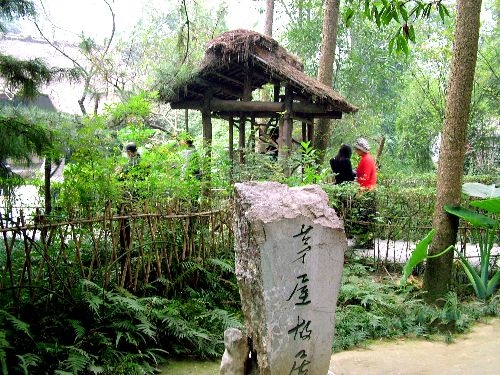 aggot Gate
A simple traditional structure symbolizing the humble lifestyle of the poet.
Gong Bu Temple
Named after Du Fu’s official title Gong Bu Yuan Wai Lang, this temple honors the poet and preserves important cultural relics.
Cultural Treasures and Memorials
Near Gong Bu Temple stands the Tablet Pavilion, located close to the original site of Du Fu’s cottage.
The pavilion, surrounded by bamboo fences, vegetable gardens, and herb gardens, recreates the simple rural environment where Du Fu lived and wrote.
Inside the memorial area, visitors can see:
* A grand bronze statue of Du Fu
* A lifelike clay figure of the poet
* Historical inscriptions and cultural exhibits
These displays help visitors understand the life, personality, and literary achievements of one of China’s greatest poets.
Why Visit Du Fu Thatched Cottage?
Du Fu Thatched Cottage is one of Chengdu’s most important cultural attractions, offering a peaceful escape from the modern city.
Visitors can experience:
* The birthplace of many famous Tang poems
* Traditional Chinese garden architecture
* Ancient literary culture
* Chengdu’s elegant lifestyle
* The spiritual world of China’s “Poet Sage”
For travelers interested in Chinese history, literature, and traditional culture, Du Fu Thatched Cottage is an unforgettable stop in Chengdu.
Travel Tips for Du Fu Thatched Cottage
* Best time to visit: Spring and autumn offer the most pleasant weather and beautiful garden scenery.
* Recommended duration: 1–2 hours.
* Location: Western Chengdu, Sichuan Province.
* Best combination: Visit together with nearby attractions such as Qingyang Temple and Jinli Ancient Street.