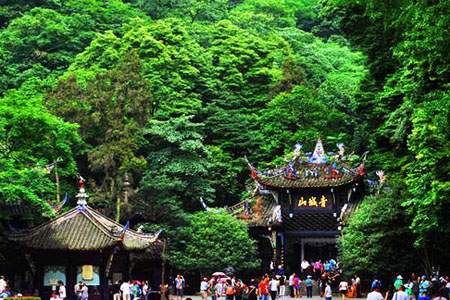
Located in Mianyang City in the western Sichuan Basin, Beichuan Qiang Autonomous County is the only Qiang autonomous county in China and one of the most important destinations for experiencing Qiang ethnic culture.
The Beichuan Qiang Culture Tourism Area includes the Wenchuan Earthquake Memorial Area, Beichuan New County, the Beichuan Earthquake Museum, the Beichuan Qiang Folk Customs Museum, Ji’na Qiang Village, En’da Qiang Village, Shiyi Qiang Village, and the Weisite Tourist Center.
For thousands of years, the Qiang, Han, Tibetan, Hui, and other ethnic groups have lived together in harmony in Beichuan, creating a unique cultural landscape featuring traditional customs, architecture, festivals, handicrafts, and folk traditions.
Known as the “Hometown of Great Yu,” Beichuan is believed to be the birthplace of Yu the Great, the legendary founder of the Xia Dynasty, who controlled the floods and created a new era in Chinese civilization. Today, the region preserves both ancient Qiang heritage and modern historical memories.
After the devastating 5.12 Wenchuan Earthquake in 2008, a new Beichuan County was rebuilt with support from people across China. The new city has become a symbol of resilience, hope, and renewal, adding a unique meaning to Beichuan’s tourism appeal.
Famous Attractions in Beichuan
En’da Qiang Village
Located near the entrance of the old Beichuan County earthquake ruins, En’da Qiang Village is an important cultural tourism site and a gateway connecting Beichuan Qiang Autonomous County with Jiuzhaigou Valley.
Surrounded by mountains and natural scenery, the village showcases traditional Qiang culture, including local architecture, folk customs, handicrafts, and ethnic traditions.
With its unique location and cultural atmosphere, En’da Qiang Village has become a popular destination for visitors interested in experiencing authentic Qiang life.
Longyin Town
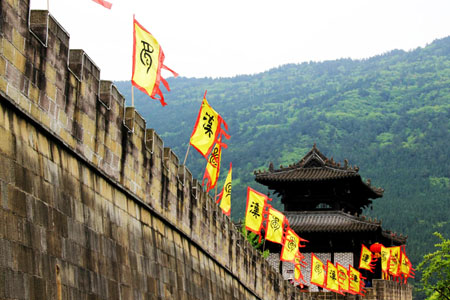
Formerly known as Beidou Town, Longyin Town is a historic town that recreates the lifestyle and architectural style of the Republic of China period in southwestern China.
The town is also a famous film and television shooting location. Visitors can walk through stone-paved streets, admire traditional buildings, see old-style waterwheels, and explore local handicrafts featuring western Sichuan characteristics.
Highlights include:
* Traditional Republic-era architecture
* Historic streets
* Folk art displays
* Local cultural experiences
Longyin Town offers visitors a journey back in time to early 20th-century Sichuan.
Beichuan Qiang Folk Customs Museum
Located opposite Ji’na Qiang Village, the Beichuan Qiang Folk Customs Museum is one of the most important institutions for preserving and displaying Qiang cultural heritage.
Known as one of the largest Qiang folk museums in China, it houses more than 2,000 cultural relics, including 123 national-level third-grade cultural relics.
The museum includes:
* Exhibition halls
* Cultural relic storage areas
* Research and management facilities
* Visitor reception areas
Designed with traditional Qiang cultural elements, the museum provides visitors with a deeper understanding of Qiang history, religion, architecture, clothing, festivals, and traditional craftsmanship.
Shiyi Qiang Village
Located in a beautiful alpine environment, Shiyi Qiang Village is famous for its rich biodiversity and excellent natural landscape.
Thanks to its unique geological conditions and abundant clear springs, the area supports a wide variety of alpine fruits, ancient trees, rare flowers, and wildlife.
With more than 1,000 plant species and over 200 animal species, Shiyi Qiang Village is known as a “Natural Gene Bank of Species.”
The village enjoys:
* Forest coverage of over 96%
* Fresh mountain air
* Rich ecological resources
* A pleasant climate
It is often described as a natural oxygen bar and an ideal destination for eco-tourism and nature lovers.
Why Visit Beichuan?
Beichuan offers a rare combination of ethnic culture, natural landscapes, and historical memories.
Visitors can experience:
* Authentic Qiang ethnic traditions
* Ancient villages and traditional architecture
* Earthquake memorial culture
* Folk museums and cultural heritage
* Alpine forests and ecological landscapes
For travelers exploring Sichuan beyond Chengdu, Beichuan provides a meaningful journey into one of China’s most distinctive ethnic regions.