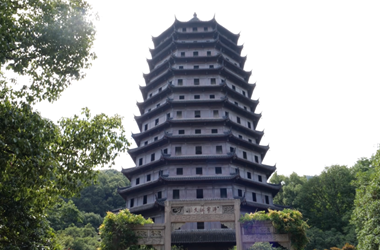
 Liuhe Pagoda (Six Harmonies Pagoda 六合塔) is one of the most famous ancient landmarks in Hangzhou, Zhejiang Province. Located at No.16 Zhijiang Road, West Lake District, near the Qiantang River and West Lake Scenic Area, the pagoda was originally built in 970 AD during the Northern Song Dynasty. It was constructed under the order of Qian Hongchu, the King of Wuyue, with the original purpose of controlling the powerful tides of the Qiantang River and protecting local people.
With its magnificent structure, elegant appearance, and profound Buddhist cultural background, Liuhe Pagoda has become one of the most important historical sites in Hangzhou and a representative example of ancient Chinese architecture.
History and Cultural Significance of Liuhe Pagoda
The name “Liuhe” (Six Harmonies) refers to the harmony of the six directions in Buddhist philosophy: east, west, south, north, heaven, and earth. The pagoda was built as both a religious monument and a symbol of peace and stability.
Over more than 1,000 years, Liuhe Pagoda has experienced several restorations. The current structure mainly preserves the architectural style of the Southern Song Dynasty, reflecting the outstanding craftsmanship and artistic achievements of ancient Chinese builders.
Standing beside the Qiantang River, the pagoda has long been admired as a landmark for travelers visiting Hangzhou. It represents the perfect combination of Buddhist culture, ancient engineering, and natural scenery.
Architectural Features of Liuhe Pagoda
The Liuhe Pagoda covers an area of approximately 890 square meters and stands 59.89 meters high. The tower has an octagonal shape and combines brickwork with wooden architectural elements, creating a unique style of traditional Chinese pagoda construction.
The pagoda has:
* 13 exterior eaves, with 7 visible floors connected to the interior structure and 6 decorative levels, creating the famous pattern of “seven bright floors and six dark floors”.
* A wooden-style masonry structure with spiral stairs leading visitors to the top floor.
* A complex design consisting of four parts on each level: the outer wall, corridor, inner wall, and central tower chamber.
* More than 100 iron bells hanging from the outer eaves, creating beautiful sounds when touched by the wind.
The tower walls are exceptionally thick, with the ground floor walls reaching about 4.12 meters in thickness, demonstrating the advanced construction techniques of ancient China.
 Artistic Beauty of Liuhe Pagoda
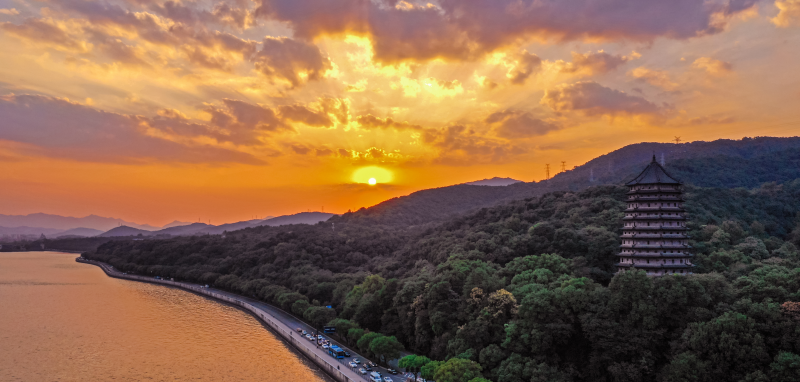
The exterior design of Liuhe Pagoda is elegant and harmonious. Its octagonal structure, layered eaves, and gradually narrowing shape create a graceful silhouette against the landscape of the Qiantang River.
The decorative carvings on the pagoda’s Xumi pedestal are especially valuable. They include patterns of:
* Flowers and birds
* Animals
* Flying figures
* Musicians
* Buddhist mythical creatures such as Kalavinka birds
These exquisite artworks showcase the artistic achievements of ancient Chinese sculpture and provide important historical materials for the study of Chinese architecture.
Visiting Liuhe Pagoda in Hangzhou
Today, Liuhe Pagoda is not only an important cultural heritage site but also a popular attraction for visitors exploring Hangzhou. From the top of the pagoda, travelers can enjoy panoramic views of the Qiantang River, surrounding mountains, and the beautiful scenery of West Lake.
As one of the finest examples of Song Dynasty architecture in China, Liuhe Pagoda offers visitors a chance to experience ancient Chinese history, Buddhist culture, and traditional architectural wisdom in one unforgettable destination.