Kuqa (Kuche) – Discover the Ancient Kingdom of Qiuci in Xinjiang
Kuqa (also known as Kuche or Kucha) is a historic oasis city in the Xinjiang Uyghur Autonomous Region of northwest China. Once the heart of the ancient Kingdom of Qiuci, Kuqa was an important cultural and commercial center along the ancient Silk Road. It played a significant role in connecting China with Central Asia and the West, particularly through trade, Buddhism, music, and art.
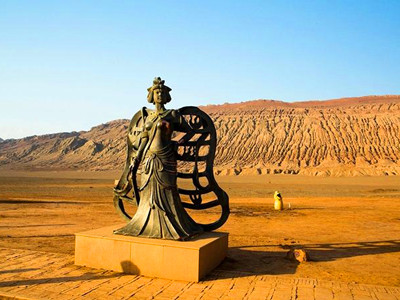
In ancient times, Kuqa was renowned for its distinctive Buddhist culture and musical traditions. The region was home to communities speaking Tocharian languages, and its cultural heritage reflects centuries of interaction between Eastern and Western civilizations. Kuqa musicians and dancers were particularly admired in Chang’an (present-day Xi’an), the capital of the Tang Dynasty, where Central Asian music and dance became popular among the imperial court and urban residents.
Located on the northern edge of the Tarim Basin, Kuqa lies approximately 280 km west of Korla and 290 km east of Aksu. Today, it is a welcoming city where visitors can experience traditional Uyghur culture, explore historic neighborhoods, and discover the fascinating heritage of the ancient Silk Road.
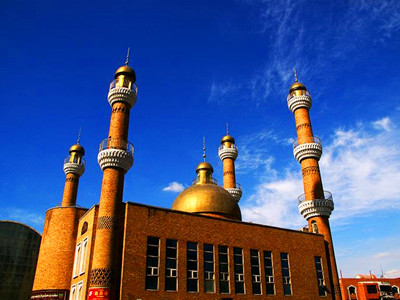
A visit to Kuqa would not be complete without exploring its traditional bazaars and the impressive Kuqa Grand Mosque. The local markets offer a glimpse into everyday life, with colorful displays of fresh produce, traditional handicrafts, local foods, and regional specialties.
Major Attractions in Kuqa
1. Tianshan Mysterious Grand Canyon
Located approximately 65–70 km north of Kuqa, the Tianshan Mysterious Grand Canyon (also known as Tianshan Grand Canyon) is one of the most spectacular natural attractions in the region.
Carved by natural erosion over millions of years, the canyon features dramatic red sandstone cliffs, unusual rock formations, towering pinnacles, and deep, winding ravines. The reddish-brown rock walls create a striking contrast with the surrounding mountains and blue sky, offering magnificent scenery for photographers and nature enthusiasts.
The canyon varies considerably in width according to the terrain. Its broadest sections are approximately 50 meters wide, while some of its narrowest passages are so tight that visitors must turn sideways to pass through.
Walking along the canyon floor, visitors can admire the towering cliffs and intricate rock formations while enjoying the peaceful atmosphere of this remarkable landscape. The changing sunlight creates different shades of red and orange on the canyon walls, making the scenery particularly impressive throughout the day.
2. Kizil Thousand-Buddha Caves
Located approximately 65–70 km west of Kuqa, near Baicheng County, the Kizil Thousand-Buddha Caves are among the most important Buddhist heritage sites in Xinjiang and one of the earliest major Buddhist cave complexes in China.
Dating mainly from the 3rd to the 8th centuries, the caves were developed during the flourishing period of the ancient Kingdom of Qiuci. They served as an important center of Buddhist learning and artistic exchange along the northern Silk Road, even predating the construction of the famous Mogao Grottoes in Dunhuang.
Carved into sandstone cliffs along the Muzart River Valley, the complex contains 236 numbered caves, featuring remarkable Buddhist murals, sculptures, and architectural remains. The surviving mural paintings cover approximately 10,000 square meters and depict Buddhist stories, religious figures, and scenes reflecting the cultural exchanges between India, Central Asia, and China.
The artistic style of the Kizil murals is particularly distinctive, combining Indian Buddhist influences with Central Asian and local artistic traditions. These paintings provide valuable insights into the religious beliefs, artistic achievements, and cultural life of the ancient Qiuci Kingdom.
Today, the Kizil Thousand-Buddha Caves are recognized as an important component of the Silk Roads: the Routes Network of Chang’an-Tianshan Corridor, which was inscribed on the UNESCO World Heritage List in 2014.
Besides Kizil, the wider Kuqa region also preserves other important Buddhist heritage sites, including the Kumtura Grottoes, Simsim Grottoes, and Subashi Buddhist Temple Ruins. Together, these sites demonstrate the remarkable importance of ancient Qiuci as a center of Buddhist culture along the Silk Road.
How to Get to Kuqa
Kuqa is accessible by both train and air, making it a convenient destination for travelers exploring southern Xinjiang.
Kuqa has its own railway station, with train connections to major destinations in Xinjiang, including Urumqi, Korla, Aksu, and Kashgar. Travelers can also reach the city by flight through Kuqa Qiuci Airport.
For greater flexibility, private car transfers are another convenient option, particularly for visiting attractions outside the city, such as the Kizil Thousand-Buddha Caves and Tianshan Mysterious Grand Canyon.
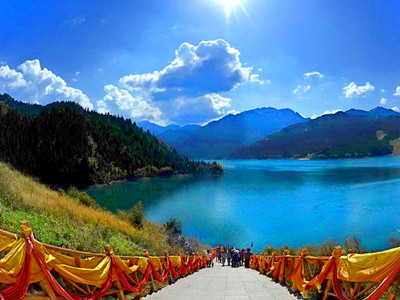
Travelers exploring Xinjiang by road can also include Kuqa in a longer journey connecting Korla, Aksu, and Kashgar. It is especially popular as a starting or ending point for journeys along the spectacular Duku Highway, which crosses the Tianshan Mountains.