 The Shenyang Imperial Palace (Mukden Palace / Shenyang Gugong) is one of the most important historical attractions in Northeast China. Located at No. 171 Shenyang Road, Shenhe District, Shenyang City, Liaoning Province, it is the only existing royal palace complex in China outside Beijing’s Forbidden City.
Built during the early Qing Dynasty, the palace reflects the unique history, architecture, and cultural traditions of the Manchu people. Together with the Forbidden City in Beijing, it was listed as a UNESCO World Heritage Site in 2004 as part of the Imperial Palaces of the Ming and Qing Dynasties.
History of Shenyang Imperial Palace
The construction of Shenyang Imperial Palace began in 1625 during the reign of Nurhachi, the founder of the Qing Dynasty. It was completed in 1636 by his son Huang Taiji (Abahai), who established the Qing imperial system before the dynasty moved its capital to Beijing.
Both Nurhachi and Huang Taiji played key roles in the rise of the Qing Dynasty, and the palace preserves important evidence of the dynasty’s early development.
Covering an area of more than 60,000 square meters, Shenyang Imperial Palace is about one-twelfth the size of Beijing’s Forbidden City. The complex contains more than 300 rooms and approximately 20 courtyards, combining imperial architecture with distinctive Manchu, Han, and Mongolian cultural influences.
The palace can be divided into three main sections: the Eastern Section, Middle Section, and Western Section, each featuring unique architectural styles and historical significance.
Eastern Section — The Origin of Manchu Royal Architecture
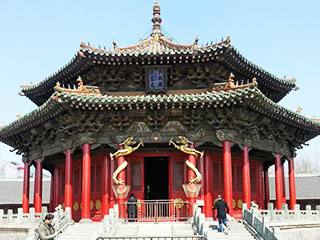
The Eastern Section is centered around the impressive Hall of Great Affairs (Da Zheng Dian), where emperors held important ceremonies, issued imperial orders, and received victorious military commanders.
Nearby stands the famous Ten Kings Pavilion, which was used by leaders of the Eight Banners (Ba Qi) to discuss state affairs.
The architecture of this area is particularly unique because it combines Manchu, Han, and Mongolian cultural elements. The design was inspired by traditional nomadic tent structures, reflecting the origins of the Manchu people before they established the Qing Dynasty.
 Middle Section — The Main Imperial Area
The Middle Section begins with the Da Qing Gate and follows a central north-south axis including:
* Chong Zheng Hall
* Phoenix Tower
* Qingning Palace
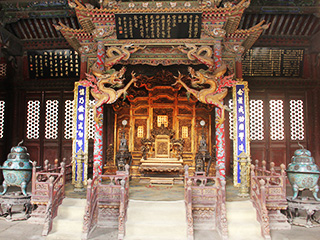
Chong Zheng Hall was the most important building in the palace and served as the place where Huang Taiji conducted government affairs.
The Phoenix Tower, a three-story structure, was once the tallest building in Shenyang and served as an important royal viewing platform.
Qingning Palace was the living residence of Huang Taiji and his consorts, representing the private life of the early Qing imperial family.
Western Section — The Cultural and Library Area
The Western Section was built under the order of Emperor Qianlong (1711–1799) during the later Qing Dynasty.
Its main structure is the Wensu Pavilion, which was built to store the famous Complete Library of the Four Treasures (Siku Quanshu).
The pavilion features a black roof because traditional Chinese beliefs associated black with water, symbolizing protection against fire and safeguarding precious books.
Other important buildings in this area include the Opera Stage, Jiayin Hall, and Yangxi Room, which were used for cultural and entertainment activities.
Rich Imperial Collections and Cultural Relics
Today, Shenyang Imperial Palace houses a valuable collection of Qing Dynasty cultural relics, including:
* Nurhachi’s sword
* Huang Taiji’s broadsword
* Ancient paintings and calligraphy
* Ceramics
* Sculptures
* Lacquerware
These collections provide visitors with a deeper understanding of the early Qing Dynasty and the lives of its emperors.
A Must-Visit Qing Dynasty Heritage Site
As the only royal palace complex in China besides Beijing’s Forbidden City, Shenyang Imperial Palace offers a rare opportunity to explore the origins of the Qing Dynasty.
With its magnificent architecture, rich historical background, and priceless cultural collections, the palace is the most famous attraction in Shenyang and an essential destination for travelers interested in Chinese history and imperial culture.