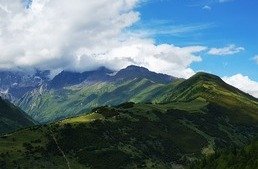
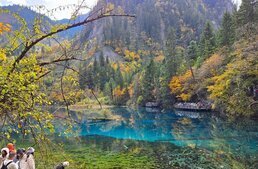
Located about 80 km southeast of Yunyang County, Chongqing, Tianxia Longgang National Geopark (also known as Yunyang Longgang Geopark) is one of China’s most spectacular karst geological wonders. The park stretches approximately 37 km from north to south and 19 km from east to west, covering an area of 296 square kilometers with elevations reaching 1,625 meters above sea level.
Renowned for its extraordinary karst landscapes, deep canyons, and dramatic sinkholes, the geopark is famous for two signature attractions: Longgang Sinkhole (Dragon Jar Sinkhole) and the Shisun (Stalagmite) River Grand Canyon. Together, they showcase some of the finest examples of karst landforms in China and make the park a paradise for geology enthusiasts, hikers, photographers, and nature lovers.
Dragon Jar Sinkhole (Longgang Tiankeng)
The Dragon Jar Sinkhole is the most iconic attraction in the geopark. Shaped like an irregular ellipse, it measures approximately 304–326 meters in length, 178–183 meters in width, and reaches a remarkable depth of 335 meters, making it the third-deepest sinkhole in China and one of the deepest vertical sinkholes in the world.
Its nearly 90-degree vertical cliffs create an awe-inspiring natural spectacle rarely seen elsewhere. The sinkhole was formed over millions of years through continuous karst collapse and limestone dissolution, resulting in one of the world’s finest examples of vertical karst topography.
One of its most remarkable geological features is its three-layer cave system:
* Full Moon Cave (first level)
* Moon Cliff Cave (second level)
* Underground River Cave (third level)
The underground river eventually flows into the scenic Shisun (Stalagmite) River, creating a complete and fascinating karst ecosystem.
Shisun (Stalagmite) River Grand Canyon
Descending from the northern cliffs of the Longgang Sinkhole, visitors can reach the breathtaking Shisun River Grand Canyon after a challenging mountain hike. Over millions of years, the river has carved a magnificent canyon through thick limestone formations, creating towering cliffs, crystal-clear waters, and dramatic geological scenery.
The canyon’s most distinctive landmark is a giant limestone pillar, rising more than 200 meters above the river. Resembling a massive stalagmite, it gives the river its name and stands as one of the park’s most impressive natural monuments.
The emerald-green river winds peacefully through the canyon, offering spectacular scenery throughout the journey. Visitors can also enjoy a rubber boat ride, drifting along the tranquil canyon before the river eventually joins the mighty Yangtze River.
Arhat Peaks
The Arhat Peaks are another unique karst landscape within the geopark. Named after the Eighteen Arhats of Buddhist tradition, the peaks resemble seated Buddhist monks scattered across the landscape.
Each limestone peak rises 70–100 meters high and is separated by natural sinkholes and depressions formed through karst erosion. From different viewpoints, the peaks appear in constantly changing shapes—some resemble cones, while others look like rounded domes.
Covered with lush forests, farmland, and traditional villages, the Arhat Peaks present a harmonious combination of spectacular geological formations and rural scenery, making them one of the park’s most photogenic landscapes.