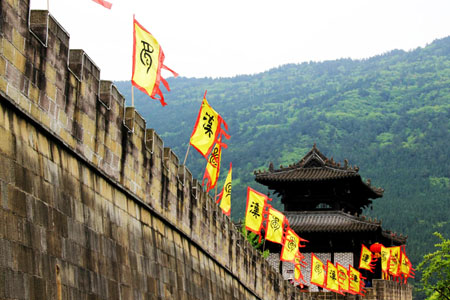
The Tomb of Princess Yongtai is one of the most remarkable satellite tombs of the Qianling Mausoleum, located near Xi’an, Shaanxi Province. It was the first satellite tomb of Qianling to be excavated and remains one of the best-preserved and most impressive Tang Dynasty royal tombs. With its magnificent murals, precious cultural relics, and unique underground structure, the tomb provides valuable insights into the royal life, artistic achievements, and cultural development of the Tang Dynasty (618–907 AD).
History of Princess Yongtai
Princess Yongtai was the granddaughter of Emperor Gaozong of the Tang Dynasty and the famous Empress Wu Zetian. Born into the imperial family, she was one of the most distinguished women of the Tang royal court.
In 700 AD, Princess Yongtai married Wu Yanji, the son of Wu Chengsi, who was Wu Zetian’s nephew. However, her life was tragically short. In 701 AD, she died in Luoyang, Henan Province, at only 17 years old.
According to her epitaph, Princess Yongtai died during childbirth. However, historical legends suggest another explanation: after Princess Yongtai reportedly revealed secrets about Empress Wu Zetian’s private affairs, she and her husband were allegedly sentenced to death by the empress. Although the exact truth remains debated among historians, the story has added a mysterious element to the princess’s history.
After Emperor Zhongzong returned to the throne, he posthumously granted his daughter the title of Princess Yongtai and ordered that she and her husband be buried together in the Qianling Mausoleum area in 705 AD.
Architecture of the Tomb
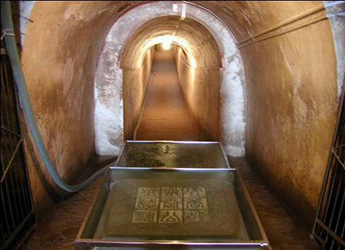
The Tomb of Princess Yongtai has a pyramid-shaped mound and features a long underground structure typical of Tang Dynasty imperial tombs. The tomb measures approximately 87.5 meters in length, with a passage width of 3.9 meters and a burial chamber extending about 16.7 meters underground.
In front of the tomb stand traditional stone sculptures, including a pair of stone lions, two pairs of stone figures, and a pair of ornamental stone columns. These sculptures reflect the grandeur and ceremonial style of Tang royal tombs.
The underground tomb consists of:
* A main passage
* Five stone gateways
* Six skylights
* A paved pathway
* Eight side niches
* An antechamber
* A burial chamber
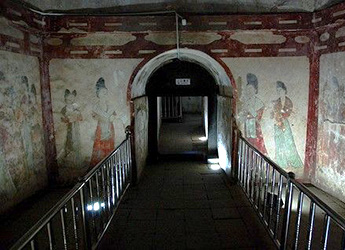
The walls along the tomb passage are decorated with magnificent murals depicting palace attendants, most of whom are elegant female figures dressed in fashionable Central Asian-style clothing popular during the Tang Dynasty.
 Remarkable Tang Dynasty Murals
The murals inside the Tomb of Princess Yongtai are among its greatest treasures. They vividly portray the daily life of the Tang imperial court and demonstrate the high artistic achievements of the period.
The antechamber resembles a luxurious royal reception room, with murals featuring beautifully dressed female attendants. Each figure carries different objects, displays unique expressions, and appears to be gracefully walking toward the princess to provide service.
The ceiling paintings depict celestial scenes, including:
* A three-legged rooster symbolizing the sun
* A Jade Rabbit representing the moon
* The Milky Way connecting the two celestial symbols
These artworks reflect the advanced astronomical knowledge and rich imagination of Tang Dynasty society.
Precious Cultural Relics
The excavation of the Tomb of Princess Yongtai uncovered more than 1,000 valuable cultural relics, including:
* Exquisite murals
* Pottery and wooden figurines
* Tang tri-color glazed pottery (Tang Sancai)
* Gold objects
* Jade ornaments
* Bronze artifacts
Among them, the Tang tri-color glazed pottery figurines are especially significant. With their vivid shapes, elegant designs, and colorful decoration, they represent the outstanding craftsmanship of Tang Dynasty ceramics and provide important evidence of the artistic prosperity of the era.
Burial Chamber and Coffins
The rear chamber contains the stone coffins of Princess Yongtai and her husband. Each coffin was composed of an outer and inner coffin.
The outer stone coffins were decorated with finely carved patterns, demonstrating exceptional craftsmanship. The inner wooden coffins, however, were severely damaged and eventually rotted away due to long-term exposure to underground moisture and silt.
Today, the Tomb of Princess Yongtai is an important cultural attraction near Xi’an, offering visitors a rare opportunity to explore the luxurious world of the Tang imperial family and appreciate some of China’s finest ancient murals and archaeological treasures.