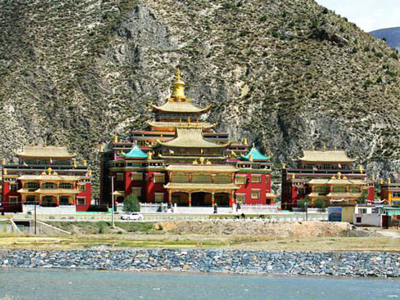
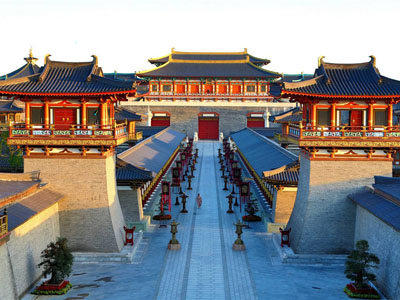
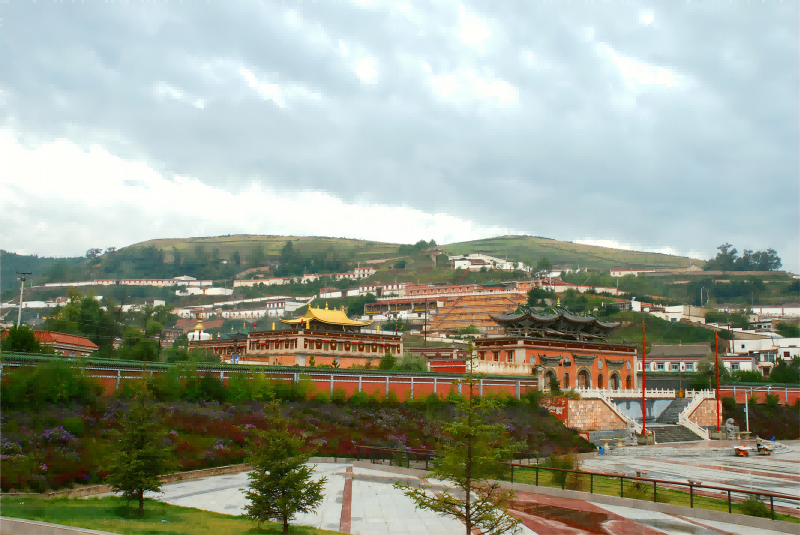
 Kumbum Monastery, also known as Ta’er Temple (Ta’er Si), is one of the most important Tibetan Buddhist monasteries in China. Located in Huangzhong District, Xining City, Qinghai Province, the monastery is about 25 kilometers southwest of downtown Xining and is a must-visit cultural attraction on the Qinghai-Tibet Plateau.
Founded in 1379 during the Ming Dynasty, Kumbum Monastery was built around the Great Golden Tile Hall, which commemorates Tsongkhapa (1357–1419), the founder of the Gelugpa School of Tibetan Buddhism (Yellow Hat Sect).
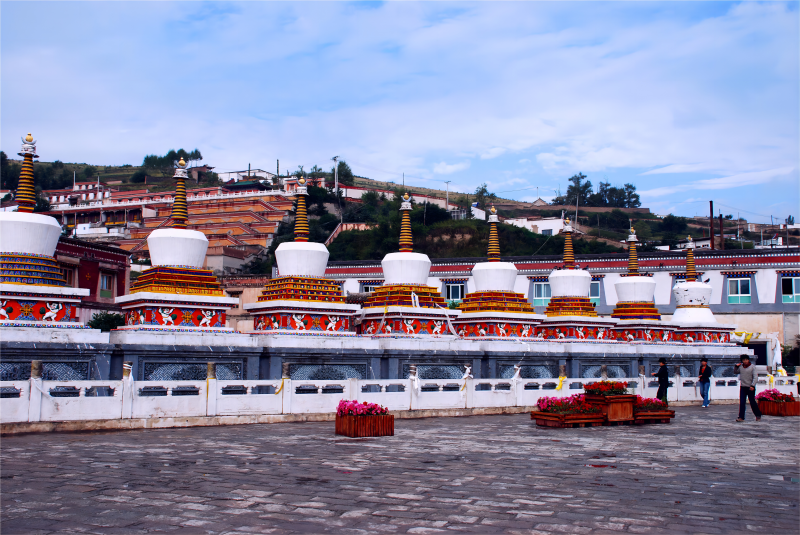
The name “Ta’er” means “tower and temple” in Chinese because the monastery was built after a memorial pagoda honoring Tsongkhapa. In Tibetan, it is called “Kumbum Jampa Ling,” meaning “Maitreya Temple of 100,000 Lion Roars.”
As one of the six great monasteries of the Gelugpa School of Tibetan Buddhism, Kumbum Monastery holds a highly respected position in Tibetan Buddhism. It is also a national key cultural relic protection unit, a national AAAAA-level tourist attraction, and one of the highlights of northwest China tourism.
A Major Center of Tibetan Buddhism in Northwest China
Kumbum Monastery has long served as an important religious and cultural center of Tibetan Buddhism in northwest China. It enjoys great influence among Buddhist communities in Tibet, mainland China, and Southeast Asia.
Throughout history, Chinese imperial governments attached great importance to the monastery’s religious status. During the Ming Dynasty, the monastery received official recognition and titles several times.
Many important Tibetan Buddhist leaders have conducted religious activities at Kumbum Monastery, including:
* The 3rd, 4th, 5th, 7th, 13th, and 14th Dalai Lamas
* The 6th, 9th, and 10th Panchen Lamas
These historical connections have made Kumbum Monastery one of the most influential Buddhist sites in China.
The Three Artistic Treasures of Kumbum Monastery
Kumbum Monastery is famous for its unique Buddhist artworks, especially the “Three Wonders of Monastery Art”:
Butter Sculptures
The butter sculptures of Kumbum Monastery are among its most famous artistic achievements. Made from colored butter, these delicate sculptures depict Buddhist figures, flowers, animals, and religious scenes.
The craftsmanship is extremely detailed, and many works appear lifelike despite being created from a fragile material.
Murals
The monastery’s murals feature rich Buddhist themes, including stories of Buddha, religious teachings, and images of deities. They represent the artistic traditions of Tibetan Buddhism.
Thangka Paintings
Thangka is a traditional Tibetan Buddhist scroll painting. The Thangka artworks preserved at Kumbum Monastery are valuable religious and artistic treasures, showcasing exquisite painting techniques and deep spiritual meanings.
In addition to these three artistic treasures, the monastery houses a large collection of Buddhist scriptures and academic works covering history, literature, philosophy, medicine, astronomy, and religious studies.
The Legend and Origin of Kumbum Monastery
The history of Kumbum Monastery is closely connected with Tsongkhapa, the founder of the Gelugpa School.
According to legend, Tsongkhapa was born in the Ta’er area of present-day Huangzhong District in 1357. From an early age, he showed exceptional intelligence and entered a Buddhist monastery when he was only three years old.
At the age of seven, he began studying Buddhism at Xiaqiong Monastery in Tibet. Later, he traveled to central Tibet on foot to further his studies. By the age of 34, Tsongkhapa had achieved profound knowledge of Buddhist teachings and became a highly respected religious scholar.
In 1401 and 1406, he established the theoretical foundation of the Gelugpa School, which later became one of the most influential traditions of Tibetan Buddhism.
The Legend of Tsongkhapa and the Birth of the Temple
After Tsongkhapa left his hometown to study Buddhism in Tibet, his mother missed him deeply. She sent him a bundle of white hair, hoping he would return home.
However, Tsongkhapa decided to continue his religious journey. Instead of returning, he sent his mother a self-portrait of the Lion Roar Buddha painted with his own blood.
He wrote that if his mother could build a pagoda containing 100,000 images of the Lion Roar Buddha and plant a Bodhi tree at his birthplace, it would be as if they had met again.
Following his wishes, his mother and followers built a lotus-shaped pagoda in 1379, which became the earliest structure of Kumbum Monastery.
In 1577, a Ming-style Buddhist temple was built beside the pagoda and named the Maitreya Hall. Because the pagoda came first and the temple was built afterward, local people called it Ta’er Temple, meaning “Pagoda Temple.”
 Architecture and Cultural Heritage of Kumbum Monastery
Since the reign of Emperor Kangxi of the Qing Dynasty, the central government provided many gifts to Kumbum Monastery, including:
* Religious plaques
* Buddhist instruments
* Buddha statues
* Scriptures
* Stupas
The monastery’s living Buddha system was also officially recognized during the Qing Dynasty, helping Kumbum grow into one of the most important Gelugpa monasteries in China.
Today, Kumbum Monastery contains:
* More than 9,300 buildings
* Over 600 mu (approximately 40 hectares) of land
* Around 25 major halls
Important buildings include:
* Great Golden Tile Hall
* Great Sutra Hall
* Nine-Room Hall
* Small Golden Tile Hall
* Flower Temple
* Maitreya Hall
* Buddha Hall
At its peak, the monastery was home to more than 3,600 monks.
Buddhist Education and Cultural Activities
Kumbum Monastery has traditionally been an important center for Buddhist education. It established four major colleges specializing in:
* Buddhist philosophy
* Tantric Buddhism
* Buddhist studies
* Tibetan medicine
The monastery also taught Tibetan language, astronomy, calendars, medicine, dance, sculpture, painting, and architecture.
During the Daoguang Emperor’s reign in 1827, a printing school was established at the monastery, which became an important center for producing Tibetan Buddhist scriptures.
At the end of the lunar year, the monastery also holds traditional religious ceremonies, including the Five-Lamp Festival, commemorating Tsongkhapa and participating in prayers for blessings and peace.
Sun Buddha Festival – The Most Spectacular Religious Ceremony
The most famous event at Kumbum Monastery is the Sun Buddha Festival, also known as the Thangka Buddha Exhibition.
During this ceremony, huge embroidered Buddha images that are normally stored indoors are displayed on the hillside of the monastery. This tradition has both religious and practical meanings: it allows believers to worship the Buddha while protecting the sacred Thangka from damage caused by moisture and insects.
The ceremony is usually held twice a year according to the lunar calendar, commemorating important Buddhist occasions, including:
* The birth of Shakyamuni Buddha
* The enlightenment and Nirvana of Buddha
* The birth of Tsongkhapa
Four major embroidered Buddha images are displayed on different occasions:
* Lion Roar Buddha
* Shakyamuni Buddha
* Tsongkhapa
* Vajra Buddha
Only one giant Thangka is displayed at a time, covering the hillside with a magnificent religious scene witnessed by thousands of pilgrims and visitors.
Religious Dance and Tibetan Cultural Performances
Before sunrise on the day of the Sun Buddha ceremony, monks at Kumbum Monastery gather to prepare the giant Thangka.
The huge embroidered Buddha image is carried by monks along the mountain path and displayed from the hillside to the foot of the mountain, where thousands of people gather to pray and watch the ceremony.
After the Buddha exhibition, the monastery holds traditional Cham dances, a form of Tibetan Buddhist masked dance.
Monks wear colorful masks representing different deities, perform sacred dances, chant Buddhist scriptures, and present Tibetan religious performances. The event has become one of the most important annual celebrations of Tibetan Buddhist culture.
Why Visit Kumbum Monastery?
Kumbum Monastery is not only a religious site but also a treasure house of Tibetan art, history, architecture, and culture.
With its golden-roofed halls, ancient Buddhist traditions, magnificent artworks, and spectacular religious festivals, the monastery offers international visitors a rare opportunity to experience the spiritual heritage of Tibetan Buddhism.
For travelers exploring Xining, Qinghai, and the Qinghai-Tibet Plateau, Kumbum Monastery is one of the most important cultural destinations in northwest China.