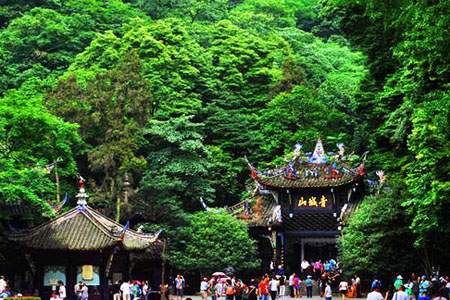
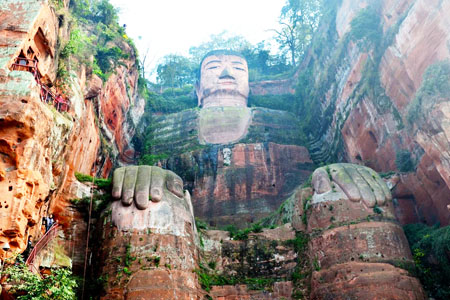
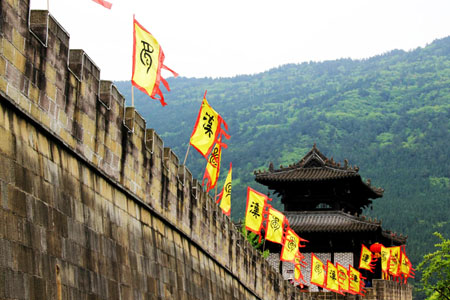
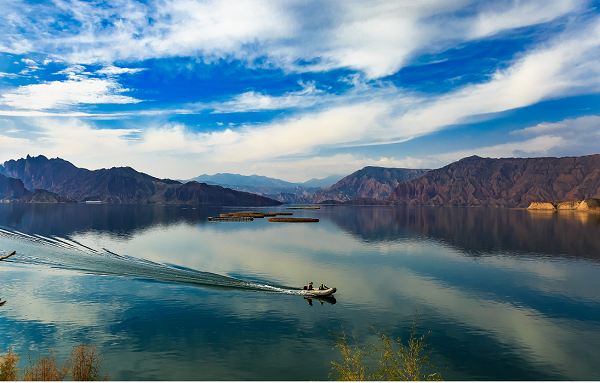
 Kanbula Unesco Global Geopark is located in Jianzha County, Huangnan Tibetan Autonomous Prefecture, Qinghai Province. Known for its spectacular Danxia landforms, dense forests, Buddhist culture, canyon landscapes, reservoir scenery, and Tibetan traditions, the park perfectly combines natural beauty with rich cultural heritage.
As one of Qinghai’s most impressive scenic destinations, Kanbula offers visitors a unique experience featuring dramatic red rock formations, ancient temples, mountain forests, and breathtaking views of the surrounding plateau landscape.
Kanbula National Forest Park is a national AAAA-level tourist attraction. It is located approximately 131 kilometers from Xining City and about 50 kilometers from Jianzha County. The scenic area covers around 152 square kilometers, with an average elevation of 2,500 meters, ranging from 2,300 meters to 3,100 meters above sea level.
Unique Danxia Landform Landscape of Kanbula
Kanbula National Forest Park lies at the transition zone between the Qinghai-Tibet Plateau and the Loess Plateau. The region is famous for its magnificent Danxia landform, which was formed from red conglomerate rock.
The exposed rock surfaces display striking red colors, while years of weathering and erosion have created spectacular geological formations, including:
* Strange peaks
* Flat-topped mountains
* Deep caves
* Steep cliffs
* Tower-shaped rock forests
The combination of red rocks, green forests, and blue water creates one of the most distinctive landscapes in Qinghai.
The 18 Famous Peaks of Kanbula
Kanbula features 18 famous peaks, many of which have names strongly connected with Tibetan religious culture. Among them are:
* Nanzong Peak
* Gongbao Peak
* Dejie Peak
* Yibaozong Peak
* Dayan Peak
* Nun Peak
* Goat Peak
* Yak Peak
Among these peaks, Aqiongnanzong Peak and Neibaozong Peak are considered the most famous.
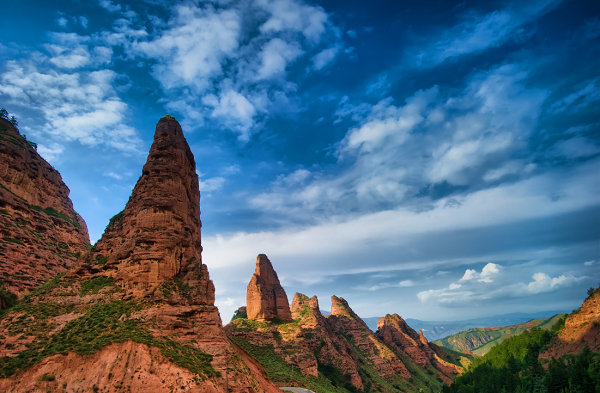 Dejie Peak
When viewed from a distance under sunlight, Dejie Peak resembles the outline of the Potala Palace in Lhasa, making it one of the most recognizable landscapes in Kanbula.
The nearby “Fairy Gathering” landscape near Dehong Village consists of dozens of uniquely shaped peaks surrounded by colorful flowers and vegetation. The scenery resembles a group of fairies dancing among the mountains.
Aqiongnanzong Peak
Aqiongnanzong Peak is surrounded by steep cliffs, with only one stone staircase leading to the summit. Many sections of the path were carved directly into the cliff.
At the top of the peak stands an ancient temple along with several small grottoes containing Buddha statues. Incense has been burned here throughout the year, making it an important Buddhist site.
Neibaozong Peak
Neibaozong Peak is an independent square-shaped mountain surrounded by unusual plants and flowers.
At the summit, visitors can find a natural lake known as Tianchi, where clear spring water gathers among the rocks.
Main Attractions of Kanbula Unesco Global Geopark
1. Yaochi Wonderland
Yaochi Wonderland is formed by more than 20 tower-shaped peak forests.
The pointed peaks slightly tilt toward the northwest, creating a unique landscape pattern with steep slopes on one side and gentle slopes on the other. This is a typical feature of the Danxia peak forest formations found in Kanbula.
2. Pillar Reaching the Sky
The Pillar Reaching the Sky is a spectacular natural rock formation standing approximately 35 meters high.
The northwest side of the pillar is smooth, while the southeast side is uneven. Natural erosion caused by rainfall created grooves and ridges on the rock surface, leaving behind this remarkable geological sculpture.
3. General’s Point
General’s Point is formed from layered sandstone and conglomerate.
Due to differences in resistance to weathering and erosion, rainwater gradually carved the rocks into small step-like peaks. Some formations resemble human figures and animals, creating a fascinating natural sculpture gallery.
4. Buddha Finger Pointing to the Sky
The Buddha Finger Pointing to the Sky is one of Kanbula’s most unique rock formations.
Created by the continuous collapse and erosion of a single tower-shaped peak along vertical cracks, the formation resembles a giant Buddha’s hand pointing toward the sky.
5. Tower Peak Forest
The Tower Peak Forest is the main landscape type of the peak forest area.
The pointed peaks slightly lean toward the southeast because the rock layers tilt northwest. Rainwater erosion and dissolution occur more strongly on the northwest side, gradually shaping the distinctive tilted peaks.
Nanzong Valley
Nanzong Valley stretches for approximately 5 kilometers and is one of the most beautiful areas in Kanbula.
The middle section of the valley offers the most impressive scenery, featuring:
* Towering strange peaks
* Green pine-covered slopes
* Singing birds and blooming flowers
* Clear streams flowing through the valley
The peaceful natural environment makes Nanzong Valley an ideal place for hiking and enjoying the beauty of the Qinghai landscape.
Buddhist Culture of Kanbula
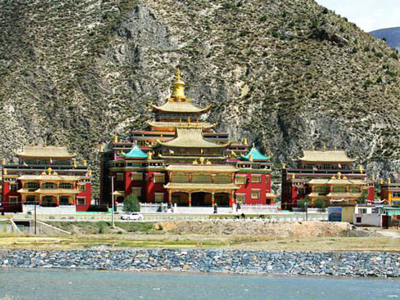
Kanbula has a long and important history of Tibetan Buddhism and is regarded as one of the key regions for the revival of Tibetan Buddhism after the later Hong period.
Several important Buddhist sites were established here, including:
* Nanzong Temple
* Nanzong Nunnery
* Aqiong Nanzong Temple
Nanzong Temple
With a history of more than 1,000 years, Nanzong Temple is one of the most important cultural attractions in Kanbula.
The temple is considered an important birthplace of the revival of Tibetan Buddhism. In the 8th century, during a difficult period for Buddhism in Tibet, three monks, including Tibet Zanjidima, came to this area for refuge and religious practice. They accepted local disciples and helped preserve Buddhist traditions.
The restoration and development of Tibetan Buddhism after the 10th century was closely connected with the efforts of these monks.
Nanzongzha Monastery
Also known as Szha Temple, Nanzongzha Monastery is located about 60 kilometers northwest of Jianzha County in the western forest area of Kanbula Township.
The monastery belongs to the Nyingma School of Tibetan Buddhism. It was originally developed by early Nyingma practitioners and gradually became a small temple complex.
Together with Nanzong Nunnery and Nanzong Temple, it forms an important part of the local Tibetan Buddhist tradition and is under the religious administration of the ancient Langcang Living Buddha lineage.
Why Visit Kanbula National Forest Park?
Kanbula National Forest Park is one of Qinghai’s most fascinating destinations, offering a rare combination of:
* Extraordinary Danxia geological landscapes
* Ancient Tibetan Buddhist temples
* Highland forests and valleys
* Unique Tibetan cultural traditions
* Spectacular mountain scenery
For travelers exploring Xining, Qinghai, and the Qinghai-Tibet Plateau, Kanbula provides an unforgettable journey through one of China’s most beautiful natural and cultural landscapes.