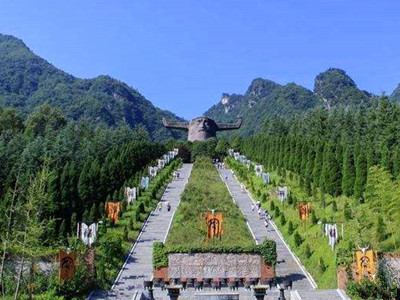
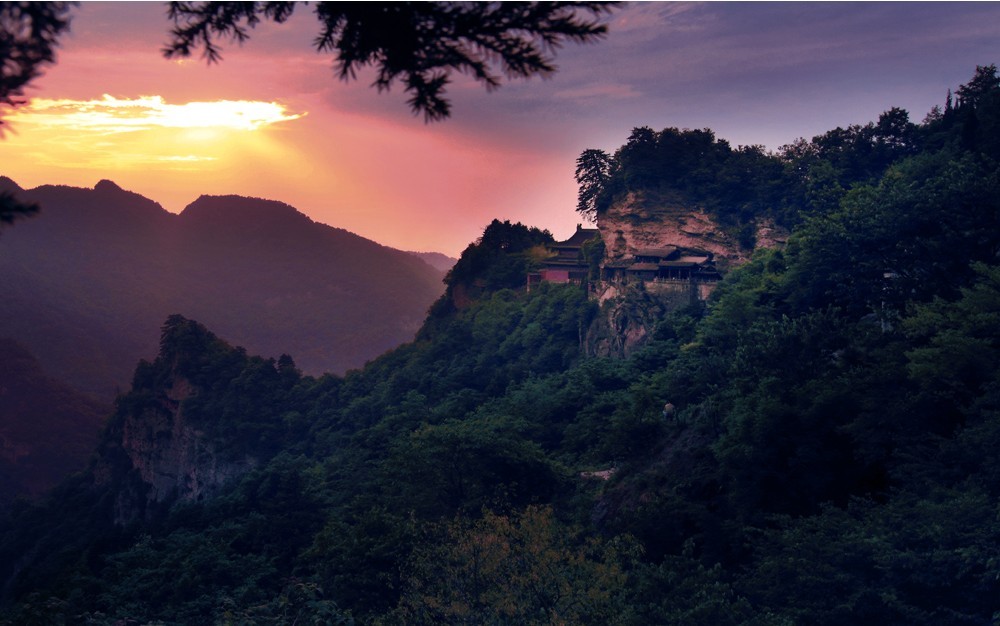
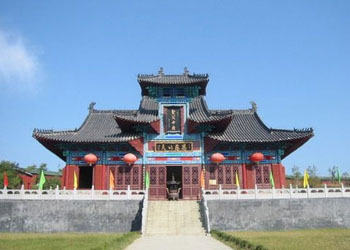
 Located near Danjiangkou City in central Hubei Province, Mount Wudang (Wudangshan, 武当山) is one of the most famous Taoist mountains in China. Also known historically as Mount Taihe and Mount Xianshi, Wudang Mountain is celebrated for its magnificent natural landscapes, ancient Taoist architecture, and deep connection with Chinese philosophy and martial arts.
The mountain features:
* 72 peaks
* 36 cliffs
* 24 valleys
* 3 lakes
* 9 springs
* 10 ponds
The highest peak, Tianzhu Peak, reaches an elevation of 1,612 meters and is the location of the famous Golden Summit, the spiritual center of Wudang Mountain.
Combining spectacular scenery with centuries-old religious traditions, Mount Wudang is regarded as one of the most important Taoist holy sites in China.
 Natural Beauty and Rich Plant Resources
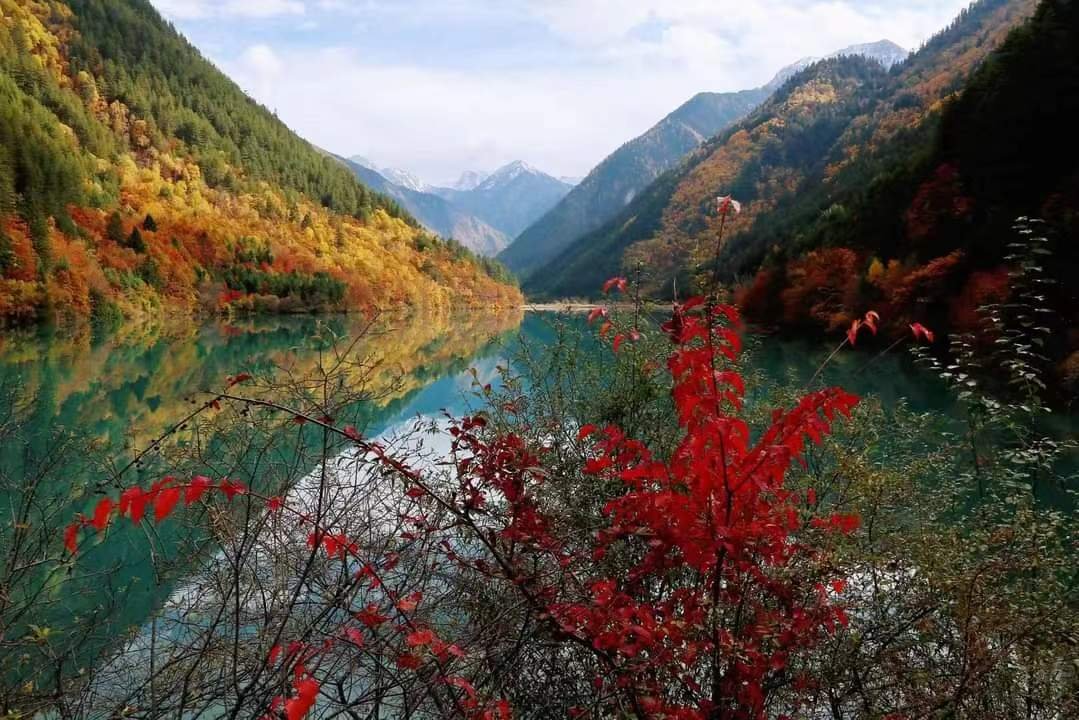
Mount Wudang is covered with dense forests and abundant vegetation, making it an important ecological area in central China.
The mountain is home to around 600 kinds of medicinal plants, accounting for approximately one-third of the medicinal herbs recorded in the famous Compendium of Materia Medica written by Ming Dynasty physician Li Shizhen.
Because of its extraordinary variety of herbs, Mount Wudang has long been known as a “natural pharmacy.”
The combination of fresh mountain air, rich forests, and unique biodiversity makes Wudang Mountain an ideal destination for nature lovers and hikers.
Mount Wudang – A Masterpiece of Taoist Architecture
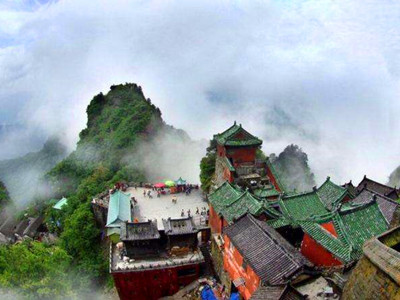
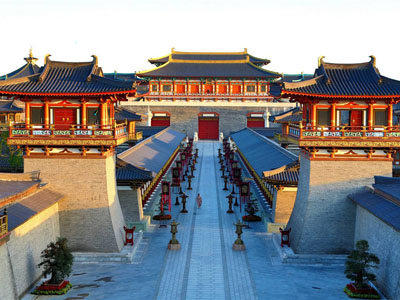
Mount Wudang is famous for its perfect integration of natural landscapes and ancient Taoist buildings. The mountain’s temples, palaces, and halls were carefully designed to blend harmoniously with the surrounding peaks, valleys, and cliffs.
During the Tang Dynasty (618–907), the first important Taoist temple, Wulong Temple, was built here.
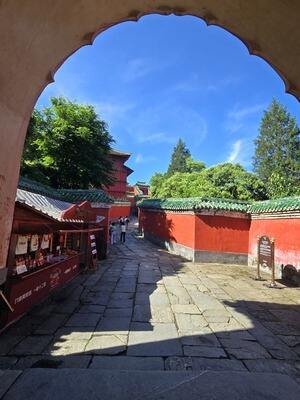 Later, during the Ming Dynasty, Emperor Zhu Di strongly supported Taoism and ordered the construction of a large-scale architectural complex. Between 1412 and 1423, more than 30 Taoist buildings were constructed, covering an area of approximately 1.6 million square meters.
Among these structures, the most famous is the Golden Hall, a magnificent copper building standing on a granite foundation. The statue of the Taoist deity inside the hall was created with exceptional craftsmanship and is considered one of the greatest achievements of ancient Chinese copper casting.
In 1994, the ancient buildings of Mount Wudang were listed as a UNESCO World Heritage Site for their outstanding architectural and cultural value.
Cultural Heritage of Mount Wudang
Today, Mount Wudang preserves:
* Four major Taoist palaces
* Remains of two additional palaces
* Two temples
* Numerous cliff temples and worship halls
These historic structures remain remarkably well preserved in terms of:
* Layout
* Design
* Construction techniques
* Materials
* Artistic style
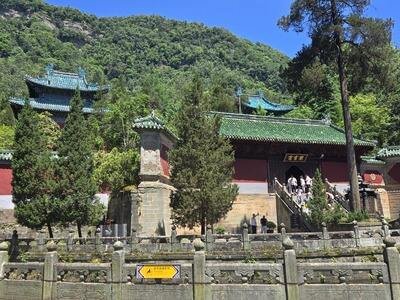
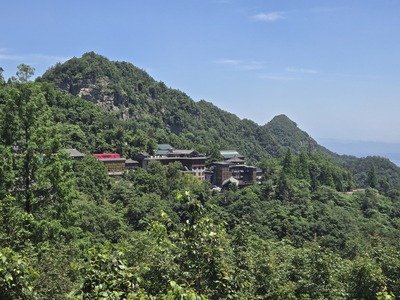
The buildings are often located in secluded valleys, on mountain terraces, or beside dramatic cliffs, creating a unique harmony between architecture and nature.
The ancient buildings of Mount Wudang are valuable resources for studying:
 * Ming Dynasty history
* Chinese religious development
* Ancient architecture
* Traditional construction techniques
Main Features of Wudang Architecture
Superb Construction Techniques
The buildings of Mount Wudang display extraordinary craftsmanship. Different materials were used creatively, including:
* Wooden halls
* Copper structures
* Stone cliff temples
The statues inside the temples were made from copper, wood, stone, and clay, showing exceptional artistic skill and attention to detail.
 A Treasure House of Taoist Architecture
The construction of Wudang’s temples was organized under imperial direction during the Ming Dynasty. The enormous scale, careful planning, and luxurious decorations made these buildings some of the finest examples of Taoist architecture in China.
Historical Importance
The construction of Mount Wudang’s Taoist complex reflected Emperor Zhu Di’s efforts to promote Taoism and strengthen imperial authority. Therefore, these buildings provide important evidence for understanding the politics, religion, and culture of the early Ming Dynasty.
Top Attractions on Mount Wudang
Taizi Slope (Prince Slope)
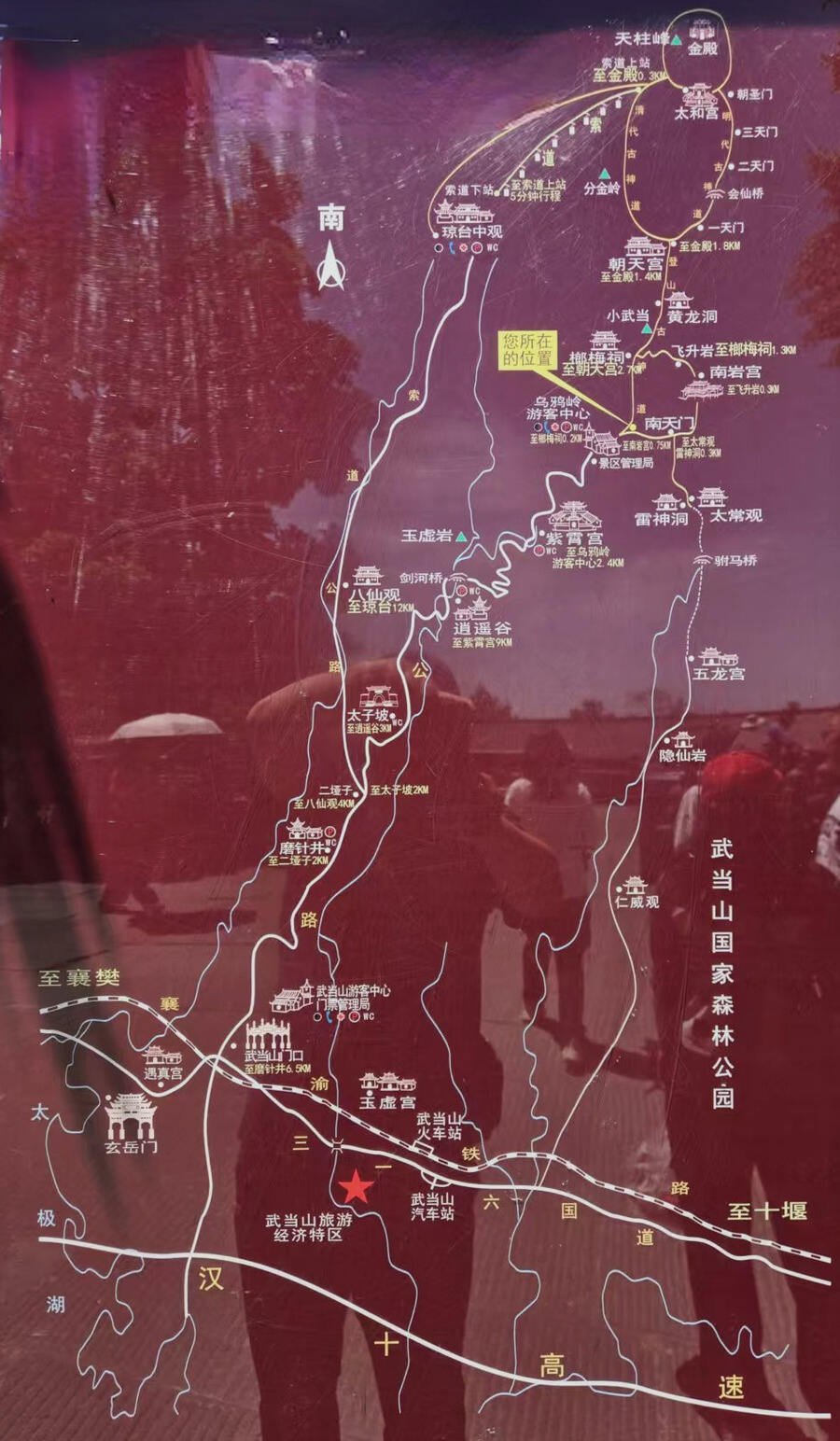
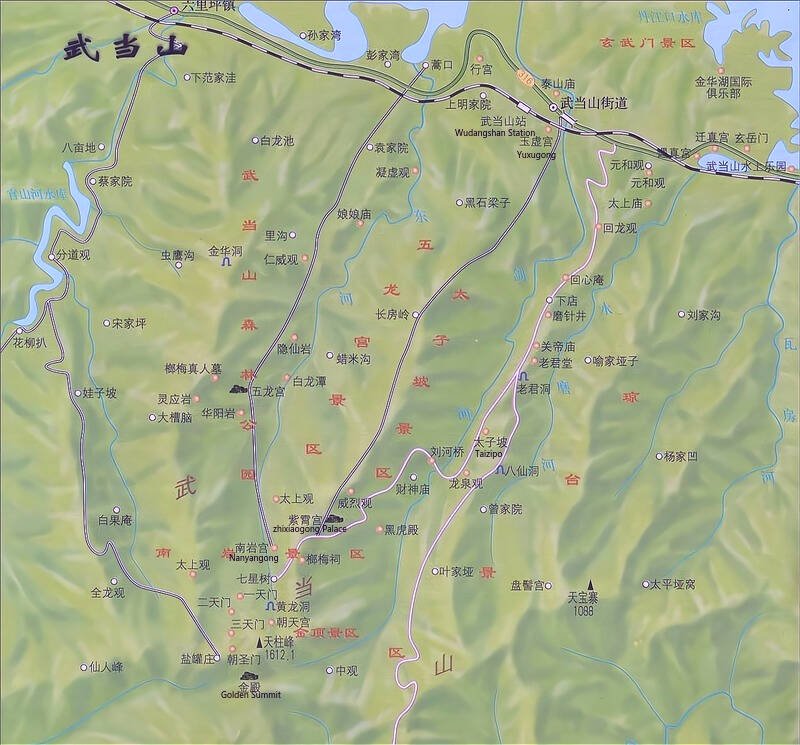
Taizi Slope is located on the middle section of Mount Wudang and serves as an important transportation hub within the scenic area.
According to legend, a young prince came here to practice Taoism after receiving guidance from the Taoist master Ziqi Yuanjun. The area later became known as Taizi Slope.
Another famous legend tells of the Needle-Milling Well, where the master transformed into an elderly woman and demonstrated patience by grinding an iron rod into a needle, inspiring the prince to continue his spiritual cultivation.
The scenic area covers approximately 16,000 square meters and includes:
* Huilong Temple
* Needle-Milling Well
* Chunyang Palace
* Laojun Hall
* Baxian Temple
 During the Ming Dynasty, Emperor Zhu Di ordered the construction of 29 buildings here, including halls, corridors, and gates.
Zixiao Palace – The Most Beautiful Taoist Palace on Wudang Mountain
Located at the foot of Zhanqi Peak, northeast of Tianzhu Peak, Zixiao Palace is one of the most important Taoist temples on Mount Wudang.
The palace contains 29 buildings, covering:
* Building area: 6,854 square meters
* Total site area: approximately 274,000 square meters
Surrounded by mountains such as Zhaobi Peak, Santai Peak, Wulao Peak, and Xianglu Peak, the landscape creates a beautiful natural formation known as “two dragons playing with a pearl.”
The main building, Zixiao Hall, is the only surviving double-eaved hip-and-gable wooden hall on Mount Wudang. It represents the highest level of ancient Chinese timber architecture.
Inside the hall, visitors can admire:
* Elaborately carved beams
* Painted pillars
* Ancient ritual objects
* Hundreds of valuable statues from the Yuan, Ming, and Qing dynasties
The central shrine houses a magnificent statue of Zhenwu Emperor, a Ming Dynasty clay sculpture decorated with colorful painting and gold details. Standing 4.8 meters high, it is the largest surviving clay statue on Mount Wudang.
Nanyan Palace – A Temple Built on a Cliff
Nanyan Palace is one of the most spectacular attractions on Mount Wudang and is traditionally regarded as the place where Zhenwu God practiced cultivation.
Legend says that after 42 years of meditation, Zhenwu achieved spiritual enlightenment and became a Taoist immortal.
The existing Nanyan architectural complex covers approximately 61,187 square meters, including:
* Nanyan Rock Hall
* South Heavenly Gate
* Stele Pavilion
* Liangyi Hall
* Imperial Scripture Hall
* Bafeng Pavilion
* Longhu Hall
Built directly against a steep cliff, Nanyan Palace appears to merge naturally with the mountain landscape. The famous cliffside architecture creates a breathtaking scene often described as a masterpiece created by nature and humans together.
The stone hall features:
* Statues of the Three Pure Ones
* 500 iron-cast Taoist figures
* Ancient inscriptions and relics
Golden Summit – The Spiritual Peak of Mount Wudang
Standing at 1,612 meters, the Golden Summit (Jinding) is the highest point of Mount Wudang and its most important religious destination.
At the summit stands Taihe Palace, built during the Ming Dynasty under Emperor Zhu Di’s order.
After completion, Emperor Zhu Di granted Mount Wudang the title:
“Great Peak Taihe Mountain.”
For Taoist believers, pilgrims, and travelers, reaching the Golden Summit represents the ultimate Mount Wudang experience.
From the summit, visitors can enjoy magnificent views of:
* Endless mountain peaks
* Ancient temples
* Sea of clouds
* Sunrise scenery
Taoist Culture of Mount Wudang
The history of Taoism on Mount Wudang dates back approximately 2,000 years.
Taoism flourished during the Tang and Song dynasties and reached its peak during the Ming Dynasty. Although it declined during the Qing Dynasty, Taoist traditions were revived after 1949.
Traditional Taoist ceremonies on Mount Wudang include:
* Scripture chanting
* Ritual performances
* Taoist music
Wudang Taoist music has become an important subject of academic research due to its historical and artistic value.
Wudang Kung Fu – The Martial Arts Tradition of Taoism
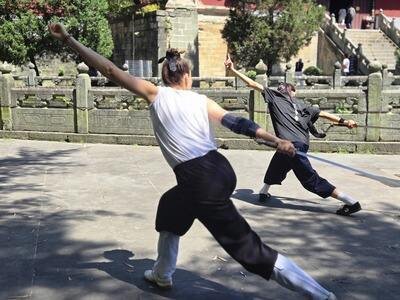
Wudang Kung Fu (Wudang Wushu) developed alongside Taoist philosophy and emphasizes harmony between body, mind, and nature.
Unlike styles focused mainly on external strength, Wudang martial arts emphasize:
* Internal energy cultivation
* Breathing techniques
* Balance and flexibility
* Mind-body harmony
Taoist principles influenced the development of Wudang martial arts, combining Chinese philosophy with sophisticated fighting techniques.
During the Ming Dynasty, the legendary Taoist master Zhang Sanfeng greatly contributed to the development of Wudang Kung Fu, which later became one of the most influential schools of Chinese martial arts.
Why Visit Mount Wudang?
With its UNESCO-listed ancient architecture, sacred Taoist temples, spectacular mountain scenery, and legendary martial arts tradition, Mount Wudang is one of the most fascinating cultural destinations in China.
Whether you are interested in:
* Chinese religion
* Ancient architecture
* Hiking
* Traditional culture
* Martial arts
Mount Wudang offers a unique journey into the spiritual and cultural heritage of China.