 Located in the heart of Hangzhou, Zhejiang Province, West Lake (Xihu lake 西湖) is one of China’s most famous natural and cultural landmarks. This beautiful freshwater lake is renowned for its elegant landscapes, historic temples, ancient pagodas, traditional gardens, and romantic legends.
Divided into five sections by three historic causeways, West Lake features numerous scenic attractions, including islands, bridges, gardens, and cultural relics. Combining natural beauty with centuries of history, it has become one of the most iconic destinations in China and a must-visit attraction in Hangzhou.
In 2011, West Lake Cultural Landscape of Hangzhou was inscribed as a UNESCO World Heritage Site for its outstanding influence on Chinese garden design and its harmonious relationship between humans and nature.
A Landscape That Inspired Generations
For centuries, West Lake has inspired countless Chinese poets, painters, scholars, and garden designers with its graceful scenery and cultural significance.
The lake represents the traditional Chinese ideal of harmony between nature and human creativity. Its landscapes have influenced garden design throughout China, as well as in Japan and Korea, where similar concepts were adopted in palace gardens and classical landscapes.
Many famous historical figures developed deep connections with West Lake. The Northern Song Dynasty poet Lin Bu, who rejected an official career and chose a life of seclusion, lived beside the lake for more than 20 years, dedicating himself to poetry and the cultivation of plum blossoms.
The famous Ming Dynasty writer Zhang Dai also created numerous literary works about West Lake, including Reminiscence and Dream of Tao’an and Dream Search of West Lake, further establishing the lake’s importance in Chinese literature and culture.
The Legend of Xi Shi and West Lake
According to Chinese tradition, West Lake is often compared to Xi Shi, one of the Four Beauties of ancient China, because of its graceful appearance and enchanting charm.
Throughout history, the lake has been associated with romantic stories, legendary figures, poets, and national heroes. Its beauty and cultural atmosphere have made it one of the most beloved landscapes in Chinese civilization.
 Top Attractions at West Lake
Leifeng Pagoda
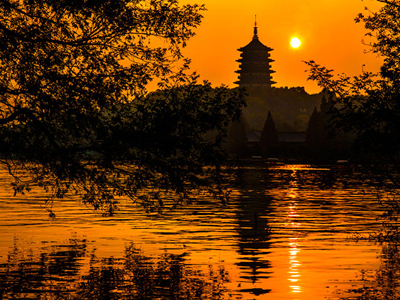
Leifeng Pagoda is one of West Lake’s most recognizable landmarks. Located on the southern shore of the lake, the pagoda offers beautiful views of the surrounding mountains and water.
The pagoda is also closely connected with the famous Chinese legend “The Legend of the White Snake,” making it an important cultural symbol as well as a historic attraction.
Three Causeways
West Lake is divided into five scenic sections by three famous causeways:
* Su Causeway – Built during the Northern Song Dynasty and named after the famous poet Su Dongpo, it is known for its peaceful walking paths and seasonal scenery.
* Bai Causeway – Named after the Tang Dynasty poet Bai Juyi, it provides beautiful views of the lake and surrounding mountains.
* Yanggong Causeway – A quieter route featuring gardens, wetlands, and less crowded landscapes.
Three Pools Mirroring the Moon
One of West Lake’s most famous scenic spots, Three Pools Mirroring the Moon, is located on Xiaoying Island. The three stone pagodas standing in the water create a beautiful reflection effect, especially during moonlit nights.
This scene is so famous that it appears on the back of China’s one-yuan banknote.
Lingyin Temple
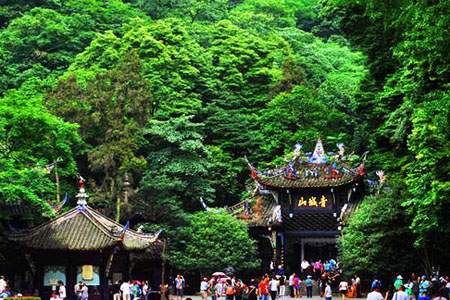
Located near West Lake, Lingyin Temple is one of China’s most renowned Buddhist temples. Surrounded by forested mountains and ancient caves, the temple offers visitors a peaceful combination of religion, architecture, and natural scenery.
West Lake’s Cultural and Historical Importance
West Lake has played an important role in Chinese history, literature, art, and landscape design.
Its unique combination of mountains, water, temples, bridges, gardens, and cultural landmarks represents the traditional Chinese philosophy of creating harmony between people and nature.
The influence of West Lake’s landscape can be seen in many famous gardens, including Kunming Lake at the Summer Palace in Beijing and classical gardens in Japan.
National Scenic Area and Tourist Destination
Due to its exceptional historical and cultural value, West Lake was designated as a National Key Scenic Resort in 1982, selected as one of China’s Top Ten Scenic Resorts in 1985, and recognized as a National 5A Tourist Attraction in 2006.
Today, West Lake remains one of China’s most popular travel destinations, welcoming visitors from around the world.
Best Things to Do at West Lake
Visitors can enjoy a variety of experiences, including:
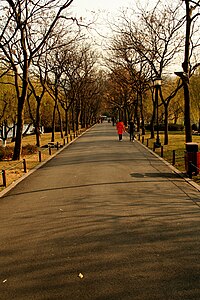
* Walking or cycling around the lakeside paths
* Taking a traditional boat ride across West Lake
* Visiting Leifeng Pagoda and historic temples
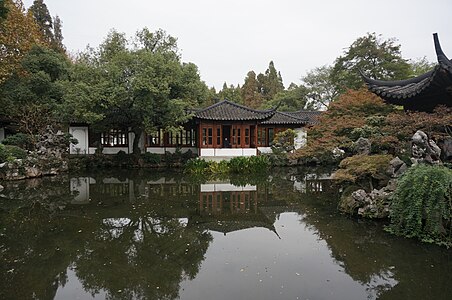
* Exploring classical gardens and islands
* Enjoying the famous “Ten Scenes of West Lake”
* Watching sunsets over the mountains
* Photographing bridges, lotus flowers, and traditional landscapes
Each season offers a different experience. Spring brings blooming flowers, summer features lotus-covered waters, autumn offers colorful foliage, and winter creates a peaceful atmosphere with misty lake views.
Why Visit West Lake?
With its breathtaking scenery, UNESCO World Heritage status, legendary stories, and deep cultural heritage, West Lake Hangzhou is one of the most beautiful and meaningful destinations in China.
Whether you are interested in Chinese history, traditional gardens, photography, nature, or cultural experiences, West Lake offers an unforgettable journey into the beauty and spirit of classical China.
Attractions
Other attractions include:
-
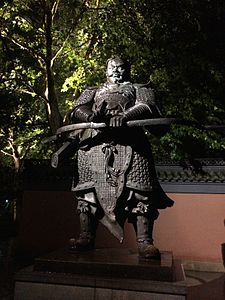
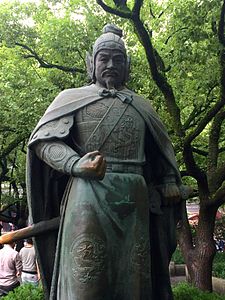
Yue Fei Temple (岳王庙), the tomb and memorial hall to Yue Fei(岳飞).
-
Lingyin Temple (灵隐寺), a Buddhist monastery and surrounding hills.
-
Long Jing tea farms (龙井茶园), an area renowned for the quality of Tea.
-
Jingci Temple (净慈寺)
-
Galloping Tiger Spring (虎跑梦泉), a spring famous for its mineral water
-
Tomb of Su Xiao Xiao (苏小小墓)
-
The West Lake Museum (located on the lake shore) is dedicated to the cultural heritage of the West Lake.
Ten Scenes of West Lake
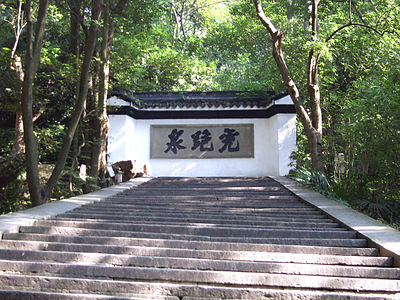
Traditionally, there are ten best-known scenic spots on the West Lake, each remembered by a four-character epithet. Collectively, they are known as the "Ten Scenes of West Lake" (10 Scenic Spots in West Lake 西湖十景). Each is marked by a stele with an epithet written in the calligraphy of the Qianlong Emperor. They are:
-
Dawn on the Su Causeway in Spring (蘇堤春曉)
-
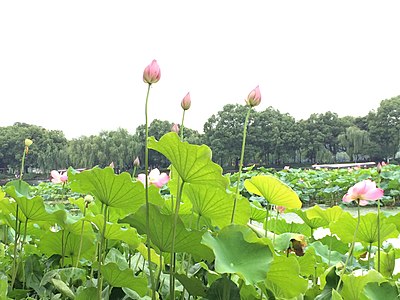
Curved Yard and Lotus Pool in Summer (曲院風荷)
-
Moon over the Peaceful Lake in Autumn (平湖秋月)
-
Remnant Snow on the Bridge in Winter (斷橋殘雪)
-
Leifeng Pagoda in the Sunset (雷峰夕照)
-
Two Peaks Piercing the Clouds (雙峰插雲)
-
Orioles Singing in the Willows (柳浪聞鶯)
-
Fish Viewing at the Flower Pond (花港觀魚)
-
Three Ponds Mirroring the Moon (三潭印月)
-
Evening Bell Ringing at the Nanping Hill (南屏晚鐘)
Gallery
-
-
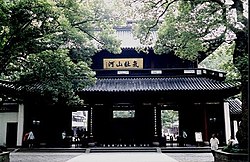
A traditional Xī Hú entrance
-
The Guozhuang Garden, one of many historic gardens in the West Lake
-
Lotus in the Breeze at the Winding Courtyard
-
-
Statue of Qian Liu, the founder and first king of the Kingdom of Wuyue, near the West Lake
-
Statue of Yue Fei, a patriotic military general from the Southern Song dynasty, near the West Lake
-
Lotus at the West Lake during summer
From Wikipedia