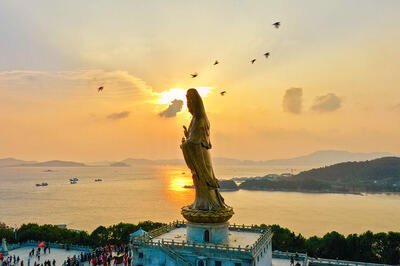
Located in the Zhoushan Archipelago off the coast of Zhejiang Province, Mount Putuoshan (普陀山) is one of the Four Sacred Buddhist Mountains of China and the country’s most important pilgrimage destination dedicated to Guanyin (Avalokitesvara), the Bodhisattva of Compassion.
Known as the “Buddhist Kingdom on the Sea” and the “Sacred Land of Guanyin,” Mount Putuo is famous for its peaceful temples, lush forests, beautiful beaches, and spectacular coastal landscapes. Surrounded by the East China Sea, the island offers a unique combination of Buddhist culture, natural beauty, and historical heritage, making it one of the most remarkable cultural attractions in eastern China.
The island covers an area of approximately 11.82 square kilometers, stretching about 6.7 kilometers from north to south and 2.3 kilometers from east to west. Its highest peak, Foding Mountain, reaches 286.3 meters above sea level, while the coastline extends for around 22.5 kilometers.
The Sacred Home of Guanyin
According to Chinese Buddhist tradition, Mount Putuoshan is considered the earthly bodhimanda (place of enlightenment) of Guanyin, attracting millions of pilgrims and visitors every year.
The island is home to more than 40 Buddhist temples and monasteries, with the most famous including:
* Puji Temple
* Fayu Temple
* Huiji Temple
* Baotuo Lecture Temple
The most iconic landmark on the island is the magnificent 33-meter-high Nanhai Guanyin Statue, which overlooks the sea and represents compassion, wisdom, and peace.
With its quiet environment and profound Buddhist heritage, Mount Putuoshan has long been regarded as one of the most spiritually peaceful destinations in China.
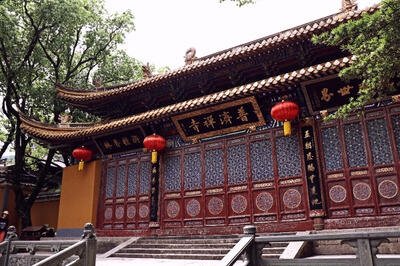 The Three Great Temples of Mount Putuoshan
Puji Temple
Located at the southern foot of Mount Putuoshan, Puji Temple is the largest and most important temple on the island. Originally founded in 916 AD, the temple covers an area of approximately 26,000 square meters.
Following the traditional Chinese temple layout, Puji Temple features important structures including the Imperial Stele Pavilion, Hall of Heavenly Kings, Yuantong Hall, and Scripture Library.
Its elegant architecture reflects the influence of Qing Dynasty imperial temple design and represents one of the finest examples of traditional Buddhist architecture in Zhejiang Province.
Fayu Temple
Built in 1580, Fayu Temple is located on a mountainside facing the sea. Covering around 12,000 square meters, the temple blends beautifully with the surrounding natural landscape.
Known for its magnificent halls, detailed craftsmanship, and peaceful atmosphere, Fayu Temple is considered one of the architectural highlights of Mount Putuo.
Huiji Temple
Located at the top of Foding Mountain, Huiji Temple is the highest temple on Mount Putuoshan and offers breathtaking views of the East China Sea.
Unlike other temples on the island, the main hall of Huiji Temple is dedicated to Shakyamuni Buddha. The nearby Great Compassion Hall houses one of the oldest surviving Tang Dynasty Guanyin 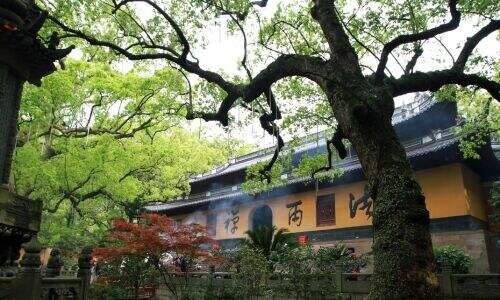 statues on Mount Putuo.
The temple’s colorful glazed roof tiles, featuring shades of blue, green, yellow, and purple, showcase the unique architectural style of eastern Zhejiang.
Top Attractions at Mount Putuoshan
Nanhai Guanyin Statue
Standing 33 meters high beside the sea, the Nanhai Guanyin Statue is the spiritual symbol of Mount Putuoshan and one of China’s most famous Buddhist monuments.
The golden statue attracts countless pilgrims who come to pray for peace, health, happiness, and good fortune while enjoying the spectacular ocean views surrounding the site.
Duobao Pagoda
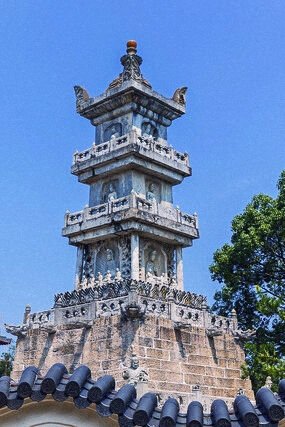
Located southeast of Puji Temple, Duobao Pagoda was built in 1334 during the Yuan Dynasty. Also known as the Prince Pagoda, this 18.2-meter-high monument combines architectural influences from Han, Tibetan, and Mongolian Buddhist traditions.
It is one of Mount Putuoshan’s most distinctive historical landmarks and an important example of ancient Buddhist architecture.
 Foding Mountain
As the highest point of Mount Putuoshan, Foding Mountain is one of the best places to enjoy panoramic views and beautiful sunrises over the East China Sea.
Visitors can also explore Guanyin Hall, where 123 stone carvings inspired by masterpieces from the Tang, Song, Yuan, Ming, and Qing dynasties decorate the walls.
Two Turtles Listening to the Dharma
One of Mount Putuoshan’s most famous legends tells the story of two turtles sent by the Dragon King of the East China Sea to listen to Buddhist teachings. According to legend, they became deeply devoted to the Dharma and were eventually transformed into stone.
Today, the unusual rock formation known as “Two Turtles Listening to the Dharma” has become a popular scenic attraction on the island.
History of Mount Putuoshan
Mount Putuoshan has been a sacred Buddhist destination for more than 1,700 years.
During the Taikang reign (280–289 AD) of the Western Jin Dynasty, Buddhist monks believed that the island’s natural scenery resembled the sacred land of Guanyin described in Buddhist scriptures.
Over centuries, Mount Putuo developed into one of China’s most important Buddhist centers, attracting monks, pilgrims, and travelers from across China and around the world.
Festivals at Mount Putuoshan
Nanhai Guanyin Cultural Festival
Established in 2003, the Nanhai Guanyin Cultural Festival is Mount Putuoshan’s largest annual cultural event.
The festival features Buddhist ceremonies, Dharma assemblies, Buddhist music performances, pilgrimage activities, lotus lantern ceremonies, cultural forums, and tourism exhibitions, attracting visitors interested in Buddhist culture and traditional Chinese heritage.
Guanyin Incense Festival
The Guanyin Incense Festival celebrates important anniversaries related to Guanyin, including her birth, enlightenment, and ordination days.
Held on the 19th day of the second, sixth, and ninth lunar months, the festival attracts thousands of Buddhist devotees who gather to offer incense and participate in religious ceremonies.
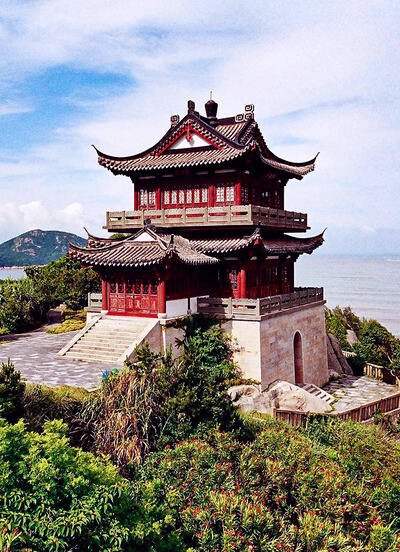 During the festival, the island is filled with lanterns, candlelight, prayers, and Buddhist chants, creating a deeply spiritual atmosphere.
Spring Tourism Festival
Held every March, the Mount Putuoshan Spring Tourism Festival combines ecological tourism with traditional culture.
Activities include cultural performances, Buddhist tea ceremonies, calligraphy exhibitions, folk activities, photography events, beach activities, and volunteer programs.
Climate and Best Time to Visit Mount Putuoshan
Mount Putuoshan enjoys a subtropical maritime monsoon climate with four distinct seasons, abundant sunshine, and moderate rainfall.
The average annual temperature is around 16.1°C (61°F), providing mild winters and comfortable summers. The island’s rich coastal vegetation and diverse plant life also make it one of Zhejiang’s most ecologically valuable coastal destinations.
With its combination of Buddhist heritage, natural scenery, and peaceful island atmosphere, Mount Putuoshan is an excellent year-round destination for pilgrims, photographers, nature lovers, and travelers seeking cultural experiences and spiritual relaxation.