Nestled on Jiulian Mountain in Putian, Fujian Province, South Shaolin Temple (Nan Shaolin Temple) is one of China’s most important Buddhist and martial arts landmarks. Widely recognized as the birthplace of Southern Shaolin Kung Fu, the temple combines more than 1,400 years of Buddhist heritage with the rich traditions of Chinese martial arts. Today, it is both a renowned Zen Buddhist temple and a cultural destination where visitors can explore the origins of Southern-style kung fu.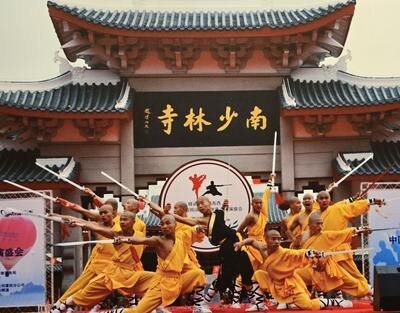
A Historic Temple with Deep Cultural Roots
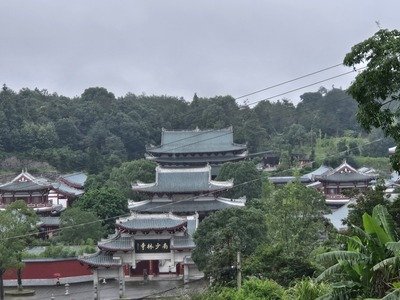
Originally known as Linquan Temple, South Shaolin Temple was founded in 557 AD during the Chen Dynasty of the Southern Dynasties. Surrounded by the nine peaks of Jiulian Mountain, the temple occupies a tranquil setting that resembles a blooming lotus, inspiring its historic association with the “Nine Lotus Mountain.”
According to traditional accounts, the temple’s connection with Shaolin martial arts dates to the early Tang Dynasty. During a period of coastal unrest in Fujian, Emperor Taizong of Tang ordered the renowned Shaolin monk Tan Zong to help suppress piracy. Several Shaolin warrior monks were dispatched to Fujian, where they earned widespread respect for protecting local communities and spreading Buddhist teachings.
Inspired by the region’s favorable landscape and growing Buddhist community, the monks established a southern branch of the famous Shaolin Temple of Songshan. This monastery gradually became known as South Shaolin Temple, serving as both a Zen Buddhist center and an important base for martial arts training.
The Birthplace of Southern Shaolin Kung Fu
South Shaolin Temple is widely regarded as the cradle of Southern Shaolin Kung Fu, one of the most influential traditions of Chinese martial arts. Over centuries, monks combined Buddhist discipline with physical training, developing practical fighting techniques suited to southern China’s environment and culture.
From this temple, Southern Shaolin martial arts spread throughout Fujian and eventually influenced many famous southern Chinese kung fu styles, including traditions that later flourished across Guangdong, Hong Kong, Southeast Asia, and overseas Chinese communities.
Today, South Shaolin Temple continues to preserve this rich martial arts heritage through demonstrations, training programs, and cultural exhibitions that introduce visitors to the philosophy and techniques of traditional Shaolin Kung Fu.
Discover Buddhist Culture and Traditional Architecture
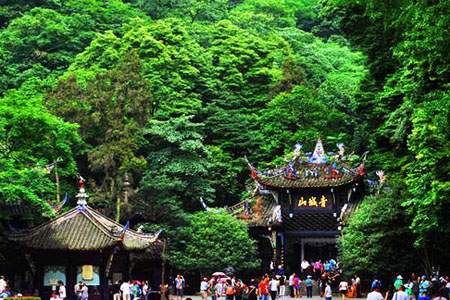
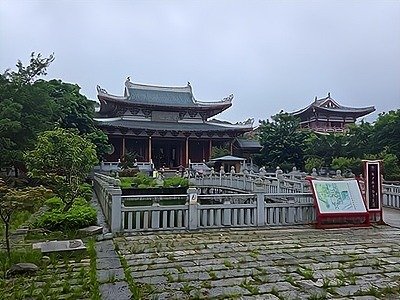
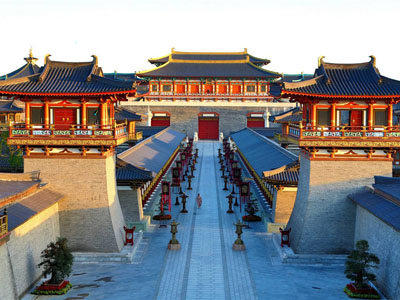
Beyond its martial arts legacy, South Shaolin Temple remains an important center of Zen Buddhism. The restored temple complex features elegant halls, peaceful courtyards, and mountain surroundings that provide a tranquil atmosphere for cultural exploration and spiritual reflection.
Visitors can explore:
* The Main Buddha Hall
* Traditional Zen courtyards
* Historic temple architecture
* Shaolin martial arts training areas
* Buddhist cultural exhibitions
* Scenic mountain walking paths
The harmonious combination of Buddhist architecture, natural landscapes, and martial arts traditions offers a unique glimpse into one of China’s most distinctive cultural heritages.
Experience Southern Shaolin Culture
A visit to South Shaolin Temple allows travelers to experience both the spiritual and martial traditions that have shaped Chinese culture for centuries.
Popular experiences include:
* Watching authentic Shaolin Kung Fu demonstrations
* Learning about the history of Southern Shaolin martial arts
* Exploring centuries-old Buddhist architecture
* Walking through the peaceful mountain temple grounds
* Discovering the relationship between Zen Buddhism and martial arts
* Enjoying panoramic views of Jiulian Mountain
Why Visit South Shaolin Temple?
As the legendary birthplace of Southern Shaolin Kung Fu, South Shaolin Temple is one of Fujian’s most significant cultural attractions. Its combination of ancient Buddhist history, martial arts heritage, beautiful mountain scenery, and traditional architecture makes it a rewarding destination for history enthusiasts, martial arts practitioners, photographers, and international travelers alike.
Often included in cultural tours of Putian, Quanzhou, and Xiamen, South Shaolin Temple offers visitors an opportunity to discover the origins of one of the world’s most influential martial arts traditions while experiencing the peaceful atmosphere of a historic Zen monastery.