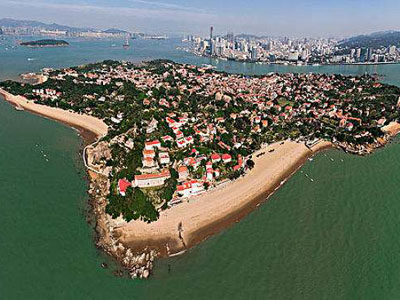
 Quanzhou, known as the “City of Light” and the “largest port in the East” in ancient times, was the starting point of the Maritime Silk Road and one of China’s most important historical and cultural cities. In the 13th century, the famous Italian explorer Marco Polo departed from Quanzhou Port and praised it as one of the greatest cities he had ever visited. In 2021, Quanzhou was inscribed on the UNESCO World Heritage List as “Quanzhou: Emporium of the World in Song-Yuan China”, recognizing its outstanding role in global maritime trade and cultural exchange.
Also known as Carp City and Citong City, Quanzhou has a history of more than 1,300 years. During the Western Jin Dynasty, frequent wars in northern China caused many families to migrate south and settle along the Jinjiang River and in the Quanzhou area. During the Tang Dynasty, Quanzhou began developing overseas trade and established a maritime trade administration office similar to today’s customs authority.
During the Song and Yuan Dynasties, Quanzhou reached its golden age and became one of the world’s largest international ports. Known as Citong Port, it connected China with Arabia, Persia, Southeast Asia, and many other regions. At its peak, Quanzhou’s shipping volume surpassed many famous ports around the world, including Alexandria in Egypt.
Due to its important position on the Maritime Silk Road, Quanzhou became a multicultural city where different religions and civilizations coexisted. Buddhism, Taoism, Islam, Christianity, Hinduism, Manichaeism, and other beliefs all left their historical traces here. Today, visitors can still find ancient temples, mosques, churches, and traditional cultural sites throughout the city.
Quanzhou has also preserved rich intangible cultural heritage, including Nanyin music, Liyuan Opera, Gaojia Opera, and puppet theater, which continue to play an important role in local cultural life.
Today, Quanzhou is one of the three major cities in Fujian Province, connecting Fuzhou in the north, Xiamen in the south, and Taiwan across the Taiwan Strait. It has developed into an important economic and cultural center in southeast China.
Jinjiang, a county-level city under Quanzhou, has also become one of China’s most successful manufacturing centers. Beginning with small family workshops in the 1980s, Jinjiang developed a world-famous footwear and clothing industry and became home to internationally recognized sports brands such as Anta, 361°, and Xtep.
 Top Attractions in Quanzhou
Kaiyuan Temple
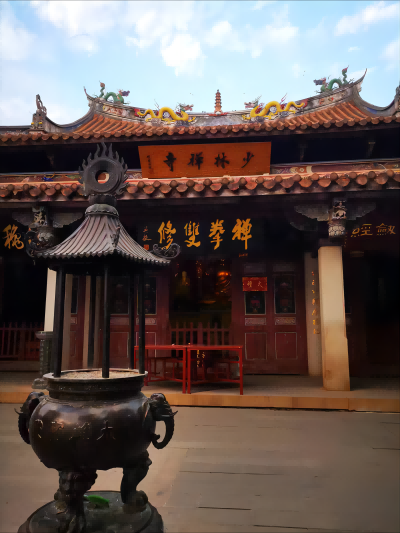
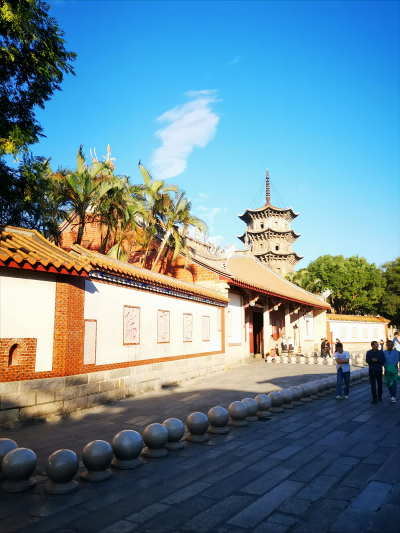
Located on West Street in downtown Quanzhou, Kaiyuan Temple is the largest Buddhist temple in Fujian Province and one of the most important historical sites of the city. Founded in 686 AD during the Tang Dynasty, the temple is believed to have been built after a local businessman named Huang Shougong dreamed of a lotus flower growing from a mulberry tree.
Covering an area of approximately 78,000 square meters, Kaiyuan Temple features a traditional Buddhist layout with the main buildings arranged along a north-south axis, including the Heavenly Kings Hall, Mahavira Hall, Sweet Dew Ordination Altar, and Buddhist Scripture Pavilion.
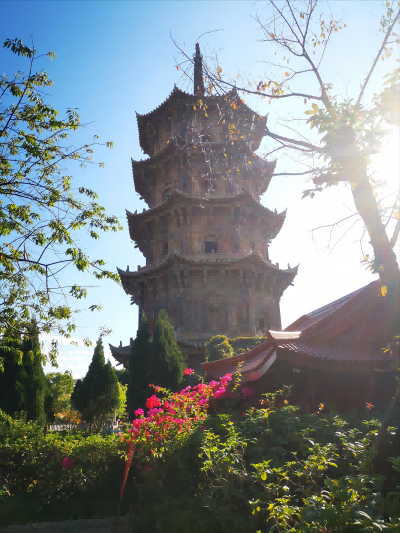
The temple is especially famous for its magnificent East and West Pagodas, which are among the tallest and best-preserved ancient stone pagodas in China.
East Pagoda
The East Pagoda, also called Zhenguo Pagoda, was originally built during the Tang Dynasty in 865 AD. After several reconstructions, the current stone structure was completed during the Southern Song Dynasty between 1238 and 1250.
Standing 48.24 meters high, the pagoda is a masterpiece of ancient Chinese stone architecture. Its carefully designed structure combines artistic beauty with advanced engineering techniques, earning it a reputation as the “King of Chinese Stone Pagodas.”
West Pagoda
The West Pagoda, known as Renshou Pagoda, was first constructed in 916 AD during the Five Dynasties period. The present stone pagoda was rebuilt between 1228 and 1237 during the Southern 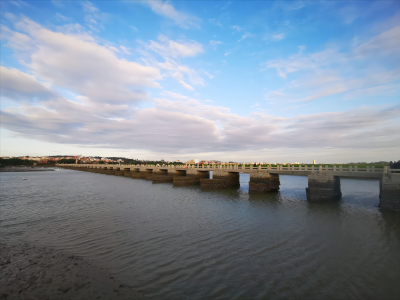 Song Dynasty.
Together, the East and West Pagodas form the iconic symbol of Kaiyuan Temple. They have survived centuries of earthquakes and typhoons and remain among Quanzhou’s most impressive historical landmarks.
Luoyang Bridge
Luoyang Bridge, also known as Wan’an Bridge, is one of the oldest surviving stone bridges in China and is considered one of the “Four Famous Ancient Bridges of China.”
Built during the Northern Song Dynasty between 1053 and 1059, the bridge was designed under the leadership of Cai Xiang, a famous official of Quanzhou. Stretching 834 meters long and 7 meters wide, it crosses the Luoyang River estuary and represents a remarkable achievement in ancient Chinese engineering.
The bridge introduced several innovative construction techniques, including:
* Raft foundation technology, which created a stable stone base under water.
* Oyster cultivation foundation technology, using oysters to naturally strengthen the bridge foundation.
* Advanced pier designs that reduced the impact of tides and waves.
These innovations demonstrate the extraordinary engineering knowledge of ancient Chinese craftsmen more than 900 years ago.