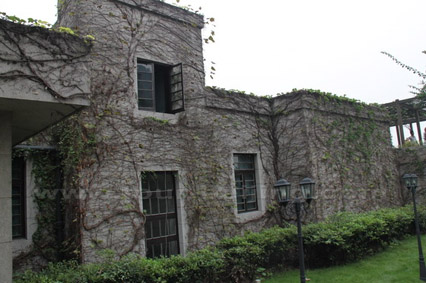
The Flying Tiger Museum Chongqing, officially known as the General Joseph W. Stilwell Museum, is a historical museum dedicated to the life and legacy of General Joseph Warren Stilwell, an American military leader who played an important role in China during the Second World War. Located in Chongqing, the former wartime capital of China, the museum preserves the former residence of General Stilwell and showcases the history of China-US cooperation during the Anti-Japanese War.
As one of the notable historical attractions in Chongqing, the museum provides visitors with an opportunity to learn about the wartime experiences of Chongqing, the China-Burma-India Theater, and the cooperation between the Chinese and American forces during World War II.
History of General Joseph W. Stilwell Museum
General Joseph Warren Stilwell served as Chief of Staff of the China-Burma-India Theater and as Chief of Staff to Generalissimo Chiang Kai-shek in 1942 during World War II. During his time in China, he played a significant role in coordinating military operations and strengthening cooperation between China and the Allied forces.
The former residence of General Stilwell in Chongqing has been preserved and converted into the General Joseph W. Stilwell Museum in his honor. The museum officially opened to the public in 1991 and has since become an important site for understanding Chongqing’s wartime history.
The museum displays historical documents, photographs, military items, and personal belongings related to General Stilwell’s life and his involvement in the China-Burma-India Theater.
General Stilwell and China During World War II
During the Second World War, Chongqing served as the wartime capital of China and became a major center for resistance against Japanese aggression. General Stilwell contributed significantly to military cooperation between China and the Allied powers during this difficult period.
His work in China included supporting military training, improving cooperation between Chinese and American forces, and assisting strategic operations against Japan. His relationship with other key figures of the China Theater, including General Claire Lee Chennault and Chiang Kai-shek, was complex and sometimes affected by differences in military strategies and political views.
In 1944, Stilwell was recalled from his command by President Franklin D. Roosevelt following growing disagreements within the China Theater leadership. His conflicts with Chiang Kai-shek, particularly over military command and strategic decisions, were among the major factors leading to his return to the United States.
Legacy of General Joseph W. Stilwell
After returning to the United States, General Stilwell passed away from stomach cancer on October 12, 1946. His ashes were scattered over the Pacific Ocean, and a cenotaph was later established in his memory at West Point Cemetery.
Today, the General Joseph W. Stilwell Museum in Chongqing serves as a reminder of the historical connections between China and the United States during World War II. Through its exhibitions and preserved buildings, the museum helps visitors understand the challenges of wartime diplomacy, military cooperation, and the shared history of the Allied struggle.
Visiting Flying Tiger Museum Chongqing
For travelers interested in Chongqing history, World War II heritage, and China-US wartime cooperation, the Flying Tiger Museum is a meaningful cultural destination. Along with nearby historical sites such as Zhazidong Prison and Bai Mansion, the museum offers a deeper look into Chongqing’s role as China’s wartime capital.
A visit to the General Joseph W. Stilwell Museum provides an insightful journey into the history of the Second World War and the remarkable international cooperation that shaped this important chapter of modern history.