 Located on the northern bank of Shichahai (Shicha Lake) at No.17 Qianhai Xijie, Xicheng District, Prince Gong’s Mansion (Gong Wang Fu) is one of the most famous historical residences in Beijing.
It is the best-preserved princely mansion from the Qing Dynasty (1644–1912) and is considered one of the finest examples of traditional Chinese royal architecture. Covering a large area of elegant courtyards, halls, gardens, and pavilions, the mansion provides visitors with a fascinating glimpse into the lifestyle of Qing Dynasty aristocrats.
Today, Prince Gong’s Mansion is one of Beijing’s most popular cultural attractions and an important site for understanding Qing Dynasty history and architecture.
History of Prince Gong’s Mansion
The history of Prince Gong’s Mansion is closely connected with He Shen, a powerful court official during the reign of Emperor Qianlong (1735–1796).
Originally built as He Shen’s private residence, the mansion was famous for its luxurious design and grand scale. After Emperor Qianlong’s death, He Shen was accused of corruption by his successor Emperor Jiaqing and was sentenced to death. His property was confiscated by the imperial court.
In 1851, during the reign of Emperor Xianfeng (1850–1861), the residence was given to his younger brother Yixin, Prince Gong, and the mansion became known as Prince Gong’s Mansion.
Architecture and Layout of the Mansion
Prince Gong’s Mansion consists of two major sections:
* The residential area
* The garden area
The residential section covers approximately 3.2 hectares and features magnificent Qing-style buildings arranged along a traditional central axis.
The main structures include:
* Main Hall
* Rear Hall
* Two-story verandah buildings
* Traditional courtyard residences
The eastern and western sides contain additional courtyards, creating a complex and elegant architectural layout typical of Qing Dynasty noble residences.
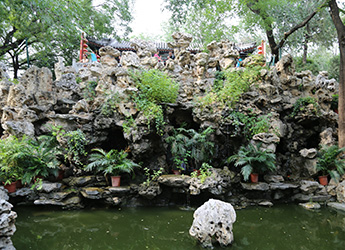
The garden covers approximately 2.9 hectares and is divided into eastern, central, and western sections. With rockeries, ponds, corridors, flowers, and pavilions, it represents the refined beauty of classical Chinese garden design.
The Three Treasures of Prince Gong’s Mansion Garden
The garden of Prince Gong’s Mansion is famous for three unique features:
 1. Western-Style Marble Gate
Facing the central axis of the garden, the white marble gate combines Chinese and European architectural influences.
It was one of only three such gates in Beijing during the Qing Dynasty, and the other two have disappeared, making this gate especially valuable.
2. The “Fu” Stele – Symbol of Blessing and Happiness
After entering the garden, visitors can see a huge Taihu stone about five meters high. Behind the stone is a pond shaped like a bat, known as Fu Chi, because bats symbolize good fortune in traditional Chinese culture.
Inside a cave beneath an artificial hill stands the famous Fu Stele, featuring the Chinese character “Fu” (福) meaning happiness and blessing.
The character was personally written by Emperor Kangxi, one of the greatest emperors of the Qing Dynasty. Since Emperor Kangxi rarely created inscriptions, this calligraphy is considered extremely precious.
3. Grand Theater House
The Grand Theater House is one of the most impressive buildings in the eastern garden area.
The theater can accommodate approximately 200 people and was used for:
* Beijing Opera performances
* Royal entertainment
* Important family ceremonies
Despite its wooden structure, it is said that the theater was built without using nails. Thanks to its excellent acoustic design, performances could be clearly heard throughout the hall.
The interior decoration features beautiful paintings of purple wisteria flowers on the columns and beams, creating an elegant and artistic atmosphere.
A Beautiful Classical Garden Near Shichahai
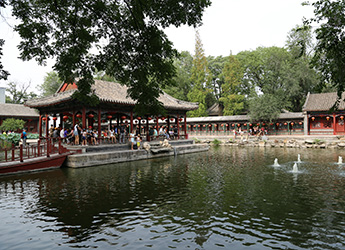
The western section of the garden features a beautiful lake area with Huxin Pavilion, surrounded by peaceful water views.
During the Qing Dynasty, connecting running water to private residences in Beijing required imperial approval. Prince Gong’s Mansion was one of the few princely residences granted this special privilege.
The garden combines:
* Artificial mountains
* Winding corridors
* Traditional pavilions
* Lakes and ponds
* Flowers and plants
* Elegant courtyards
Because of its unique design and peaceful atmosphere, the garden is often described as the “Pearl of Shichahai” and a beautiful example of classical Chinese garden art.
Why Visit Prince Gong’s Mansion?
Prince Gong’s Mansion is a must-see destination for travelers interested in:
* Qing Dynasty history
* Traditional Chinese architecture
* Imperial family life
* Classical gardens
* Beijing cultural heritage
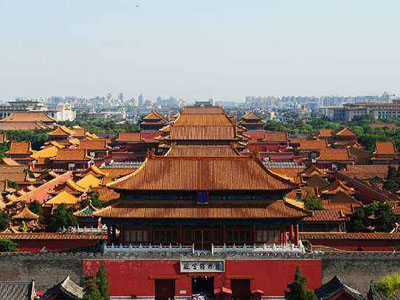
Unlike the grand imperial scale of the Forbidden City, Prince Gong’s Mansion offers a more personal view of how Qing Dynasty nobles lived.
The mansion has welcomed many international visitors, including foreign leaders and distinguished guests, and remains one of the most valuable historical attractions in Beijing.
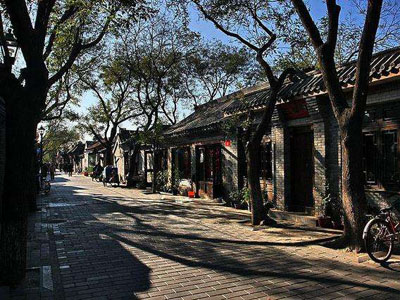
For travelers exploring the Shichahai and Hutong areas, Prince Gong’s Mansion provides an unforgettable journey into the elegance and traditions of old Beijing.