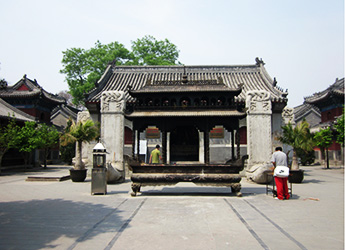
White Cloud Temple (Baiyun Guan) is one of the most famous and historically significant Taoist temples in Beijing. Known as one of the “Three Great Ancestral Courts of Taoism,” it has played an important role in the development of Chinese Taoist culture for more than 1,200 years.
Located in the Xicheng District of Beijing, the temple was originally built in 739 AD during the Tang Dynasty (618–907) and became one of the most influential Taoist centers in China. Today, it serves as the headquarters of the Chinese Taoist Association and remains an active place for Taoist rituals, religious activities, and cultural exchanges.
After being used as a military facility for many years following the Cultural Revolution, White Cloud Temple was restored and reopened. Today, around 30 resident Taoist monks live and practice here, preserving traditional Taoist customs and rituals.
Explore Traditional Taoist Culture in Beijing
Unlike many historical sites in Beijing, White Cloud Temple is not just a museum but a living religious center where visitors can experience authentic Taoist culture.
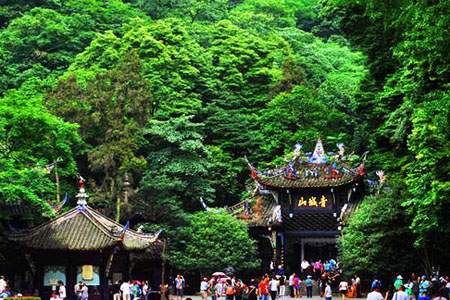
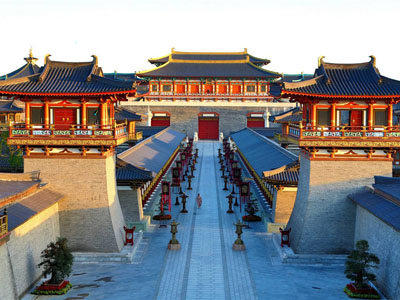
The temple follows a layout similar to traditional Buddhist temples, with several courtyards, halls, altars, and gardens arranged along a central axis. However, it also has distinctive Taoist characteristics, including symbolic structures representing Taoist philosophy.
The three gateways at the entrance represent the Three Worlds of Taoism:
* The World of Desire
* The World of Substance
* The World of Emptiness
Passing through these gates symbolizes leaving behind worldly distractions and entering a peaceful spiritual space.
Main Halls and Architectural Features
The White Cloud Temple complex consists of three main sections:
* Central Section: The main religious area with important Taoist halls and statues
* Eastern Section: Additional halls and cultural facilities
* Western Section: Supporting buildings and quiet courtyards
At the rear of the temple, visitors can find a peaceful garden offering a relaxing atmosphere away from the busy city streets.
The temple contains many halls dedicated to Taoist deities, decorated with traditional sculptures, incense burners, and religious artworks. Visitors can observe worshippers offering incense and praying for blessings, health, and prosperity.
 The Three Lucky Monkeys of White Cloud Temple
One of the most interesting traditions at White Cloud Temple is searching for the three hidden monkey sculptures.
According to local belief, visitors who find all three monkeys will receive good luck. The monkey carvings are located in different areas of the temple:
* One monkey is carved on the entrance gate and has been polished dark by countless visitors touching it.
* The other two monkeys are hidden in the first courtyard.
Finding these small sculptures has become a popular activity for visitors exploring the temple.
Laolu Hall – A Historic Taoist Building
One of the most notable structures in White Cloud Temple is Laolu Hall (Laolu Tang), located in the third courtyard.
Originally built in 1228 during the Yuan Dynasty, the hall was traditionally used for Taoist teachings, ceremonies, and religious gatherings. Today, it continues to serve as an important place for Taoist cultural activities.
The temple also has a bookstore selling Taoist-related books, traditional cultural items, and souvenirs such as lucky charms.
Taoist Traditions and Religious Activities
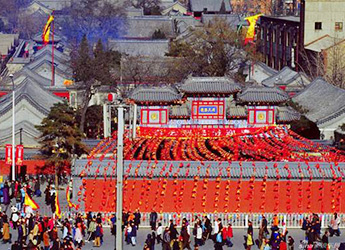
White Cloud Temple remains an important destination for Taoist believers, especially during traditional festivals such as the Chinese New Year period and Taoist celebrations.
Although Taoist philosophy emphasizes simplicity and spiritual balance rather than material wealth, the God of Wealth Hall attracts many visitors who come to pray for prosperity and good fortune.
The temple provides travelers with a unique opportunity to experience traditional Chinese philosophy, architecture, religion, and local customs in the heart of Beijing.
Travel Tips for White Cloud Temple
* Recommended duration: 1–2 hours
* Best for: History lovers, culture enthusiasts, photographers, and travelers interested in Taoism
* Highlights: Ancient Taoist architecture, religious ceremonies, monkey sculptures, traditional gardens
* Best time to visit: Spring and autumn when Beijing weather is pleasant
* Location: Xicheng District, Beijing